Buying Property in Panama · Part 9 of 10
Managing Property from Abroad: Rentals, Property Managers, and the 45-Day Rule
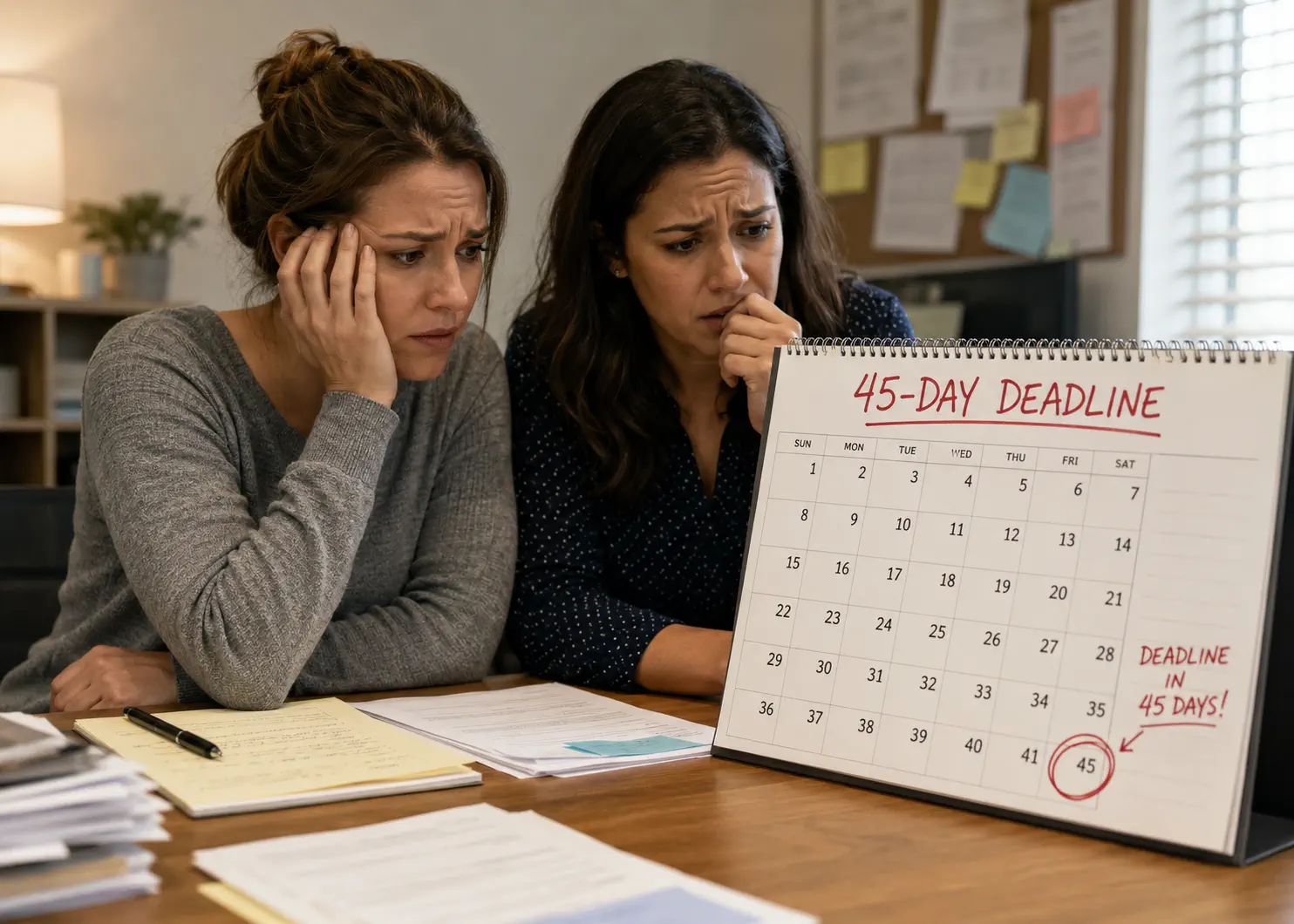
Many expats buy Panama property before they live there full-time — which means managing it remotely, deciding whether to rent it, and navigating rules that catch foreign investors off guard. The 45-day short-term rental prohibition in Panama City is the most common one. It isn’t the only one.
 Brian & Kent · GayExpatsPanama.com · April 2026 Research Trip
Most of the people who buy property in Panama before moving there full-time have the same initial plan: keep the property rented while they’re not using it, let the rental income offset the carrying costs, and eventually transition to living there. It’s a reasonable plan and it works for plenty of owners. What makes it work — or doesn’t — is understanding the rules before you buy, not after. The short-term rental prohibition in Panama City is the clearest example: buyers who assumed Airbnb income would cover part of their mortgage discovered after closing that Panama City rules prohibit rentals under 45 days unless the property is registered as a tourism lodging facility. The building’s own HOA bylaws may be stricter still. This article covers the full picture of absentee ownership in Panama: the rental rules, the tax obligations, the cost of professional management, and what you actually need to have in place before you hand someone the keys from 3,000 miles away.
Buying Property in Panama: The Complete Expat Guide
Ten articles covering everything from the rent-vs.-buy decision through closing day and beyond — including the specific issues that affect gay couples that most guides completely ignore.
- What to Think About Before You Think About Properties
- What Are You Actually Buying? Titled Property, ROP, Concessions Explained
- Finding a Real Estate Agent — and How to Tell If They're Working for You
- What Sellers Don't Have to Tell You: Flooding, Zoning & Hazards
- The Promise to Purchase: What to Negotiate Before You're Committed
- Due Diligence: Title, HOA Health & the Inspection Nobody Does
- Closing: Costs, Taxes, the Public Registry & What Happens on Day One
- Corporate vs. Personal Ownership: When a Panama Corporation or Foundation Makes Sense
- Managing Property from Abroad: Rentals, Property Managers & the 45-Day Rule You are here
- Buying Property as a Gay Couple: Title Structure, Legal Documents & What Marriage Doesn't Protect Here
The 45-Day Rule: What It Is, What It Covers, and Where It Doesn’t Apply
In Panama City, it is not permitted to rent a residential apartment or house for fewer than 45 consecutive days unless the property or building is registered with the Autoridad de Turismo de Panamá (ATP) as a tourism lodging facility — essentially, operating as a licensed hotel, apart-hotel, or hostel. The framework treats sub-45-day stays as a tourism accommodation service requiring formal registration and commercial licensing, not as a simple residential lease.
The regulatory basis for this is layered rather than sitting in one statute, and we want to be straight with you about the limits of what we could confirm. Decreto Ley 4 of 27 February 2008 created the ATP and established the definitions of tourism lodging categories — apart-hotel, albergue, cabañas, and so on — and was itself regulated by Decreto Ejecutivo 82 of 2008. Panamanian practitioners writing about short-term rentals in condominium buildings analyse the question by reference to those instruments. Elsewhere in this series we have also cited Ley 80 of 2012 in connection with the same 45-day threshold. We have not been able to determine from published sources which specific provision establishes the 45-day number itself, and we are not going to assert one. If your purchase depends on the answer, have a Panamanian attorney identify the governing provision for your specific property and district in writing.
What is not in doubt is the practical position: sub-45-day rentals in Panama City require ATP tourism registration, penalties for non-compliance are substantial, and enforcement exists. We have seen a fine range quoted but could not source it to an official schedule, so we are not publishing figures — ask your attorney what the current exposure actually is before you rely on any number.
The Building Bylaws Are Their Own Layer of Enforcement
Even where a building holds ATP tourism registration, the building’s own Reglamento de Copropiedad (the condominium regulations under Ley 284 of 2022) may prohibit short-term rentals entirely, or impose its own minimum stay. Panamanian propiedad horizontal specialists report the 45-day threshold appearing directly in PH internal regulations — meaning the rule is enforced at building level as well as nationally, and building administrations levy their own penalties separately from any government action. Request the full reglamento in writing from the administration before you buy, and read the rental provisions specifically. This is not a formality; in practice it is often the binding constraint.
The tourism permit path — and how difficult it is
Obtaining ATP tourism registration for an individual unit or building is possible but involves demonstrating compliance with commercial accommodation standards — fire safety certification, building registration, operational requirements, and ongoing compliance obligations. For individual condo owners, the realistic path to legal short-term rentals in Panama City is buying in a building that already holds the registration, not obtaining one yourself. Buildings marketed as “vacation rental legal” or “hotel-registered” carry this distinction and price accordingly. If a listing agent tells you short-term rentals are permitted in a building, ask for the ATP registration number. If they cannot provide it, treat the claim as unverified.
Outside Panama City: more flexible but still regulated
The 45-day restriction applies to Panama City. Other parts of the country operate under different regulatory conditions. Boquete, Bocas del Toro, beach communities on both coasts, and smaller towns generally allow short-term rentals more freely — though municipal rules, condominium regulations, and ATP requirements may still apply. If rental income from a vacation property is central to your investment case and you are not buying in the capital, confirm the specific rules for that municipality and any building-level restrictions before committing. The regulatory picture is genuinely less restrictive in most of the country than in Panama City.
Long-Term Rentals in Panama City: A Different Market
The 45-day threshold creates a natural market for medium and long-term rentals — 45 days to six months, or year-long leases — in Panama City. Expats arriving for visa processes, corporate relocations, contract workers, and people trying Panama before committing to a longer stay all generate demand in this range. The yield is lower than short-term turnover income, but it is compliant, lower-maintenance, and often more consistent. If Panama City is your target and you want rental income, the long-term market is the more realistic model.
The True Carrying Costs of Absentee Ownership
Before modeling rental income, model the fixed costs of ownership that continue whether the property is occupied or not. Many buyers underestimate these and discover their rental income covers far less of the carrying cost than projected.
For a Panama City condo, the recurring items are: the building’s HOA or maintenance fee, typically assessed per square metre; property management fees if you use a manager, charged as a percentage of gross rent; annual property tax under the bands covered in Part 7 of this series; property insurance; annual corporate or foundation maintenance if the property is held in an entity, as covered in Part 8; and a reserve for vacancy and maintenance. We have deliberately not published dollar figures for the variable items here — the ranges we found were not traceable to a current, authoritative source, and a carrying-cost model built on numbers from a blog is worth very little. Get current quotes for each line before you build your model.
Carrying Cost Line Items to Model Before You Buy
The pattern worth internalising is that net yield is materially lower than gross yield once management, HOA, tax, insurance, and vacancy are subtracted. Published gross yield figures for Panama circulate widely in marketing material; the number that matters to you is what remains after costs. Build the model from your own quotes, not from an advertised yield.
Property Management: What It Costs, What It Covers, and Why It Isn’t Optional
Managing a rental property in Panama from abroad without professional help is not advisable. The time zone gap, the language barrier with Panamanian tenants, the need for someone on the ground when maintenance emergencies arise, and the practicalities of collecting and disbursing rent all create obstacles that make remote self-management genuinely difficult. Property management firms with Panama experience are consistent on this point: owners who try to manage remotely without local representation suffer delayed responses to tenant issues, which drives tenant attrition and vacancy.
What a property manager typically does
A standard long-term rental management agreement in Panama covers rent collection, disbursement to the owner (typically monthly), payment of the building’s HOA fees from rental income, coordination of routine and emergency maintenance with vetted contractors, tenant communication, lease renewal, and basic accounting for income and expenses. The manager acts as the owner’s representative — the person a tenant calls when the A/C stops working at 11 p.m.
What management typically does not cover: major capital repairs, legal disputes requiring attorney involvement, tax filing and compliance, or your own DGI reporting obligations. These either cost extra or require separate professional engagement.
What it costs
Management is charged as a percentage of gross rent, with short-term rental management costing considerably more than long-term because of the higher turnover and service intensity. We are not publishing specific percentages, because the figures we found were not traceable to a source we could verify and rates vary by firm and property type. Get quotes from at least two firms and compare on scope as well as rate.
What you should pin down in writing regardless of the rate: is there a one-time fee when a new tenant is placed? What is charged for lease renewals? What maintenance work can the manager authorise without owner approval, and up to what limit? Those terms matter as much as the headline percentage.
Vetting a Property Manager Matters as Much as Vetting an Agent
Property management quality in Panama is inconsistent. A poor manager costs you money through slow maintenance response, tenant dissatisfaction, and vacancy — not just through their fee. Before engaging anyone, ask for references from current clients with similar properties in the same building or neighbourhood. Ask how many properties they currently manage and what their average vacancy rate is. Ask how after-hours maintenance emergencies are handled. If they cannot answer those questions specifically, treat that as a signal.
Rental Income Taxes: What Panama Expects You to Pay
Rental income from Panama property is Panama-sourced income and is taxable in Panama regardless of where the owner lives. Panama’s territorial system taxes income where it is generated — not where the recipient is based. This applies equally to resident and non-resident foreign owners, and it is one of the more commonly misunderstood points among buyers who assume territoriality means their rental income escapes Panamanian tax.
Individual landlord income tax
Rental income for individual landlords is taxed at Panama’s progressive personal income tax rates, with an initial exempt band, a middle bracket, and a top bracket. Rental expenses — management fees, maintenance, insurance, property tax, depreciation — are deductible against rental income, reducing the taxable base, so the effective rate for a landlord with one or two properties and a normal expense load is meaningfully below the headline top rate. Confirm the current bracket thresholds and rates with a Panamanian accountant for the tax year in question rather than relying on figures published online.
Corporate landlord income tax
If the property is held in a Panamanian S.A. and the company earns rental income, corporate income tax applies to net Panama-sourced profit, with the same expense deductions available. For US citizens who own the S.A., the Form 5471 reporting obligation discussed in Part 8 applies — the corporation’s existence and income are reportable to the IRS regardless of whether anything is distributed to you.
The VAT (ITBMS) threshold
Panama’s VAT — ITBMS — applies to rental income once gross rental income exceeds a defined monthly or annual threshold. Landlords below the threshold are exempt from collecting and remitting it. Most individual owners with a single unit will fall below it; owners of multiple units or higher-value properties may exceed it. We are not publishing the threshold figure here because we could not confirm it against a current official source, and it is exactly the kind of number that gets revised. If your rental income is anywhere near the range where this might apply, confirm your registration status with a Panamanian accountant — the obligation is not automatic, but the consequence of missing it once you cross the line is real.
US citizens: Panama income is still reportable to the IRS
Panama’s territorial system is a genuine advantage for residents with foreign-source income — they pay no Panamanian tax on income generated outside Panama. It does not exempt US citizens from US tax obligations. US citizens are taxed on worldwide income regardless of residence, and rental income from a Panama property is taxable on a US federal return. The Foreign Tax Credit can offset US tax with tax paid to Panama, preventing double taxation, but that requires accurate Panamanian filings and proper documentation. A US CPA who specialises in expat taxation is not optional if you are a US citizen with Panama rental income.
Rental Income Tax — What to Confirm With Your Accountant
The Power of Attorney: The Practical Tool for Absentee Owners
Whether or not you use a property manager, a notarised power of attorney is what makes absentee ownership function day to day. A POA granted to a trusted local representative — your attorney, your property manager, or a trusted individual in Panama — allows them to sign documents, interact with government agencies, respond to legal notices, and handle administrative matters on your behalf without requiring you to fly to Panama every time something needs a signature.
For absentee owners, a POA covering routine property administration — not blanket unlimited authority — is a reasonable arrangement from day one of ownership. Your attorney can draft it as part of the closing process. Define the scope specifically: what the holder can do, what requires your explicit approval, and when it expires or comes up for review. A POA is a tool of trust and convenience; keep it scoped appropriately rather than granting unlimited authority to someone you have recently met.
Banking Access for Absentee Owners
Collecting and managing rental income is easier with a Panamanian bank account. Opening one as a non-resident is possible but generally requires in-person appearance, documentation of income and source of funds, and patience with know-your-customer processes that Panamanian banks take seriously. Budget time for this during a Panama visit around the time of closing. Some property managers will collect rent and disburse internationally by wire without requiring a local account, but having one gives you more control and lower transfer costs over time.
What to Confirm Before Buying With Rental Income in Mind
If rental income is part of your financial model — to offset carrying costs, generate a return, or cover a mortgage — these need confirmed answers before you sign a Promesa, not after closing.
- What is the minimum rental term permitted for this property’s location? Panama City: 45 days unless ATP tourism registration is held. Elsewhere: confirm the municipal position.
- Does the building hold ATP tourism registration? If yes, ask for the registration number and verify it. If no, sub-45-day rentals are not available to you in Panama City.
- What does the building’s Reglamento de Copropiedad say about rentals? Request the full regulations. Some buildings prohibit rentals entirely, impose their own minimum stays, or require owner notification. This is frequently the binding constraint.
- Has the reglamento been updated for Ley 284 of 2022? An un-updated reglamento may contain provisions that no longer have effect — worth knowing which rules actually bind. See Part 6.
- What is the realistic long-term rental rate for this unit? Ask for comparable current listings in the building and neighbourhood — what similar units are actually renting for today, not what the agent hopes you can charge.
- What is the vacancy picture in this building? Buildings with a high proportion of absentee owners sometimes have oversupplied rental markets. Ask how many units are currently rented, owner-occupied, and vacant.
- Can an existing tenant be removed if you want to occupy the property? Panamanian law protects a tenant’s right to remain until the lease expires. If the property is tenanted, confirm the lease terms before closing.
- Which property managers operate in this building or neighbourhood? Get at least two names and two references before you own the property.
- What are the full carrying costs? Total the monthly and annual figures from your own quotes before modelling net income.
- Have you confirmed the tax treatment for your specific situation? Individual versus entity ownership matters; US citizenship adds a layer. Consult a Panamanian accountant and, if applicable, a US CPA before committing.
The Honest Reality of Absentee Ownership
Panama property can be managed successfully from abroad. Plenty of expats who moved to Panama full-time started as absentee owners and ran the transition well. What makes it work is not optimistic projection — it is realistic cost modelling, compliance from day one, a competent manager with a track record, and a clear-eyed understanding that net yield after real costs sits well below the gross yield that gets advertised.
The buyers who struggle are almost always the ones who modelled the income side without modelling the cost side, who assumed short-term rental income was available without confirming the legal and building-level position, or who managed remotely without professional help and discovered too late that a neglected maintenance issue had driven out a good tenant.
Model the costs first. Then the income. If the net number still works, it’s a real investment. If you need the optimistic scenario to justify the purchase, it probably isn’t.
We have not yet rented a Panama property. Our plan — when we eventually buy — involves either occupying the property ourselves or making a deliberate decision about rental structure with professional guidance before closing. We will write about that decision and its results when we get there. For now, this is the framework we would use if we were buying today with rental income as part of the plan.
Sources & Verification
- Official: Decreto Ley 4 of 27 February 2008 (Gaceta Oficial 25989, 29 February 2008), creating the Autoridad de Turismo de Panamá and establishing definitions for tourism lodging categories including apart-hotel, albergue, and cabañas; regulated by Decreto Ejecutivo 82 of 2008.
- Reported: Panamanian propiedad horizontal practitioners analysing short-term rentals in condominium buildings by reference to Decreto Ley 4 of 2008 and Decreto Ejecutivo 82 of 2008, and reporting the 45-day minimum appearing directly in PH internal reglamentos — meaning building-level enforcement operates alongside the national framework.
- Not yet verified: Which specific legal instrument establishes the 45-day minimum-stay threshold. This article previously attributed it to Decreto Ley 4 of 2008; Part 1 of this series attributes it to Ley 80 of 2012. We could not resolve this from published sources and have described the framework as layered rather than asserting a single governing provision. Confirm with a Panamanian attorney for your specific property and district.
- Not yet verified: The fine range for short-term rental violations. A range was previously published; we could not source it to an official schedule and have removed the figures.
- Not yet verified: Average gross rental yield for Panamanian residential property, property management fee percentages for long-term and short-term rentals, HOA per-square-metre rates, insurance cost ranges, personal and corporate income tax bracket figures, and the ITBMS registration threshold. All were previously published as firm figures without traceable sourcing and have been replaced with directions to obtain current professional quotes.
Facts and prices in this article last verified: July 2026.
Buying Property in Panama: The Complete Expat Guide
- 01 What to Think About Before You Think About Properties
- 02 What Are You Actually Buying? Titled Property, ROP, Concessions Explained
- 03 Finding a Real Estate Agent — and How to Tell If They're Working for You
- 04 What Sellers Don't Have to Tell You: Flooding, Zoning & Hazards
- 05 The Promise to Purchase: What to Negotiate Before You're Committed
- 06 Due Diligence: Title, HOA Health & the Inspection Nobody Does
- 07 Closing: Costs, Taxes, the Public Registry & What Happens on Day One
- 08 Corporate vs. Personal Ownership: When a Panama Corporation or Foundation Makes Sense
- 09 Managing Property from Abroad: Rentals, Property Managers & the 45-Day Rule
- 10 Buying Property as a Gay Couple: Title Structure, Legal Documents & What Marriage Doesn't Protect Here
Brian & Kent
A gay couple based in St. Petersburg, Florida, researching and planning a move to Panama in real time. Brian is in the Pensionado visa process. Kent is the primary researcher. We write about what we’re actually doing and what we actually find — including the decisions ahead of us that we haven’t made yet.