Our Story & April 2026 Trip · Part 7 of 16
We Made It. Day One in Panama — Wheelchairs, Wind, and a Metro Lesson We Learned the Hard Way
The flight landed, the passports got stamped, and we immediately made the mistake every expat guide told us not to make. An honest account of arrival day — the good, the sweaty, and the surprisingly delightful.
 Brian & Kent · GayExpatsPanama.com · April 2026 Research Trip
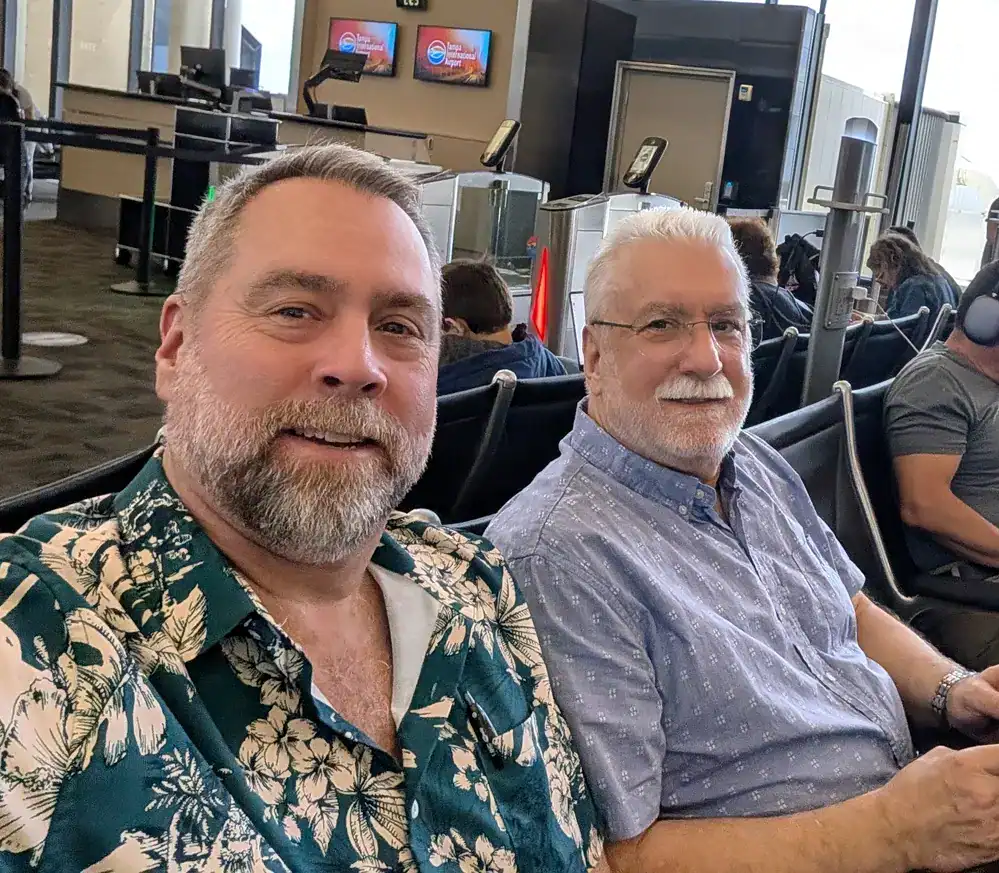
Tampa International Airport — boarding Copa Airlines and trying to look calm about it.
Standing at the gate in Tampa, waiting to board Copa Airlines to Panama City, we noticed something immediately: we have never seen so many wheelchairs at a gate in our lives. We’re talking a full fleet. Apparently the expat retirement community has spoken, and they are all headed to Panama at the same time we are. We felt very much at home.
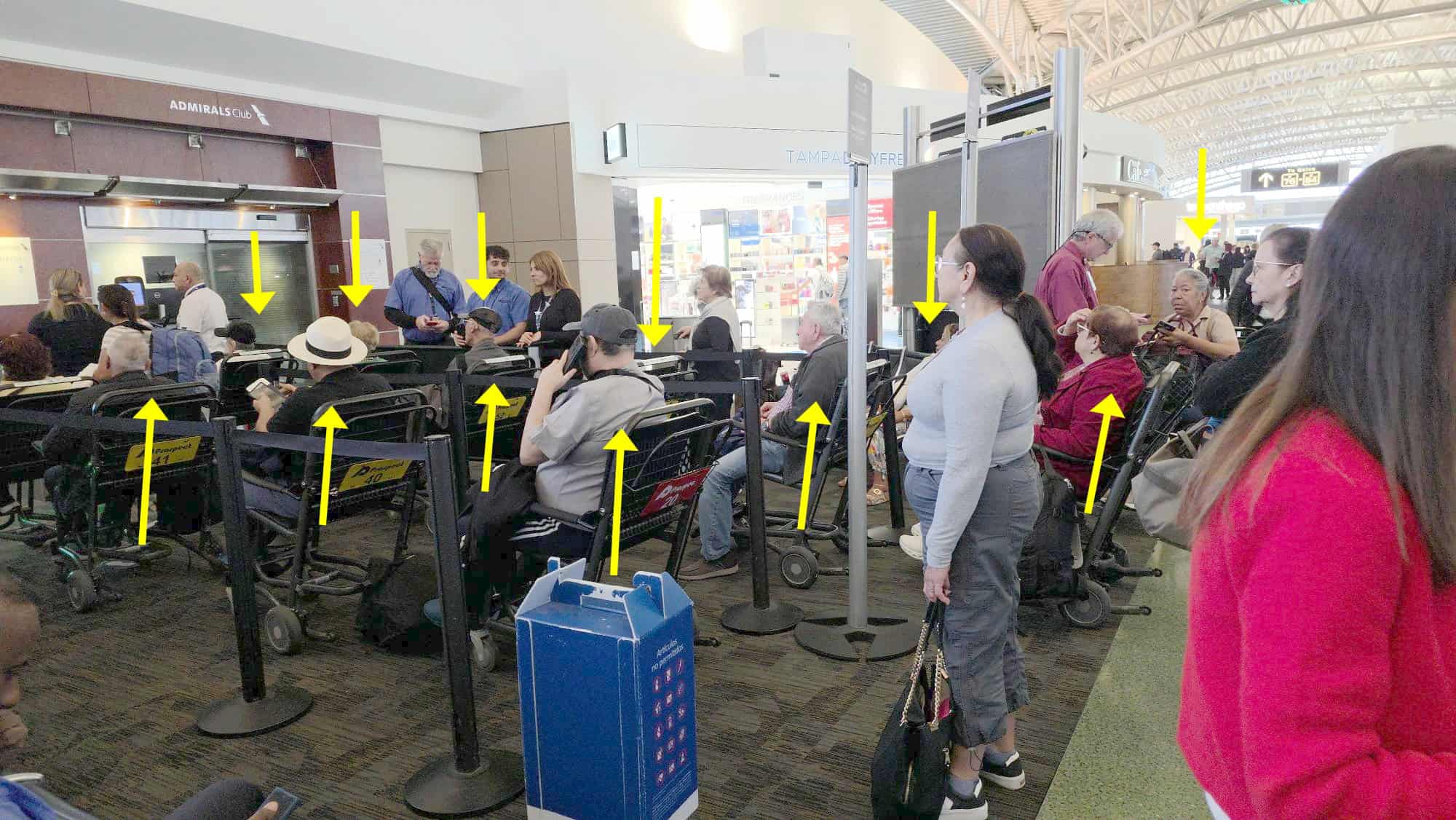
The Copa gate at Tampa. We counted. There were a lot of wheelchairs. Panama is clearly doing something right.
[[[ PASTE:Our Story & Panama Journey Series
Articles sharing our story, our earlier life abroad, and the day-by-day experience that helped us decide whether Panama was right for our future.
- Almost 40 Years, 12 Homes — and We’re Doing It Again
- We Lost Everything in Spain. We’re Still Glad We Went.
- Going to Panama — and You’re Coming With Us
- Day One: Wheelchairs, Wind, and a Metro Lesson
- Day Two: The Shorts Crisis and the World’s Biggest Mall
- Day Three: Grocery Prices, Neighborhoods, and a $12 Drink
- Day Four: The Attorney, the Doctor, and the Pensionado Visa You are here
- Day Five: The Fish Market, Multiplaza, and Maluka
- Day Six: Neighborhoods, Hardware Stores, and a Fixer-Upper
- Day Seven: Breakfast, Laundry, and Furniture Shopping
- Day Eight: The Canal Museum, La Cresta, and Casco Viejo
- Day Nine: Hato Pintado, Carrasquilla, and Hardware Stores
- Day Ten: Miraflores Locks, the Ciclovía, and Hamman
- Day Eleven: Getting the Pensionado Residency Card
- Day Twelve: What Panama Actually Taught Us
- Day Thirteen: Going Home — Is Panama Still the Answer?
The flight, the landing, and the aborted landing
The Copa flight itself was smooth and uneventful — right up until it wasn’t. As we descended into Panama City, the pilot announced an aborted landing due to high winds and took us around for another pass. Not a big deal in the grand scheme of things, but not exactly the calm arrival we’d imagined when we were booking this trip six months ago. We landed fine on the second attempt.
First observation about Tocumen International Airport: Copa Airlines arrives at the very last gate in Terminal 1. Baggage claim for Copa, however, is at the far end of Terminal 2. If you are doing the math, that means you walk the full length of Terminal 1 and then the full length of Terminal 2 to get your bags. It took us about 20–30 minutes. No shuttle. Just walking. Welcome to Panama.
Immigration was straightforward. U.S. citizens can stay up to 180 days — we told them two weeks, got our passports stamped, and moved on to baggage claim, where our two bags were sitting by themselves looking lonely. Customs was painless: they ran our luggage through an X-ray machine and waved us through.
The metro idea — bold in theory, humbling in practice
We had done our research. Panama City has a Metro. It’s clean, modern, efficient, and costs $0.35 a ride. Taking mass transit like locals sounded like exactly the kind of thing we’d want to do. So we headed for the Metro station.
Everyone else at the airport Metro station was an airport employee. There were no other travelers. They apparently all knew something we didn’t.
Here’s what the guides don’t fully convey: the Metro station is outside the terminal. You exit baggage claim in Terminal 2, turn right, and walk — in the heat and humidity — for 10 to 15 minutes over rough sidewalks, dragging your wheeled luggage the entire way. The connection between the terminal and the station isn’t finished yet; there are steel girders sticking out of the terminal building where a covered walkway is presumably supposed to go someday. For now, you’re outside, in the Panamanian sun, with your bags.
The station itself isn’t air-conditioned. The turnstiles are not designed for luggage — ours got caught every single time. We wrestled our bags through like we were solving a puzzle no one else had attempted before. And then we transferred. Twice. Lugging the bags each time.
The Metro itself? Genuinely good. Clean, on schedule, easy to use. You buy a plastic card for $2.00, add money to it, and tap to board. Whenever we stopped and looked confused, someone immediately walked over and offered to help — that happened more than once and it was genuinely kind. Our total cost for the ride into the city with two transfers was $0.85.
Metro from the airport — the numbers
The real lesson came when we got off at the Carmen Metro stop and tried to walk the three blocks to our hotel. The sidewalks are paved with brick — beautiful to look at, punishing for rolling luggage. The wheels bounced constantly. Curbs are not a standard height; some are a few inches, some are six or more. The gutter between curb and street can drop four inches, and it catches the wheels of roller bags like it was specifically designed to do that.
Our verdict on the airport metro
The Metro is a great way to get around Panama City once you’re settled. It is not the right choice when you arrive with luggage. The walk to the station in the heat, the un-air-conditioned platform, the turnstile wrestling, the transfers, and the brick sidewalks at the other end make it genuinely uncomfortable.
Take an Uber from the airport, or arrange a car service in advance. Uber from Tocumen to central Panama City runs around $20–$25 and takes you directly to your door. That’s the call. We learned this the expensive way — in sweat.
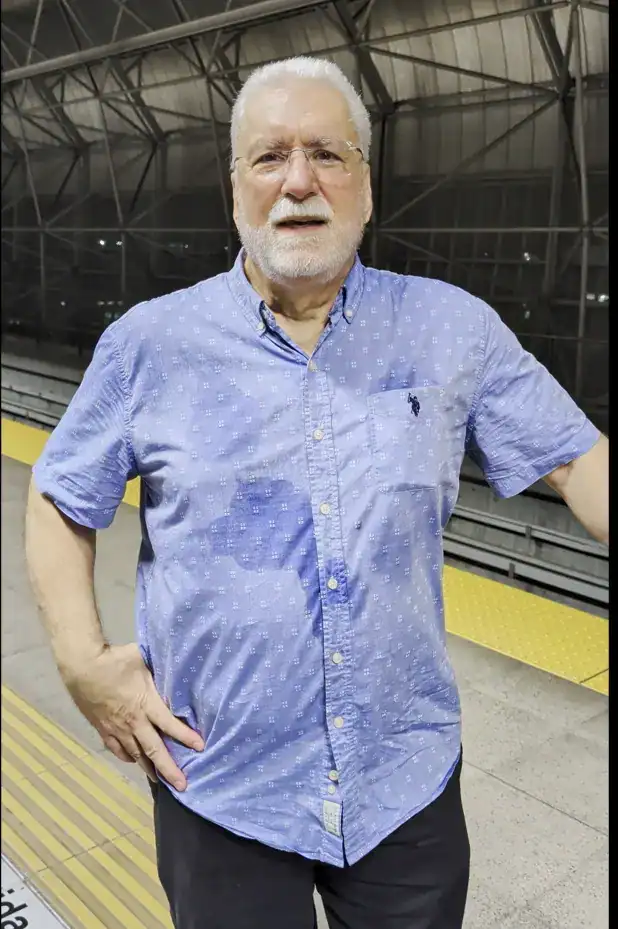
This is Brian at the Metro station. This is what the guides mean when they say “the walk is uncomfortable.” Exhibit A.
The hotel — a very welcome 67 degrees
We stayed at the Marriott Executive Apartments Finisterre in El Cangrejo, and we loved it. We had a studio with a small fully equipped kitchen — gas stove, pots and pans, plates, glasses, all of it. We only used the refrigerator, but it was nice to know the option was there.
We arrived around 8pm. The room was set to 19.5°C — 67.2°F. We have no idea if that’s the default or if a previous guest just runs cold, but we left it exactly where it was and it felt like stepping into a different dimension after the airport adventure. Highly recommended.
First meal: street tacos and a walk to the gay bar
Once we’d cooled down and changed, we walked down the hill to Los Tacos de Villa. Three street tacos for $9.50 — small, but genuinely flavorful. We watched the table next to us get a massive plate of loaded nachos and immediately made a mental note for next time. The walk back up the hill was already starting to feel less catastrophic than the walk from the Metro station had been. We were acclimating.
Los Tacos de Villa — first meal receipt
The gay bar — El Apartamento
El Apartamento (y El Sótano)
Gay-friendly bar · Bella Vista
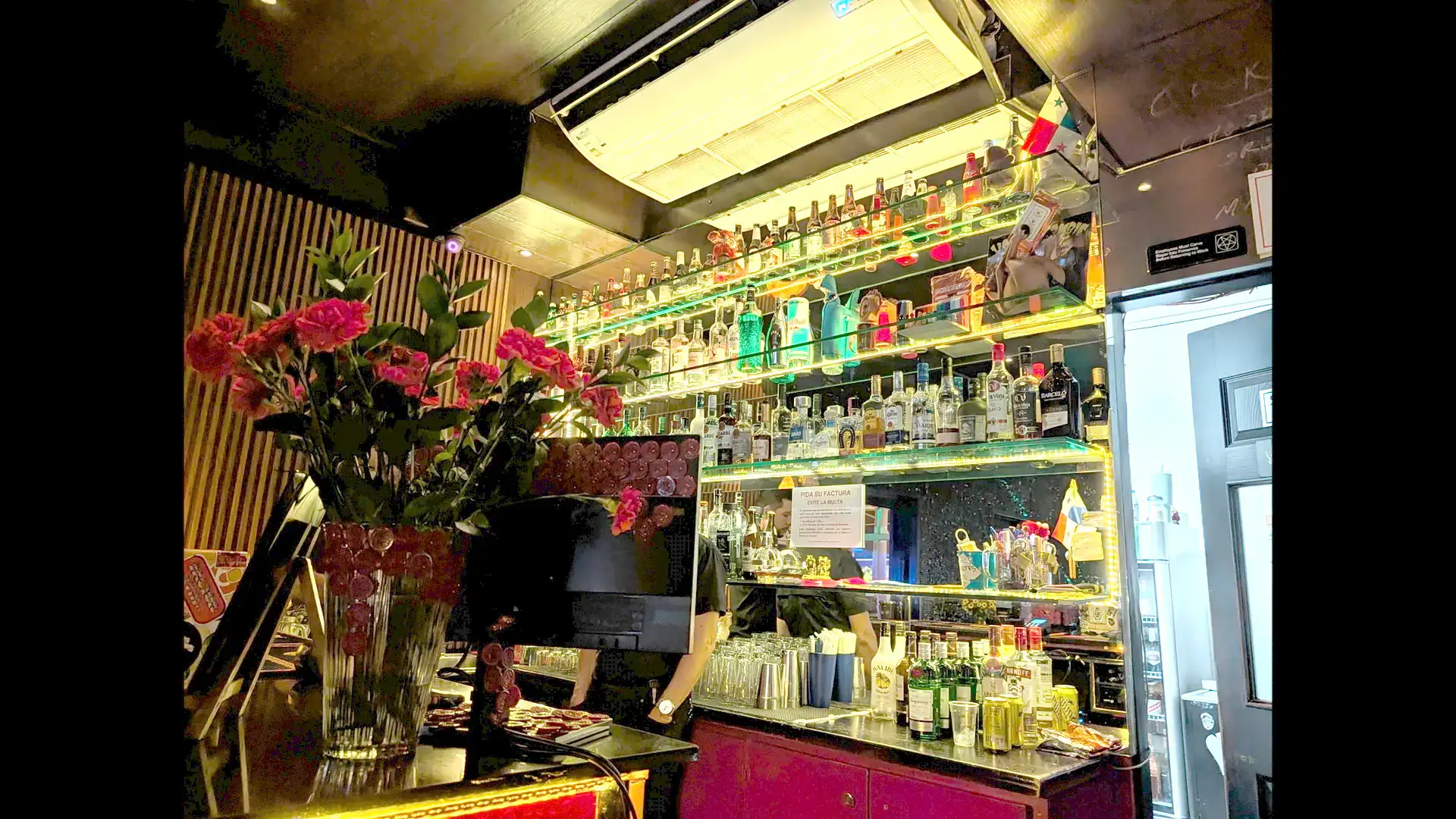
After dinner we made our way to El Apartamento and El Sótano — the two connected gay-friendly venues in Bella Vista that show up on every list of Panama City’s gay nightlife. El Sótano, the lower-floor bar, was closed for renovations on the night we visited. El Apartamento upstairs was open.
The bar was clean and the staff was friendly. Walking in, there’s a main room with the bar itself and a few tables and chairs along the walls — cool, comfortable, well air-conditioned. Off the bar, a door leads to a larger seating area and the DJ booth, with doors opening onto the patio where several people were sitting outside. We looked at those people and silently agreed we were not yet at that level of Panama heat adaptation. We stayed inside.
We ordered Jim Beam and Sprite. Each drink was $7.00 — poured from a jigger, on the generous side of 1.5 ounces. The DJ that night was playing grunge, which is not exactly our scene, so after one drink we called it and headed back to the hotel. One drink, a good look around, friendly staff. A solid first visit — we’ll be back when the music suits us better.
El Apartamento — what we paid
Back at the hotel — and a surprise about the TV
One thing we hadn’t expected: back at the hotel, over two-thirds of the TV channels offered an English SAP option. We selected English and watched U.S. television like we’d never left. Not exactly the full cultural immersion experience, but after the day we’d had, a familiar voice on the television felt exactly right.
Day one done. Passports stamped. Bags delivered (eventually). Metro lesson learned. One gay bar checked off the list. Tacos consumed.
Tomorrow we start actually exploring the city. We’ll be covering neighborhoods, doing some grocery store pricing at El Rey, and continuing to acclimate to the heat — ideally without dragging any luggage anywhere.
Sources & Verification
- Firsthand: Arrival day, April 2026 — Copa flight from Tampa, Tocumen terminal walk, immigration and customs, the airport-to-city Metro ride with luggage, and every price listed (Metro card $2.00, fares, Los Tacos de Villa $9.50, El Apartamento $7.00 cocktails).
- Not yet verified: The terminal-to-Metro covered walkway was unfinished and El Sótano was closed for renovations as of April 2026 — both may have changed since; we’ll re-check on our next visit or via current reports before the next review.
Facts and prices in this article last verified: July 2026.
Brian & Kent
We’re a gay couple doing the research so you don’t have to start from scratch. This site is what we wish had existed when we began — we write everything ourselves, we tell you when something didn’t work, and we show you the receipts. Questions? he***@*************ma.com