Our Story & April 2026 Trip – Part 6 of 16
Day Three — Grocery Prices, Two Neighborhoods, and a $12 Drink We Won’t Be Ordering Again
We started the morning together at Riba Smith documenting real grocery prices. After returning to the hotel, Kent headed out solo to walk San Francisco and hit two more stores — while Brian kept the room cold. We reunited for dinner, a waterfront detour, and a bar that charged us $12 for a jigger of ginger ale and Jack Daniels.
 Brian & Kent · GayExpatsPanama.com · April 2026 Research Trip
We woke up cold again — the A/C had done its job overnight with maximum commitment. I nudged it up another half degree, we got dressed, and went to find breakfast. Wendy’s was open but the heat inside was already too much, so we walked a few doors down to McDonald’s. Not a culinary revelation, but air-conditioned and functional. Then Tim Hortons for two iced French Vanilla coffees each — at this point fully cemented as our morning ritual and not up for debate.
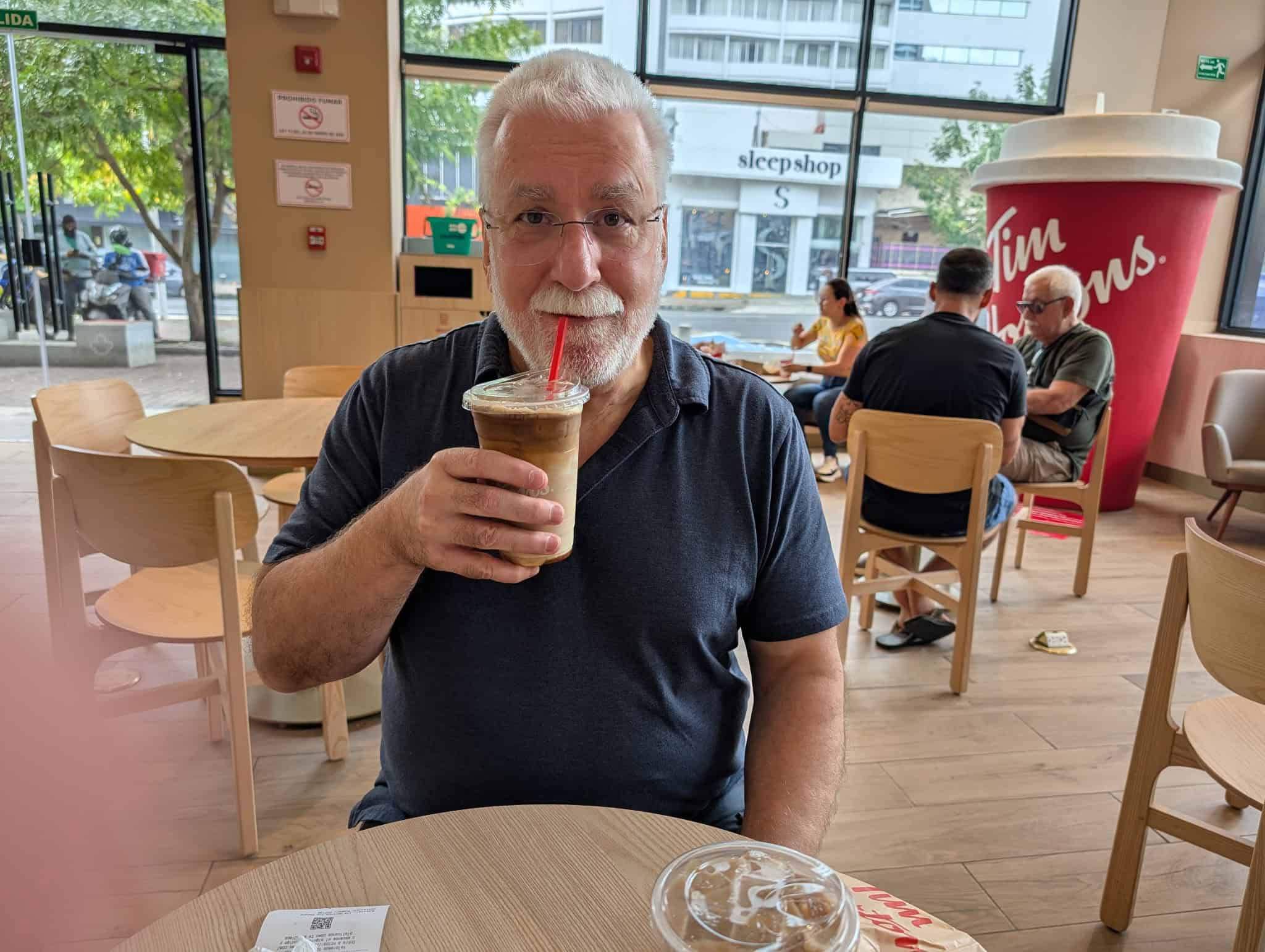
Brian at Tim Hortons. Two iced French Vanillas. Every morning. No apologies.
After Tim Hortons, the two of us walked over to Riba Smith together — our first proper grocery store reconnaissance of the trip. After working through the store and documenting prices, we headed back to the hotel to cool down. Then in the afternoon we split up: Brian stayed back at the hotel to work on the computer while Kent headed out to explore the San Francisco neighborhood and hit two more grocery stores along the way. Here’s how both parts of the day went.
Our Story & Panama Journey Series
Articles sharing our story, our earlier life abroad, and the day-by-day experience that helped us decide whether Panama was right for our future.
- Almost 40 Years, 12 Homes — and We’re Doing It Again
- We Lost Everything in Spain. We’re Still Glad We Went.
- Going to Panama — and You’re Coming With Us
- Day One: Wheelchairs, Wind, and a Metro Lesson
- Day Two: The Shorts Crisis and the World’s Biggest Mall
- Day Three: Grocery Prices, Neighborhoods, and a $12 Drink You are here
- Day Four: The Attorney, the Doctor, and the Pensionado Visa
- Day Five: The Fish Market, Multiplaza, and Maluka
- Day Six: Neighborhoods, Hardware Stores, and a Fixer-Upper
- Day Seven: Breakfast, Laundry, and Furniture Shopping
- Day Eight: The Canal Museum, La Cresta, and Casco Viejo
- Day Nine: Hato Pintado, Carrasquilla, and Hardware Stores
- Day Ten: Miraflores Locks, the Ciclovía, and Hamman
- Day Eleven: Getting the Pensionado Residency Card
- Day Twelve: What Panama Actually Taught Us
- Day Thirteen: Going Home — Is Panama Still the Answer?
The grocery stores — real prices, three stores compared
One of the most useful things we wanted to come home with from this trip was actual, photographed grocery prices from Panama City’s main supermarket chains. Not estimates from a guide written two years ago — real shelf prices from the week we were there. Riba Smith was our first stop, the two of us walking the aisles together. Super 99 and PriceSmart came later in the day when Kent was on his solo afternoon walk. Here’s what we found across all three.
Pay close attention to units at Panamanian grocery stores
Products are listed sometimes in pounds and sometimes in kilograms — often inconsistently, even within the same store. Riba Smith typically lists both to help shoppers, but elsewhere you’ll need to do the conversion yourself. For reference: 1 kilogram = 2.204 pounds. We’ve converted everything below to price per pound to make comparison easier.
Riba Smith — the premium option
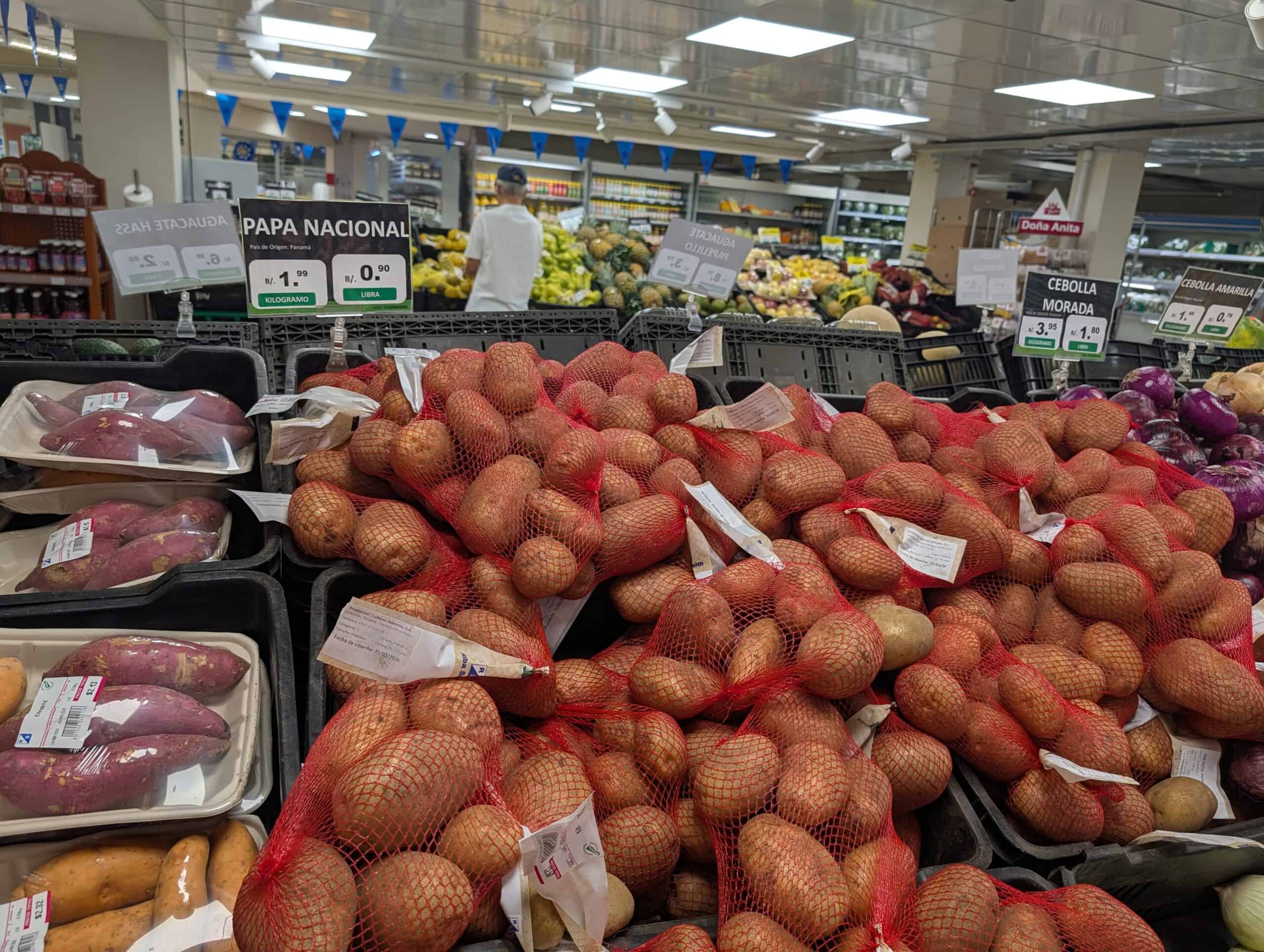
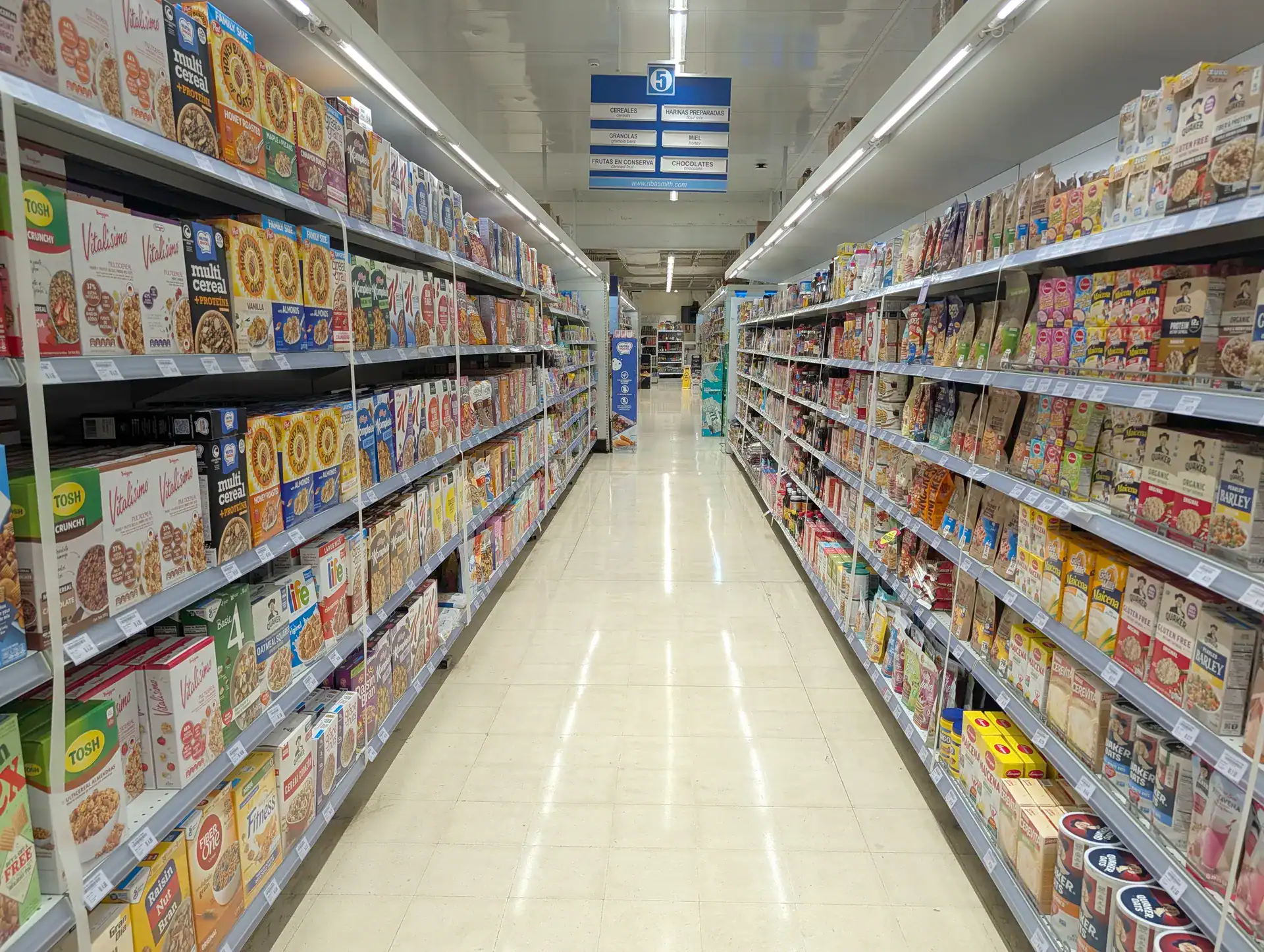
Riba Smith — think Publix or Whole Foods rather than Walmart. Large, well-stocked, very good produce section.
Riba Smith is Panama City’s upscale grocery chain — the equivalent of a Publix or a nicer regional grocer in the U.S. Large stores, great selection, well-organized, and genuinely good produce. And this is where Panama delivers one of its clearest advantages over American shopping: the produce actually tastes like produce. It’s not harvested early to survive a cross-country shipment. It ripens properly. The pineapple in particular was remarkable — sweet and soft all the way through in a way that supermarket pineapple in the U.S. essentially never is. We ate a lot of pineapple and watermelon over the course of the trip.
The bananas were another pleasant surprise: sold ripe but lasting longer than American supermarket bananas, which come home green and turn black before they make it to fully ripe. Local supply chains make a genuine difference.
| Item | Riba Smith | Super 99 | PriceSmart |
|---|---|---|---|
| Chicken thighs | $1.63/lb | $3.65/lb | $2.09/lb |
| Eggs (per dozen) | $2.53 | $2.53 | $2.04 (from 5-doz pack) |
| Ground beef | — | — | $3.45/lb |
| Bacon | — | — | $4.76/lb |
| Spaghetti noodles | $1.99/lb | $1.27/lb | — |
| Jasmine rice (bulk) | — | — | $3.74/lb (9kg bag) |
| Pineapple | $0.43/lb | — | $1.04/lb |
| Bananas | $0.44/lb | — | $0.44/lb |
| Apples | — | — | $0.86/lb |
| Oranges | — | — | $1.24/lb |
| Potatoes | $0.90/lb | — | — |
| Carrots | — | — | $0.79/lb |
| Tomatoes | — | — | $1.34/lb |
| Milk (per liter) | $1.90 | — | $1.72 |
| Flour (5 lb bag) | $3.69 | — | $3.29 |
| Coke Zero (2.25L) | $2.83 | — | $2.37 |
Highlighted values indicate the best price found across all three stores for that item. All prices converted to per-pound where applicable. Shelf prices photographed April 2026.
Super 99 — the budget chain that surprised us
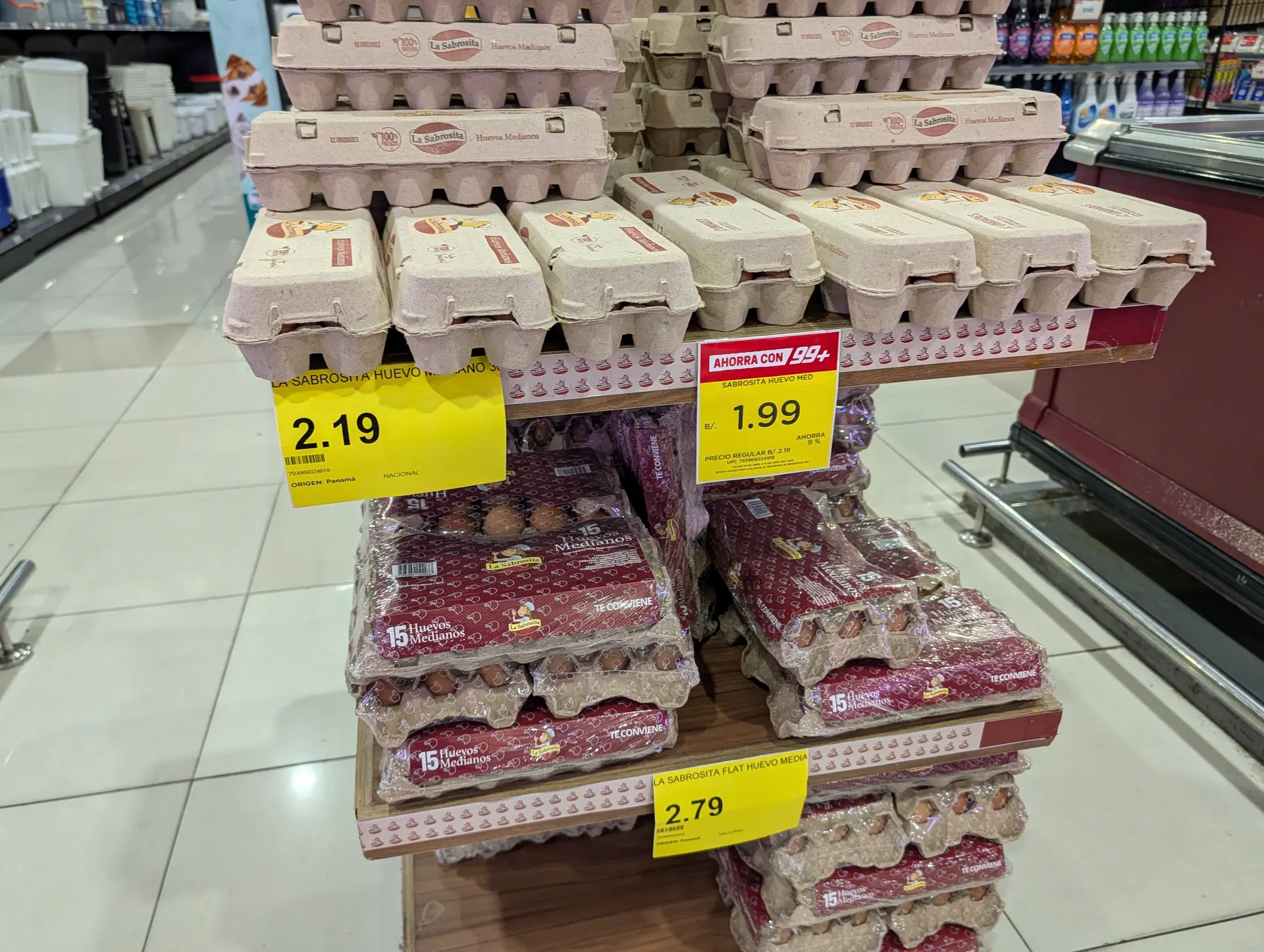
Egg prices at Super 99 — $2.53/dozen, same as Riba Smith. Not everything is cheaper at the budget chain.
Super 99 is positioned as the lower-cost end of Panama City’s supermarket options, and on some items it absolutely delivers — spaghetti at $1.27/lb versus Riba Smith’s $1.99/lb, for instance. But the “budget” label doesn’t mean what you might expect walking in. Kent stopped in during his afternoon walk through San Francisco, and the store was clean, well-designed, well-stocked, and nicely air-conditioned — a genuinely pleasant shopping experience, not a warehouse-style discount situation. And on some items, like eggs, the price was identical to Riba Smith. Shopping around across stores, as with anywhere, is worth doing.
PriceSmart — Panama’s Costco
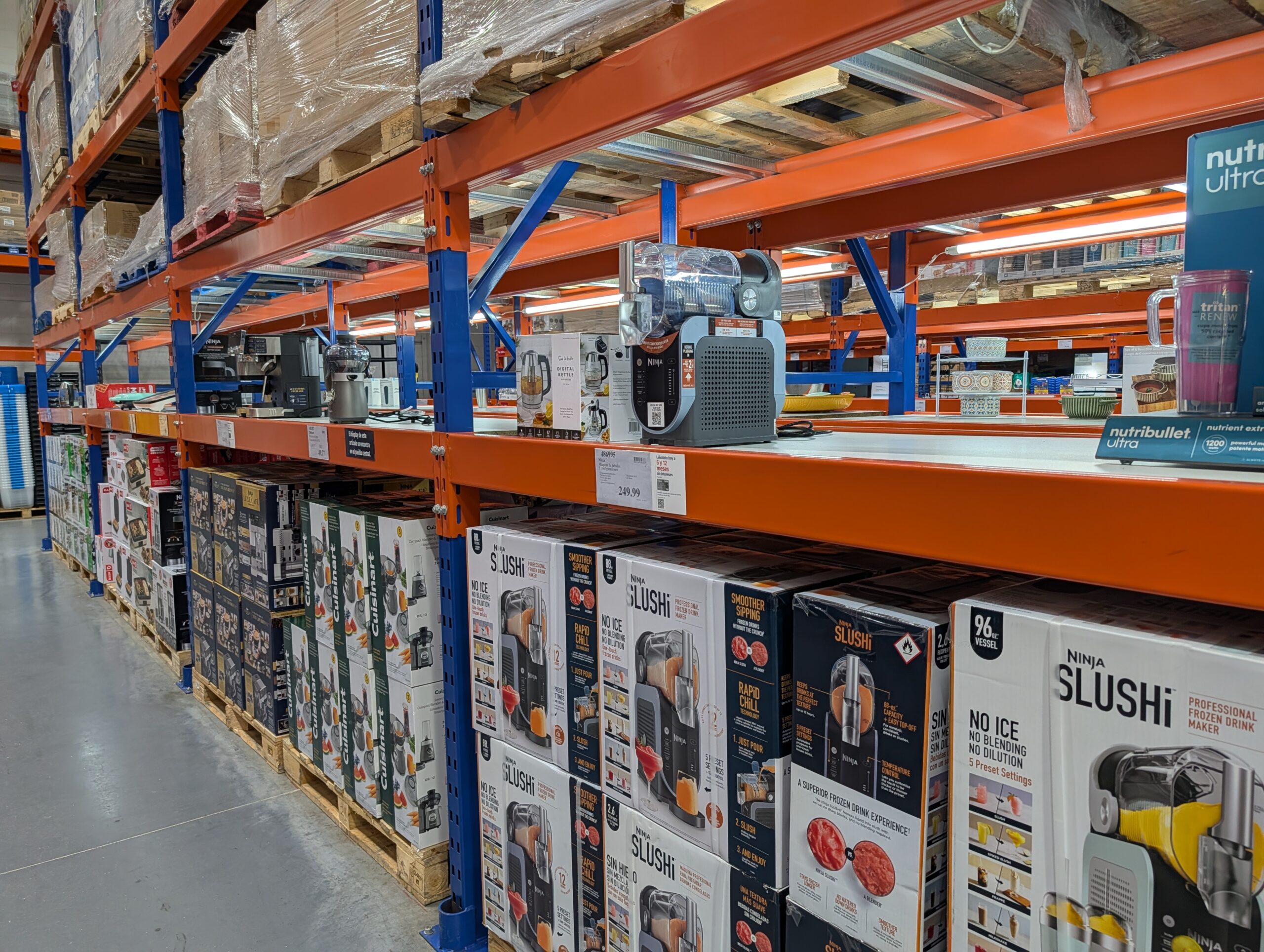
PriceSmart. If you’ve been to Costco, you already know this store — orange shelving racks, warehouse layout, bulk everything. The only thing missing is the $1.50 hot dog.
Kent’s final stop of the afternoon was PriceSmart. PriceSmart is, in every meaningful way, Costco — same orange shelving racks, same warehouse layout, clothing and outdoor furniture in the middle aisles, dry goods and household staples along the sides. There’s a reason for this: both companies share the same founders. Sol and Robert Price created The Price Club, which later merged with Costco. PriceSmart became a separate company in 1997, but the relationship between the two companies persists — you’ll find Kirkland-branded products on PriceSmart shelves. What you won’t find: a Costco membership card that works here. They’re separate companies. Don’t make that trip for nothing.
The one PriceSmart omission worth mourning: no $1.50 hot dog at the exit. They do sell local food — empanadas and similar — but at $5 to $6 each. It’s not the same.
For bulk staples and pantry items, PriceSmart wins on several items. The 5-dozen egg pack works out to about $2.04/dozen. Coke Zero is meaningfully cheaper. Milk and flour both come in below Riba Smith prices. If you’re setting up an apartment in Panama City and planning to cook at home regularly, a PriceSmart membership is worth considering.
Our overall read on the grocery stores
For everyday shopping, most expats we’ve spoken with use a combination: Super 99 or a local market for staples and produce where local sourcing means fresher and cheaper, Riba Smith when you want something specific or a better selection, and PriceSmart for bulk items where the savings add up. Riba Smith’s produce section is exceptional — the quality difference over U.S. supermarket produce is real and noticeable.
Meanwhile — Kent walks San Francisco
Kent’s dispatch — the San Francisco neighborhood
After Brian and I did Riba Smith together and returned to the hotel, Brian set up at the computer and I headed back out into the afternoon heat. My goal for the rest of the day: walk the San Francisco neighborhood properly — something we hadn’t done yet — and hit two more grocery stores along the way for price comparison. I also wanted to find what we’d been unable to find in El Cangrejo: actual single-family houses.
Before I left the hotel, I stopped at the front desk and asked about taxis versus Uber. The receptionist’s advice was unambiguous: use Uber. Historic problems with taxis overcharging foreigners mean Uber is simply the more reliable and transparent option. Good to know, and consistent with what we’d read before arriving. When I explained I wanted to be dropped at the far side of San Francisco so I could walk back — to see the neighborhood properly rather than from a car window — he looked at me like I had said something slightly deranged. I explained that I wanted to see houses, not just high-rise condos. He understood and pointed me toward the Uber app.
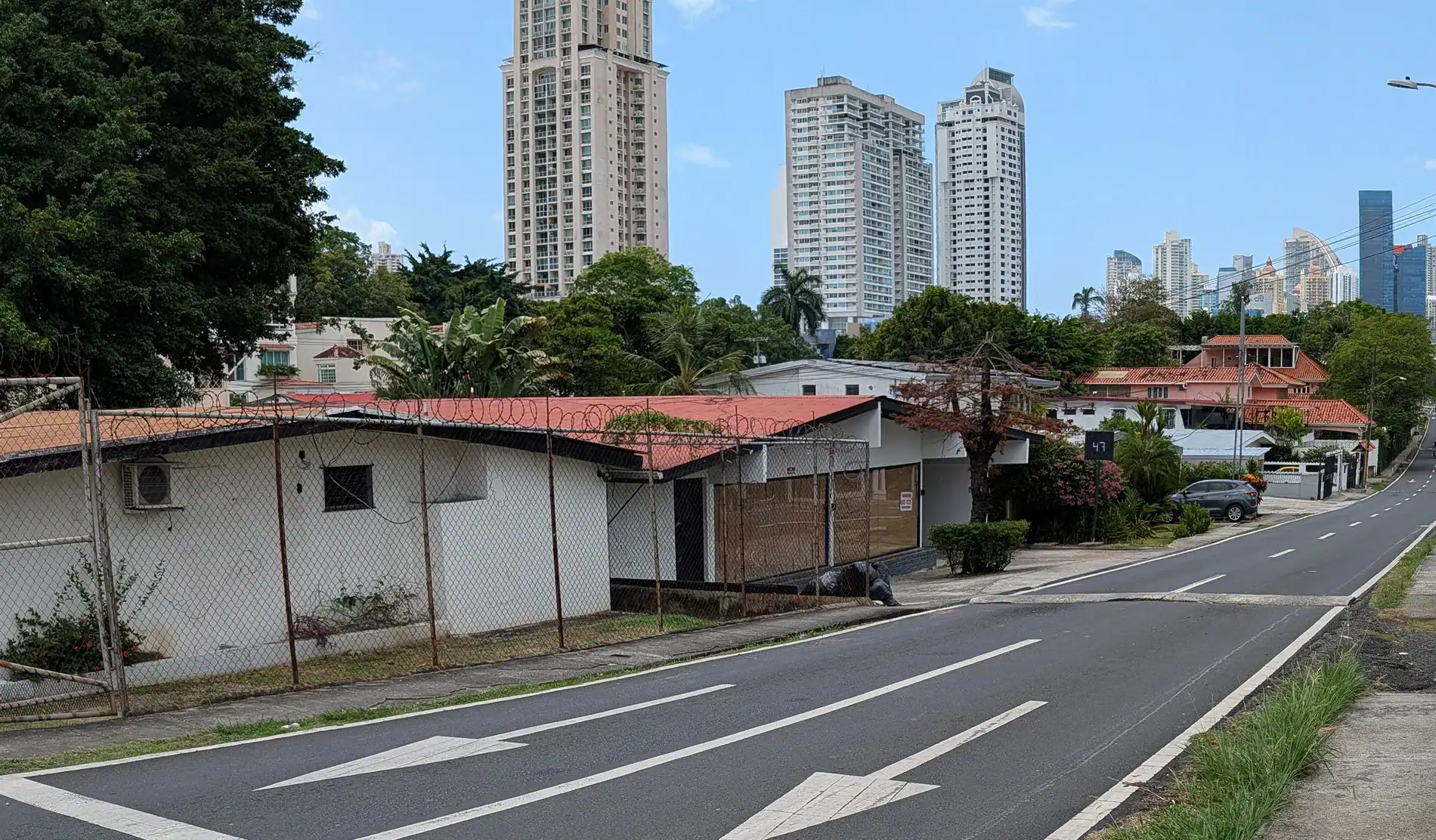
San Francisco from street level — the northern residential streets versus the southern high-rise and commercial corridor below Calle 50 are genuinely different places.
North vs. south of Calle 50 — two different neighborhoods
San Francisco is effectively two different places depending on which side of Calle 50 you’re on. The southern half — closer to the waterfront — is high-rises, office towers, and the business corridor. The northern half is where I spent my time: smaller two and three-story apartment buildings, and — critically for us — a real number of single-family homes. Not many in El Cangrejo. Plenty up here.
The terrain is another meaningful difference. San Francisco’s northern residential streets roll gently rather than climbing steeply — a noticeably more walkable environment than parts of El Cangrejo, and worth flagging for anyone with mobility considerations.
The houses themselves were a mix of styles, with a strong thread of mid-century modern running through them — one-story flat-roofed structures that have aged well in Panama’s climate. Several were clearly well-maintained. A couple were for sale in the kind of condition that makes a person who has done renovation work in multiple previous homes start doing calculations.
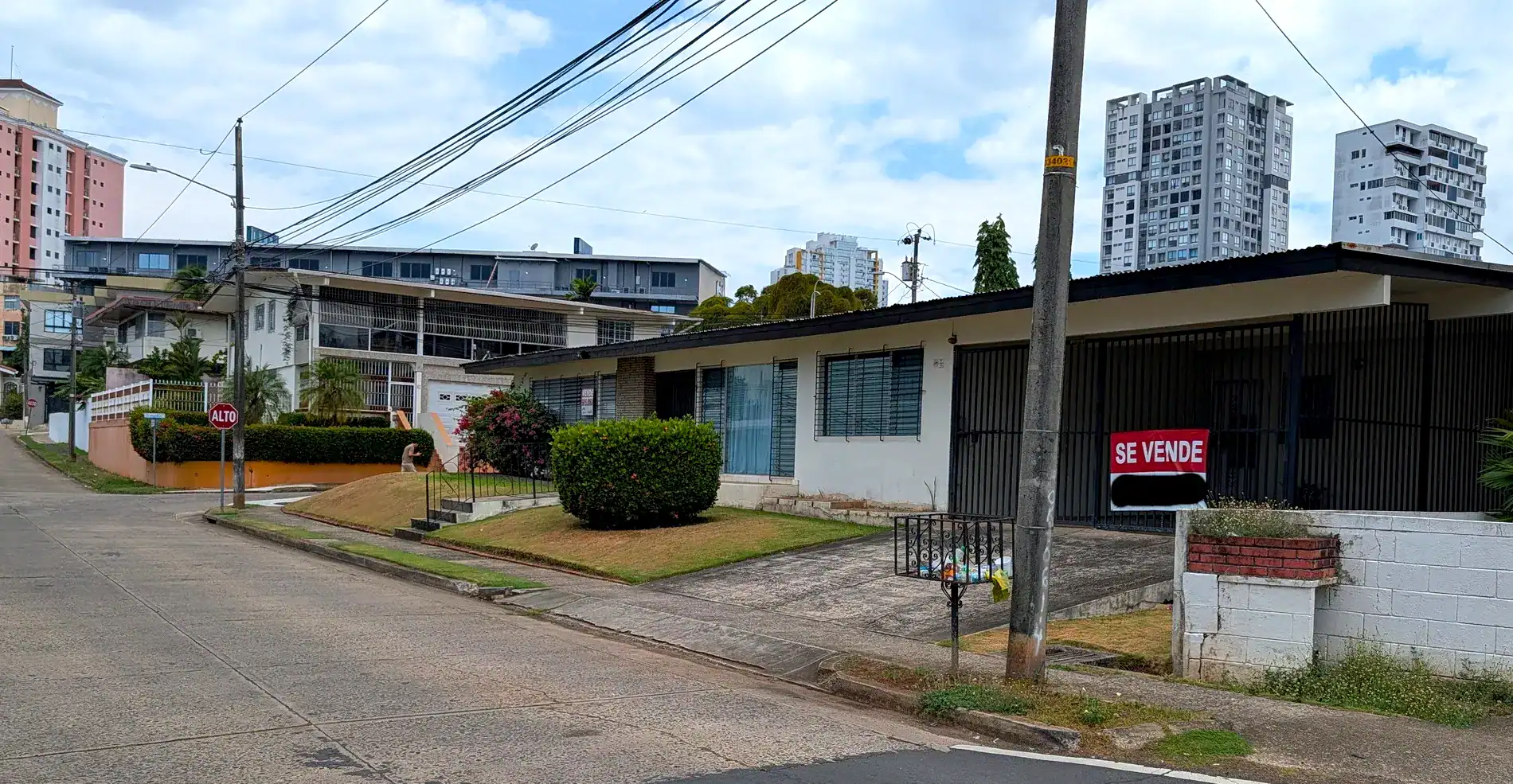
One of the homes we spotted for sale. Needs work — which is exactly what interests us. One caveat worth naming: construction in Panama uses concrete block for interior walls rather than 2×4 framing and drywall. If you’re planning to renovate, the process is different from what you’re used to in the U.S.
The neighborhood has energy. Several homes were being actively gutted and remodeled — a sign of an area where people want to be, not one that’s declining. The prices reflect this: San Francisco runs higher than El Cangrejo, and the desirability is evident on the ground.
One practical note from the walk: I stopped into a Super 99 on the way — the store was genuinely nice, well-organized, and a very welcome blast of cold air after walking in full April sun. At 2pm the heat here approaches what Phoenix feels like in midsummer — there were active weather advisories that day about the intensity of the sun given our proximity to the equinox. The sun is directly overhead, and in direct exposure at that hour it is punishing. Factor this into any plans involving extended outdoor time in April.
I walked back through El Cangrejo along a block below Via España and confirmed what we’d suspected from our earlier wandering: there is essentially one single-family home in El Cangrejo proper. The neighborhood is overwhelmingly condos and apartments. For us, that settles it. San Francisco — and the neighborhoods to its north and west, including Bethania, Hato Pintado, and Carrasquilla — is where we need to spend more time on the next trip.
Dinner, a detour, and the most expensive bad drink of the trip
After cooling off and regrouping, we decided to walk toward the waterfront hoping to find a good dinner spot. We crossed one of the pedestrian bridges over the traffic — and somewhere on the second bridge I hit my wall. Heat, distance, and a full day of walking caught up with me and I was done. We turned around.
Since we’d wandered into the financial district, the restaurant options were thin. We ended up at TGI Fridays — which, unlike most of its U.S. counterparts, is still very much alive in Panama City. Clean, lively, fully operational. Brian had a Chipotle Yucatán chicken salad, Kent had a whiskey glazed bacon burger. Two passion fruit margaritas. The food was good. Total bill: $34.00.
TGI Fridays — what we paid
Walking back, we noticed a bar called Alejandro’s promoting itself as gay-friendly and women-owned. We went in.
Not everything is cheaper in Panama. Alejandro’s made sure we understood this.
The bar was small and dark. We ordered Jack Daniels and Sprite — they had neither Sprite nor 7-Up, so we settled for ginger ale. The pour was measured by jigger, one and a half ounces, which is fair. What was less fair: they also measured the ginger ale in the jigger. The drinks were $12.00 each.
To put that in context: back in St. Petersburg we regularly get two-for-one cocktails for $6 to $8. At Alejandro’s we paid $12 for a carefully measured jigger of ginger ale mixed with Jack Daniels in a dark small room. We had one drink and left. It is not a place we’d recommend, and it is a good reminder that Panama’s general affordability comes with specific exceptions — and bar pricing in some spots is one of them.
Alejandro’s — what we paid and what we thought
The antidote: we stopped at Riba Smith on the way home and bought a bottle of Evan Williams bourbon, a bottle of 7-Up, and a large bag of Lay’s chips for $30.00 total. Back at the hotel we made our own drinks, watched television, and felt considerably better about our financial decisions for the evening. Kent had logged over ten miles on foot by this point. He was asleep almost immediately.
The smarter move — Riba Smith run
Day three done. We had real grocery price data from three stores, a much clearer read on San Francisco as a neighborhood, confirmation that El Cangrejo is essentially condo-only for our purposes, and a firm new policy about checking drink prices before ordering.
Day four coming up.
Sources & Verification
- Firsthand: Day three of our April 2026 trip — all grocery prices photographed on the shelf at Riba Smith, Super 99, and PriceSmart that week; Kent’s ten-plus-mile walk through San Francisco and El Cangrejo; and every bill paid (TGI Fridays $34.00, Alejandro’s $12.00 drinks, Riba Smith bourbon run $30.00).
- Reported: The PriceSmart–Costco corporate history — Sol and Robert Price, The Price Club’s merger with Costco, and PriceSmart’s 1997 separation — from published company histories, not independently verified by us.
Facts and prices in this article last verified: July 2026.
Brian & Kent
We’re documenting the real process of researching Panama — real prices, real neighborhoods, real opinions. Questions? he***@*************ma.com