Our Story & April 2026 Trip – Part 5 of 16
Day Two in Panama — The Shorts Crisis, the World’s Biggest Mall, and Learning How to Cool Down
We explored El Cangrejo on foot, overheated, made an emergency wardrobe decision, took the metro to the largest mall in Latin America, and discovered that Panama has a better answer to food trucks than food trucks do.
 Brian & Kent · GayExpatsPanama.com · April 2026 Research Trip
We woke up on day two pressed against each other and genuinely cold. In Panama. Cold. The hotel room had been set to 19.5°C when we arrived the night before and we’d left it exactly there, and by morning it had done its job so thoroughly that we needed to actually raise the temperature one degree before getting out of bed. This is not a complaint. After the airport metro adventure of day one, a room that felt like a walk-in refrigerator was exactly what we needed.
Breakfast, coffee, and the beginning of a routine
We went to Wendy’s for breakfast. Yes, we know — not exactly immersing ourselves in local cuisine on day two. But here’s the practical reality we discovered quickly: most of the local breakfast spots in our area of El Cangrejo are not air-conditioned. When you’re still acclimating to heat and humidity you haven’t felt since the last time you were in Panama, the decision between “authentic” and “air-conditioned” is not a difficult one. Wendy’s it was. No regrets.
After breakfast we found what quickly became our daily ritual: two iced French Vanilla coffees each at Tim Hortons. There’s something slightly surreal about sitting in a Tim Hortons in Panama City planning your day, but we’re not apologizing for it. It was cool, comfortable, and gave us thirty minutes to talk through what we wanted to do. The coffee was good. We went back every single day.
A note on bakeries and cafés
One thing Panama shares with Spain — there are bakeries and pastry shops everywhere. Freshly baked goods are available all over the city, and café culture is genuinely alive here. You will never be far from a good coffee or something just out of the oven. This is not a small thing when you’re spending a lot of time on foot.
Exploring El Cangrejo — not what the guides prepared us for
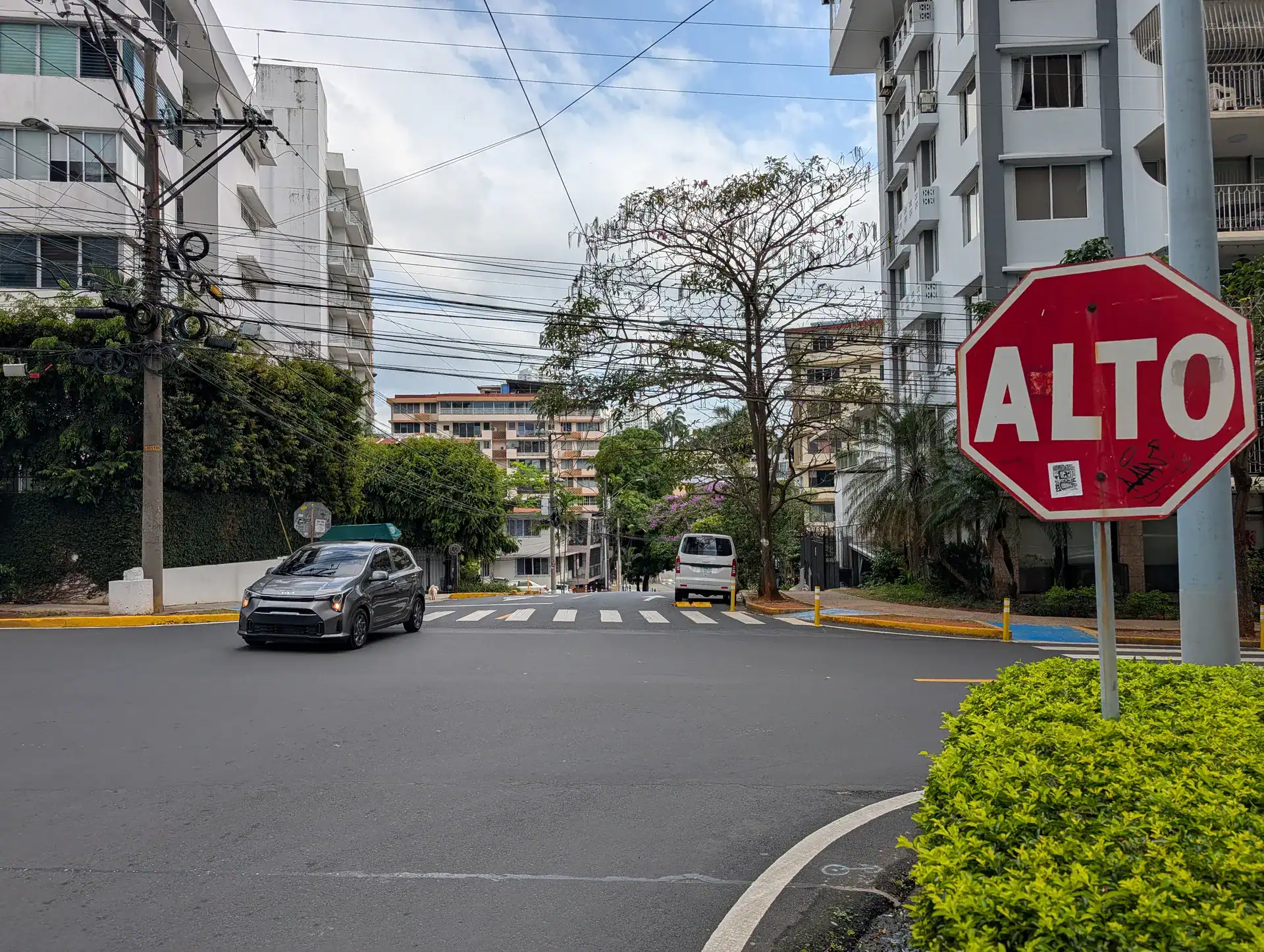
El Cangrejo — hillier than we expected, more mixed than the guides suggested, and very much a neighborhood in the middle of figuring out what it wants to be.
El Cangrejo is the neighborhood most recommended to expats researching Panama City, and we wanted to see it properly on foot rather than through an Uber window. First surprise: it’s hilly. Genuinely hilly, with some streets climbing at grades we hadn’t anticipated. The guides don’t mention this much. If you have mobility considerations, factor it in.
Second observation: the neighborhood is in transition in a way that “established expat area” doesn’t fully convey. Some buildings are recently constructed and well-maintained. Others are clearly from El Cangrejo’s heyday — which appears to have been at least forty years ago — and show the kind of deferred maintenance that raises questions about what’s happening inside the walls, not just on the outside. The area is vibrant, safe, and full of bars, restaurants, and shops. It’s also noticeably mixed in quality from block to block in a way you need to see in person rather than assess from photos.
For us specifically — we’re looking for a free-standing house rather than a condo or apartment. El Cangrejo is almost entirely condos and apartment buildings. That observation alone tells you something about whether it’s the right fit for your particular vision of Panama life. If condo living works for you, there’s real value here. If you want a house with a yard, this isn’t your neighborhood.
If you’re considering a unit in El Cangrejo
Some of the older condo buildings show significant deferred maintenance — things that aren’t always obvious from a listing photo. Walk the building, look at the common areas, and ask specific questions about what maintenance has been done recently and what’s planned. Also worth noting: El Cangrejo has a lot of bars. That’s part of its energy and appeal — but if you’re considering a specific unit, visit on a Friday or Saturday night before you commit. Noise levels vary considerably by location.
The shorts situation — an honest conversation about the heat
Before leaving for Panama, we did what any reasonably thorough researchers would do: we read everything we could find about what to wear. And almost everything said the same thing — men wear long pants in Panama. It’s the local expectation. Pack accordingly.
So we packed mostly long pants and only two pairs of shorts between us. This was a mistake.
The reality on the ground: yes, long pants are more common — we’d estimate roughly 90% of men we saw were wearing them. But a meaningful 10% were in shorts, especially given the heat. More importantly, the advice to wear long pants everywhere applies most strictly to government buildings and certain businesses. For walking around the city, exploring neighborhoods, shopping, eating — shorts are fine. Uncommon but fine. And for someone like me whose core body temperature rises faster than it should in heat and humidity, “uncommon but fine” was information I needed before I packed.
By mid-morning on day two, with the temperature climbing into the upper 80s and the humidity doing what Panama humidity does, I was overheating again. We made a decision: we needed to find shorts, and we needed to find them today.
Managing the heat — what actually works
Here’s what I learned over the course of the trip. When you feel yourself starting to overheat, you cannot simply push through it. You need to find somewhere cool, sit down, get a cold drink, and let your core temperature actually drop before going back out. Plan for thirty minutes to an hour. The good news: Panama — like Spain — has absolutely no issue with you sitting at a table for as long as you need. Nobody rushes you. Nobody gives you the look you’d get in an American restaurant when you’ve been nursing one drink for too long. Sitting and staying is normal, expected, and genuinely pleasant. Use it. It may also be the single most useful practical tip for anyone visiting Panama in the warmer months.
Taking the metro to Albrook Mall
With “find shorts” as our mission, we took the Metro from Carmen station to Albrook. The Metro itself was exactly as good as it was on day one — clean, efficient, on time, air-conditioned. We’re converts. For getting around the city without luggage, it’s excellent.
The Albrook station is not next to the mall
This one caught us off guard. The station is called Albrook — but getting from the station to the mall entrance involves: escalators up, crossing over a large highway, escalators down into the bus transit terminal, walking through the bus station, up a flight of stairs, crossing over another roadway, and then entering the mall on the second level. It’s not a short walk and it’s not all covered. Plan for it, especially if it’s hot.
Albrook Mall — the largest mall in Latin America
We filmed a walk-through of Albrook so you can see the scale and the crowds for yourself. This is what a busy Saturday looks like.
The size is genuinely impressive. Albrook Mall is the largest mall in Latin America and it earns the title. You’ll find most major U.S. brand names here, including some brands that have largely disappeared from American malls but apparently found a second life in Panama. Department stores with full clothing and housewares sections. Multiple electronics retailers selling computers, televisions, split A/C inverter units, washing machines, refrigerators, and stoves — useful context if you’re thinking about furnishing an apartment.
The food court is a full inventory of American fast food — virtually every chain you can think of, at prices nearly identical to what you’d pay in the U.S. We wanted something local, so we went to Don Pan — a Panamanian bakery chain — and split a large sandwich with two bottles of water for $6.00 total. That’s the move if you want a meal that’s both affordable and not a chain you could have eaten at home.
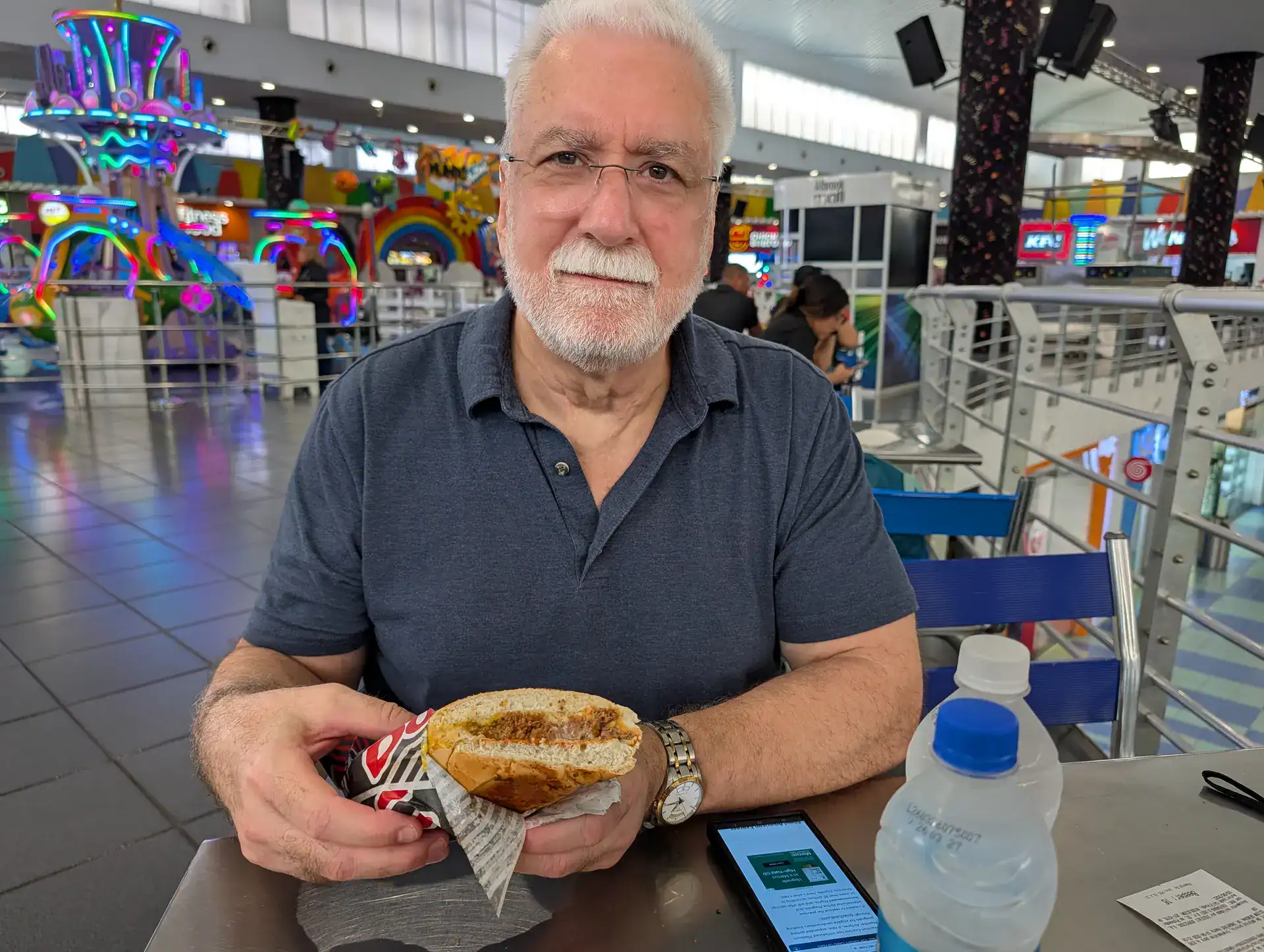
Brian at Don Pan. Large sandwich, two waters, $6.00. The right call.
One thing that struck us about the mall: it was packed. Not moderately busy — genuinely packed, in a way that American malls haven’t been since the 1980s. Part of this is almost certainly the air conditioning. In a city where the heat is a constant consideration, a massive, well-cooled shopping environment draws people in a way it simply doesn’t in a temperate climate. Whatever the reason, the energy was real. It felt like a place people actually wanted to be, not an aging retail space people visit out of habit.
Albrook Mall — what we spent
Bring quarters for the restrooms
The mall bathrooms (baños) require a quarter to get through the turnstile. This is not a suggestion. Bring quarters.
The shorts — found, but not ideal
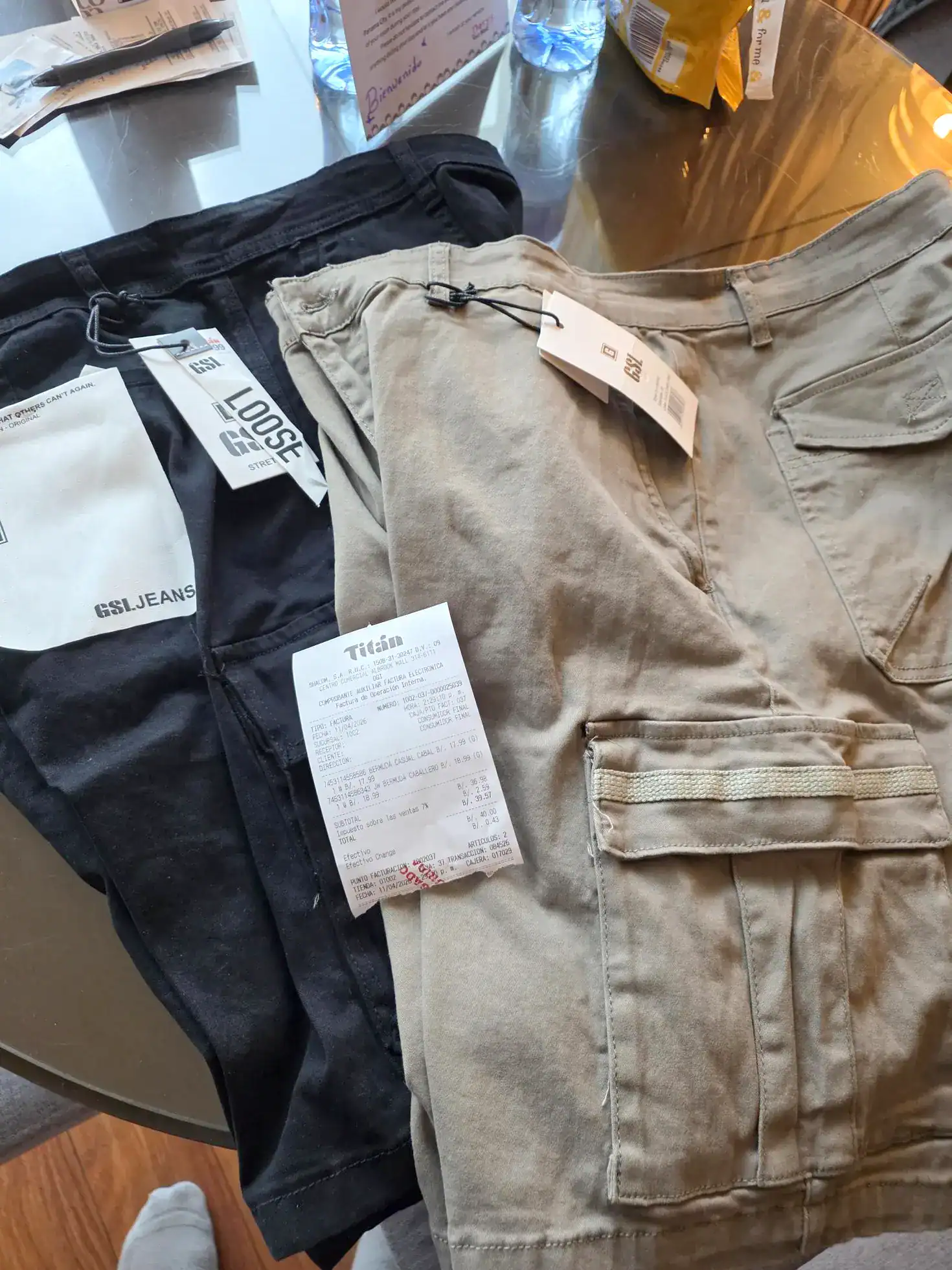
Mission accomplished. Not exactly what I’d have chosen given a wider selection — but breathable cotton, purchased in Panama, and dramatically better than overheating in long pants.
We found shorts, though the selection of cotton styles was limited. Most men in Panama wear long pants, which means the market for cotton shorts at Albrook is thin. I ended up with two pairs at $17.99 and $18.99 — not the style I’d have chosen with more options, but cotton, breathable, and mine. From that point forward, the rule was simple: shorts everywhere except government buildings. My core body temperature thanked me for the rest of the trip.
Dinner — Panama’s answer to food trucks
Panama City doesn’t really have food trucks the way American cities do. What it has instead is something we liked considerably better: throughout the city you’ll find clusters of four to eight independent food vendors operating out of spaces on a large lot — many of them built from converted shipping containers. Think of it as a permanent open-air food court, but entirely independent operators rather than chains, and with a rotating variety of local flavors.
The prices aren’t particularly cheap — most meals run $12 to $18 — but the experience of being able to try different things from different operators in one spot is genuinely appealing. We ate at PotatoUs: loaded fries, wings, and two bottles of water for $21.00 total.
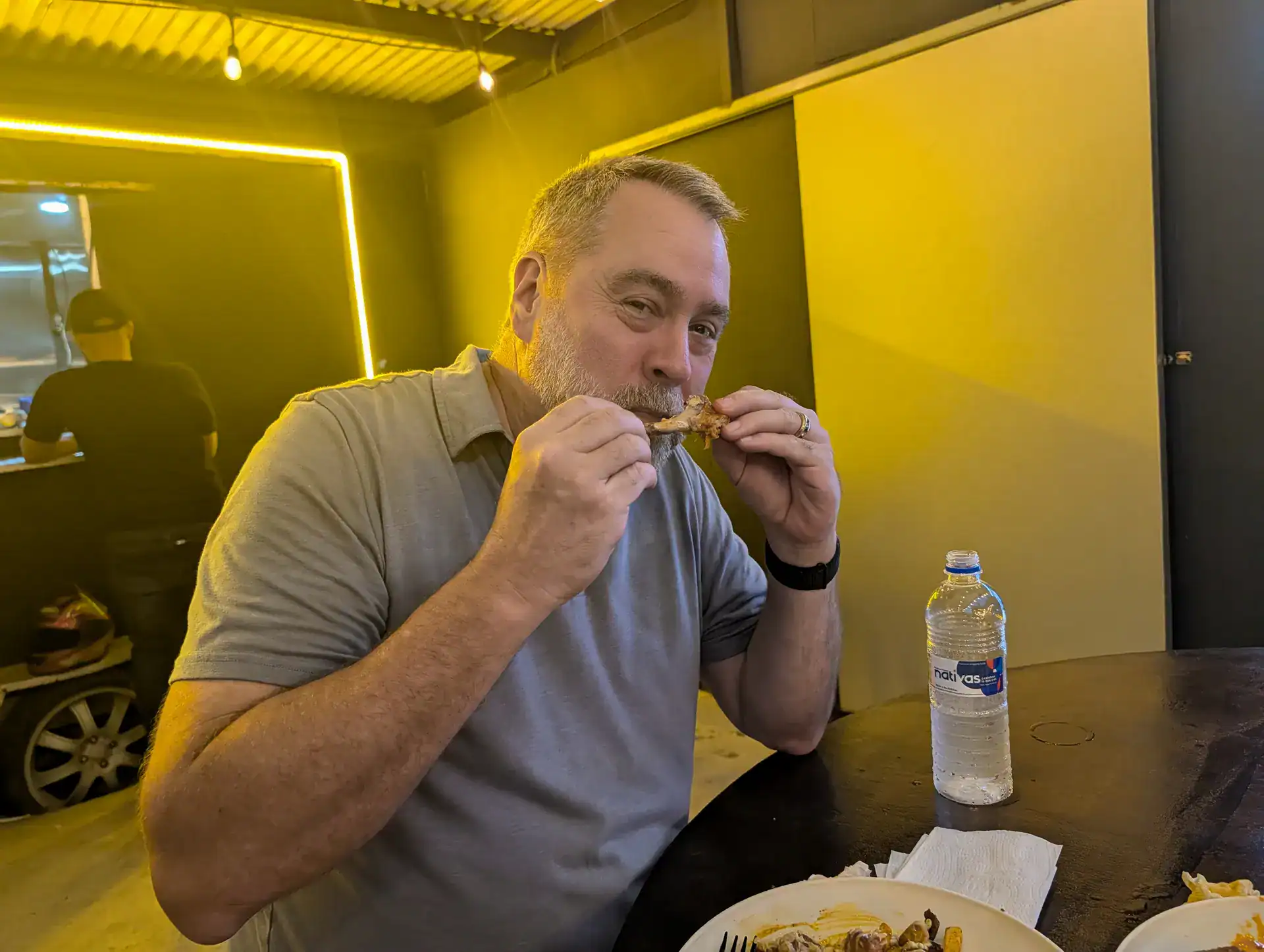
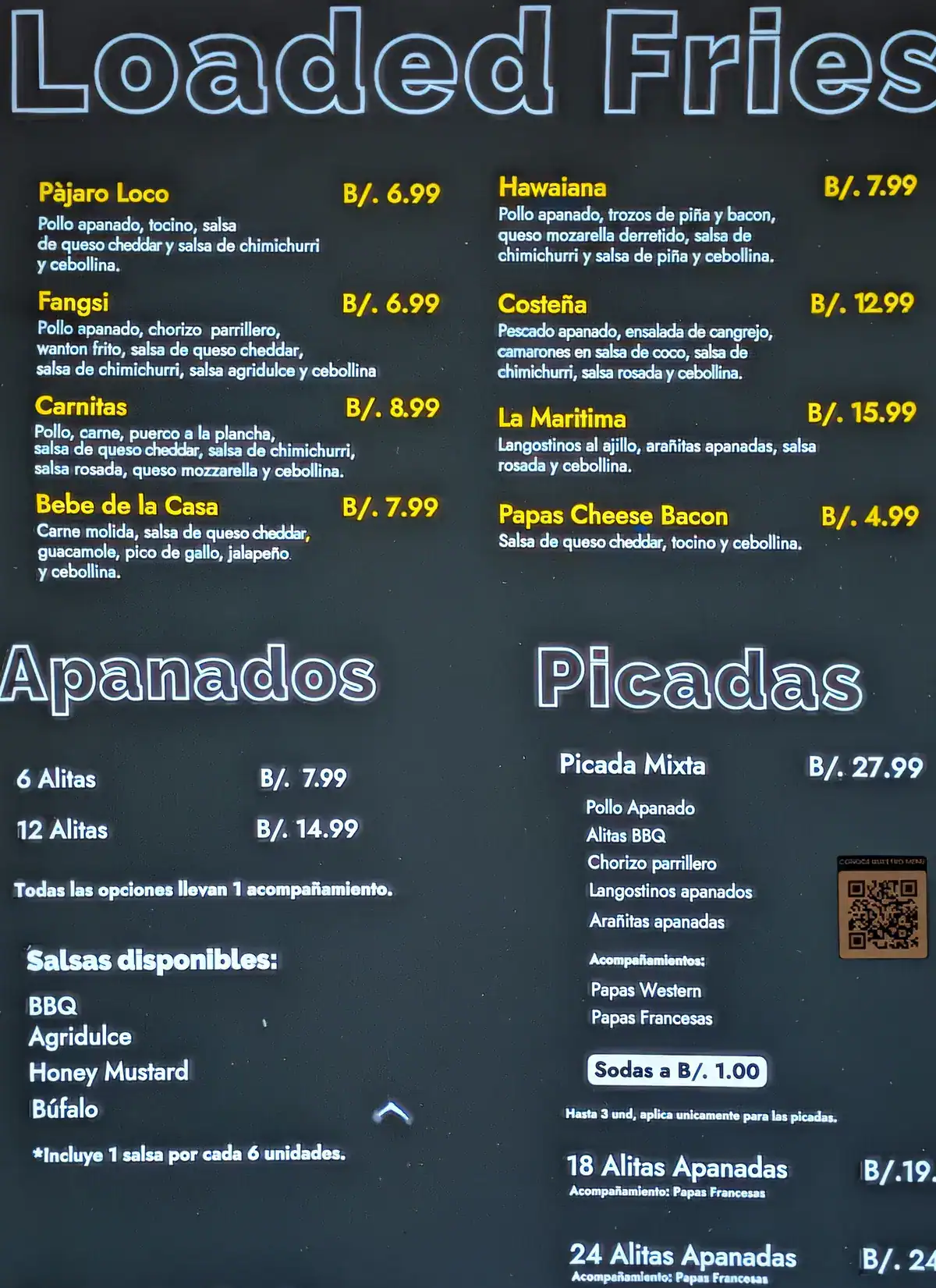
Kent working through the wings at PotatoUs, and the menu so you can see the pricing yourself.
PotatoUs — what we paid
After dinner we went back to the hotel, turned the room back down to somewhere between “arctic” and “reasonable,” and watched television until we fell asleep. Day two was longer than it sounds. We were wiped out — but the good kind of wiped out, the kind that comes from actually being somewhere and doing things rather than reading about it from a sofa in St. Pete.
Day three coming up.
— Brian & Kent
Sources & Verification
- Firsthand: Day two of our April 2026 trip — walking El Cangrejo, the Metro ride from Carmen to Albrook, the station-to-mall walk, and every price paid (Don Pan $6.00, shorts $17.99 and $18.99, PotatoUs $21.00, container food spots $12–$18 range observed on menus).
- Reported: Albrook Mall’s status as the largest mall in Latin America — a widely reported claim we did not independently measure; the scale is, in any case, firsthand-confirmed enormous.
Facts and prices in this article last verified: July 2026.
Our Story & Panama Journey Series
- 01 Almost 40 Years, 12 Homes — and We’re Doing It Again
- 02 We Lost Everything in Spain. We’re Still Glad We Went.
- 03 Going to Panama — and You’re Coming With Us
- 04 Day One: Wheelchairs, Wind, and a Metro Lesson
- 05 Day Two: The Shorts Crisis and the World’s Biggest Mall
- 06 Day Three: Grocery Prices, Neighborhoods, and a $12 Drink
- 07 Day Four: The Attorney, the Doctor, and the Pensionado Visa
- 08 Day Five: The Fish Market, Multiplaza, and Maluka
- 09 Day Six: Neighborhoods, Hardware Stores, and a Fixer-Upper
- 10 Day Seven: Breakfast, Laundry, and Furniture Shopping
- 11 Day Eight: The Canal Museum, La Cresta, and Casco Viejo
- 12 Day Nine: Hato Pintado, Carrasquilla, and Hardware Stores
- 13 Day Ten: Miraflores Locks, the Ciclovía, and Hamman
- 14 Day Eleven: Getting the Pensionado Residency Card
- 15 Day Twelve: What Panama Actually Taught Us
- 16 Day Thirteen: Going Home — Is Panama Still the Answer?
Brian & Kent
We’re a gay couple documenting the real process of researching Panama as a retirement destination — costs, neighborhoods, the gay scene, and everything the brochures leave out. Questions? he***@*************ma.com