Our Story — Part 2 of 16
We Lost Everything in Spain. We’re Still Glad We Went.
The financial crisis didn’t just close our bar — it dismantled a life we had genuinely built. Here’s what that experience actually felt like, what it cost us, and why it didn’t change the one thing we knew for certain.
 Brian & Kent · GayExpatsPanama.com · Updated July 2026
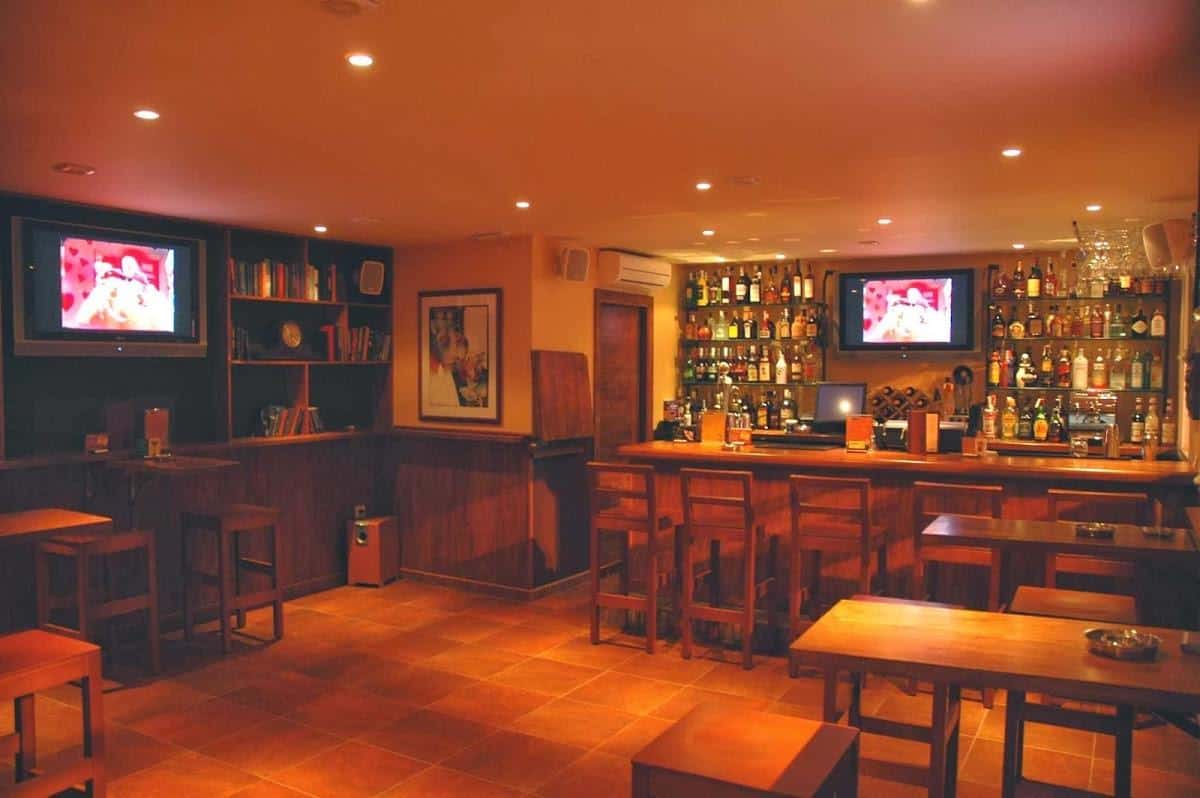
The Library Bar, Marbella. We built this from nothing. For a few years, it was our whole life.
There’s a version of our life that still exists in our minds. In that version, we never leave Spain. The bar is still open. The same people walk through the door each night. Conversations stretch late into the evening, the way they always did, and we become part of that place in the quiet, unspoken way that happens when you stop being a visitor and start belonging somewhere.
For a long time, we believed that was going to be our life. Because for a while — a genuinely good while — it was.
What it actually felt like to arrive
When we landed in Marbella in 2007, we didn’t ease in. We had an investor visa, we’d already purchased the land for the bar, and we had architectural drawings to finalize, permits to chase, and a build to oversee. We hit the ground running, and the pressure was real from day one.
But even in the middle of all that — the paperwork, the contractors, the things that didn’t translate easily — Spain itself kept breaking through. Something about the place just felt right in a way we hadn’t quite expected. Life moved differently there. Not slower in a frustrating way, but more deliberately. Meals weren’t rushed. Evenings weren’t scheduled down to the minute. People made time for each other as a matter of course, not as something they had to carve out of an already-full calendar. It took some adjustment. We were Americans. We had to learn how to stop treating every moment like it needed to be optimized.
We learned. And the longer we were there, the more natural it felt. At some point, it stopped feeling like somewhere we had chosen and started feeling like somewhere we belonged. That shift is hard to describe, but you know it when it happens.
The bar became everything
The Library Bar wasn’t just a business. It was the center of our days — where mornings started, where evenings ended, where the rhythms of our lives in Spain organized themselves. People came in as customers and somewhere along the way became regulars, and then became familiar faces we genuinely looked forward to seeing.
We weren’t visiting anymore. We were living there — in the fullest sense of the word. We knew which bakery opened earliest. We knew our neighbors. We knew the unofficial rules of how things worked in a way that only comes from time and presence and a genuine willingness to be part of a place rather than just passing through it. We had done the hard part of becoming locals, or as close to locals as you get when you arrive as Americans in your fifties.
We weren’t counting time or thinking about “what comes next.” We had already decided. We were building a future in Spain. And then the world had other plans.
How the crisis arrived — slowly, then all at once
When the financial crisis started taking shape in 2008, it didn’t feel immediate at first. It was something happening somewhere else — something you heard about, something people mentioned in passing. We thought we had left that particular American anxiety behind when we moved. We were wrong.
It showed up in conversations first. Friends who’d lost their jobs. British expats watching their pensions shrink as the pound lost value against the euro — a third of their income, effectively, just gone. We listened and felt a kind of removed sympathy, the way you do when something bad is happening to people you know but hasn’t quite reached you yet.
Then it started showing up in the bar. A few fewer people on a Friday. Shorter stays. Slightly smaller tabs. Nothing dramatic — just enough to notice. We told ourselves what anyone in our position would: this is temporary. It will pass. We’ll adjust. Business is cyclical. We’ve navigated difficult stretches before.
But it didn’t pass. And then we started seeing something that changed the way we understood what was happening. Places around us were closing. Not struggling new places — established bars, restaurants that had been operating for decades, family businesses that had survived everything. We’d walk past a place that had always been open and find it dark. Locked. Gone.
At first it felt like coincidence. Then it became a pattern. And then it became something we couldn’t talk ourselves out of anymore. This wasn’t something we could wait out.
The decision we didn’t want to make
We fought to stay. We adjusted everything we could — cut costs, reworked the business model, looked for ways to stretch the runway. We held on longer than the numbers probably justified, because leaving wasn’t something we were ready to accept. We weren’t trying to escape something that had stopped working. We were trying to hold onto something we had built carefully and loved, and watching it slip beyond our control despite everything we did.
That distinction matters, and we want to name it clearly: we were exactly where we wanted to be. That’s what made the decision so heavy. It wasn’t that Spain had disappointed us or that the life we’d built there hadn’t been everything we hoped. It was that something entirely outside our control was dismantling it anyway.
Eventually reality caught up in the way it always does when the numbers stop making sense, no matter how much you want them to. We sold the bar.
What we lost — the honest accounting
The financial loss was several hundred thousand dollars. We lost a business we had built from the ground up and a significant portion of what we had set aside for our future. That is a hard sentence to write, and we’re writing it anyway because we think the honesty matters. Anyone reading this who is considering a move abroad deserves to know that it can go wrong in ways you don’t fully anticipate, even when you’ve planned carefully and done everything reasonably right.
But the harder thing to explain is what the loss felt like beyond the money. It wasn’t just a business we were selling. It was a life we were letting go of. The bar, the customers who’d become friends, the morning routine, the neighborhood, the version of ourselves that had stopped feeling like expats and started feeling like people who simply lived there. All of that went with it.
That kind of loss stays with you. It lives in the questions you ask yourself later. It changes how you plan, how you assess risk, how you think about the distance between a good idea and a guaranteed outcome. But it also — and this took time to see — made us wiser in ways we wouldn’t trade.
The one thing that didn’t change
Here’s what surprised us, and what we think is the most important part of this story: even after all of that, we never stopped wanting to live abroad. Not during the hardest months. Not after we came back to the U.S. Not while we were rebuilding in Phoenix over the twelve years that followed.
The desire didn’t go away. If anything, it became clearer. Because we had experienced something that most people who dream about living abroad haven’t — we had actually done it. We knew what it felt like to walk to a grocery store that was part of our neighborhood, to have conversations with people who knew our faces, to live at a pace that wasn’t organized around the car and the commute and the constant acceleration of American daily life. We knew that life was possible. We had lived it.
Losing it in the way we did didn’t make us doubt the experience. It made us more certain that the experience was worth having — and that when the time was right, it was worth trying again.
This time is different — and we mean that specifically
We’re not opening a business this time. We’re not betting our financial future on a venture that depends on a local economy staying healthy. We’re not making fast decisions or building a life on momentum and instinct alone. We spent nearly two years researching — reading, comparing countries, running numbers, working through what we actually needed versus what we thought we wanted, and having a lot of honest conversations about what we were and weren’t willing to risk.
Panama kept rising to the surface through all of that. Not because it’s perfect — it isn’t — but because it consistently answered the questions that matter most to us at this stage of life: accessible healthcare, a dollar economy, a straightforward path to permanent residency through the Pensionado visa, and a gay social scene in Panama City that’s real and growing. We’ve written the full honest version of whether Panama might be right for you — including the trade-offs — if you want to go deeper on the specifics.
Why we’re sharing the loss, not just the plan
Most stories about moving abroad focus on the outcome. The highlights. The destination. The version of life that looks effortless from a distance. We’re sharing this because that’s not what the process actually feels like from the inside. It’s uncertain. It’s emotional. It involves decisions that don’t have clean answers, and sometimes it involves real loss. If you’re thinking seriously about doing this, you deserve the full picture — not just the parts that make it look easy.
We are, after everything, choosing to try again. We know what can go wrong. We know it more personally than most people who write about living abroad. And we still think the life you can build on the other side of that decision is worth pursuing — carefully, honestly, and with eyes wide open.
That’s what we’re doing. And that’s what we’re documenting here.
— Brian & Kent
Sources & Verification
- Firsthand: This is our own story — moving to Marbella, Spain on an investor visa in 2007, building and operating The Library Bar, living through the 2008 financial crisis on the ground there, selling the bar at a loss of several hundred thousand dollars, and the years of rebuilding that followed.
Facts in this article last verified: July 2026.
Our Story & Panama Journey Series
- 01 Almost 40 Years, 12 Homes — and We’re Doing It Again
- 02 We Lost Everything in Spain. We’re Still Glad We Went.
- 03 Going to Panama — and You’re Coming With Us
- 04 Day One: Wheelchairs, Wind, and a Metro Lesson
- 05 Day Two: The Shorts Crisis and the World’s Biggest Mall
- 06 Day Three: Grocery Prices, Neighborhoods, and a $12 Drink
- 07 Day Four: The Attorney, the Doctor, and the Pensionado Visa
- 08 Day Five: The Fish Market, Multiplaza, and Maluka
- 09 Day Six: Neighborhoods, Hardware Stores, and a Fixer-Upper
- 10 Day Seven: Breakfast, Laundry, and Furniture Shopping
- 11 Day Eight: The Canal Museum, La Cresta, and Casco Viejo
- 12 Day Nine: Hato Pintado, Carrasquilla, and Hardware Stores
- 13 Day Ten: Miraflores Locks, the Ciclovía, and Hamman
- 14 Day Eleven: Getting the Pensionado Residency Card
- 15 Day Twelve: What Panama Actually Taught Us
- 16 Day Thirteen: Going Home — Is Panama Still the Answer?
Brian & Kent
We built a bar in Spain, lost most of it in the financial crisis, spent twelve years rebuilding in the U.S., and are now doing it all again — this time in Panama, where Brian’s Pensionado residency is already underway. This site is the resource we wish had existed when we started. We write everything ourselves and tell the truth about what we find. he***@*************ma.com