Finance & Money in Panama
Day-to-Day Money Management in Panama: ATMs, Transfers, Cash, and Getting Your Income Here Reliably
Panama uses U.S. dollars, which removes the currency problem entirely. What remains: a $250 ATM withdrawal limit, a $5.25 fee per hit on a foreign card, wire transfer fees that vary by a factor of ten depending on how you send, and a cash culture that will surprise anyone arriving from a tap-to-pay Florida lifestyle.
 Brian & Kent · GayExpatsPanama.com · April 2026 Research Trip
Panama’s dollar economy eliminates one of the biggest practical headaches of expat life elsewhere: currency exchange. There are no pesos to buy, no exchange rate to watch, no conversion fees when you move money from a U.S. account. Everything prices in U.S. dollars, ATMs dispense U.S. dollars, and your U.S. bank sees your Panama transactions the same way it sees your Florida ones. That simplicity is real and genuinely valuable. But it coexists with a set of practical money management issues that catch nearly every new arrival off guard — most of which are completely solvable with the right setup.
This post covers the full day-to-day money management picture: the ATM situation (fees, limits, and how to beat both), the right U.S. accounts to have before you leave, how to get larger amounts of money into Panama efficiently and cheaply, wire transfers vs. Wise (a comparison worth understanding in detail), how Social Security and pension income can be deposited directly into a Panama account, cash vs. card reality by situation, and the complete account setup checklist before you move.
Finance & Money in Panama Series
Fourteen articles covering everything you need to know about managing your money before, during, and after your move to Panama.
- The Real Numbers: Our 13-Part Guide to Finances, Money, and Budgeting in Panama
- Taxes in Panama: What the Territorial System Actually Means for American Expats
- Banking in Panama: The Truth Behind the Social Media Fear
- What Does It Actually Cost to Live in Panama City?
- What Buying a Home in Panama Actually Costs You
- Financing a Home in Panama
- Home & Auto Insurance in Panama
- Healthcare Costs in Panama
- Travel Within Panama: Getting Around
- ATMs, Wire Transfers, Wise, and Getting Your Income Here Reliably You are here
- Estate Planning for Gay Couples in Panama
- Can a Foundation Let My Partner Inherit Our Panama Property Without Probate
- Your Retirement Accounts Are Not Worth What You Think — RMDs, Taxes & Medicare
- Building Your Reserve in Panama: The Financial Cushion That Makes a Retirement Budget Actually Work
Panama’s Currency — The Dollar System Explained
Panama’s official national currency is the Balboa (PAB), but there is no Balboa paper money. None exists. All paper currency in Panama is U.S. dollars — the dollar is legal tender, always has been, and there is no exchange rate between Balboas and dollars because they are permanently pegged 1:1. What you will encounter as Balboas are coins only: 1, 5, 10, 25, and 50 centesimo coins that circulate alongside U.S. coins at equivalent values. A Balboa quarter is identical in value and practice to a U.S. quarter.
Prices at stores, restaurants, and government offices are listed as either “B/.” (Balboas) or “$” — they mean exactly the same amount. A restaurant bill for B/.24.50 and one for $24.50 are identical. There is nothing to calculate and nothing to exchange. This is genuinely unusual in Latin America and one of Panama’s underappreciated practical advantages for American expats.
Small Bills Are Non-Negotiable
Panama’s cash culture operates on small denominations. Always have a supply of $1, $5, and $10 bills. Larger bills — $50s and $100s — are problematic at small restaurants, local markets, taxis, and any street vendor. Many smaller businesses will refuse $100 bills outright over concerns about counterfeits. When you withdraw from ATMs (which typically dispense $20s), plan to break them at supermarkets or larger restaurants before heading to local markets or tipping situations.
The ATM Reality — Fees, Limits, and the Fix
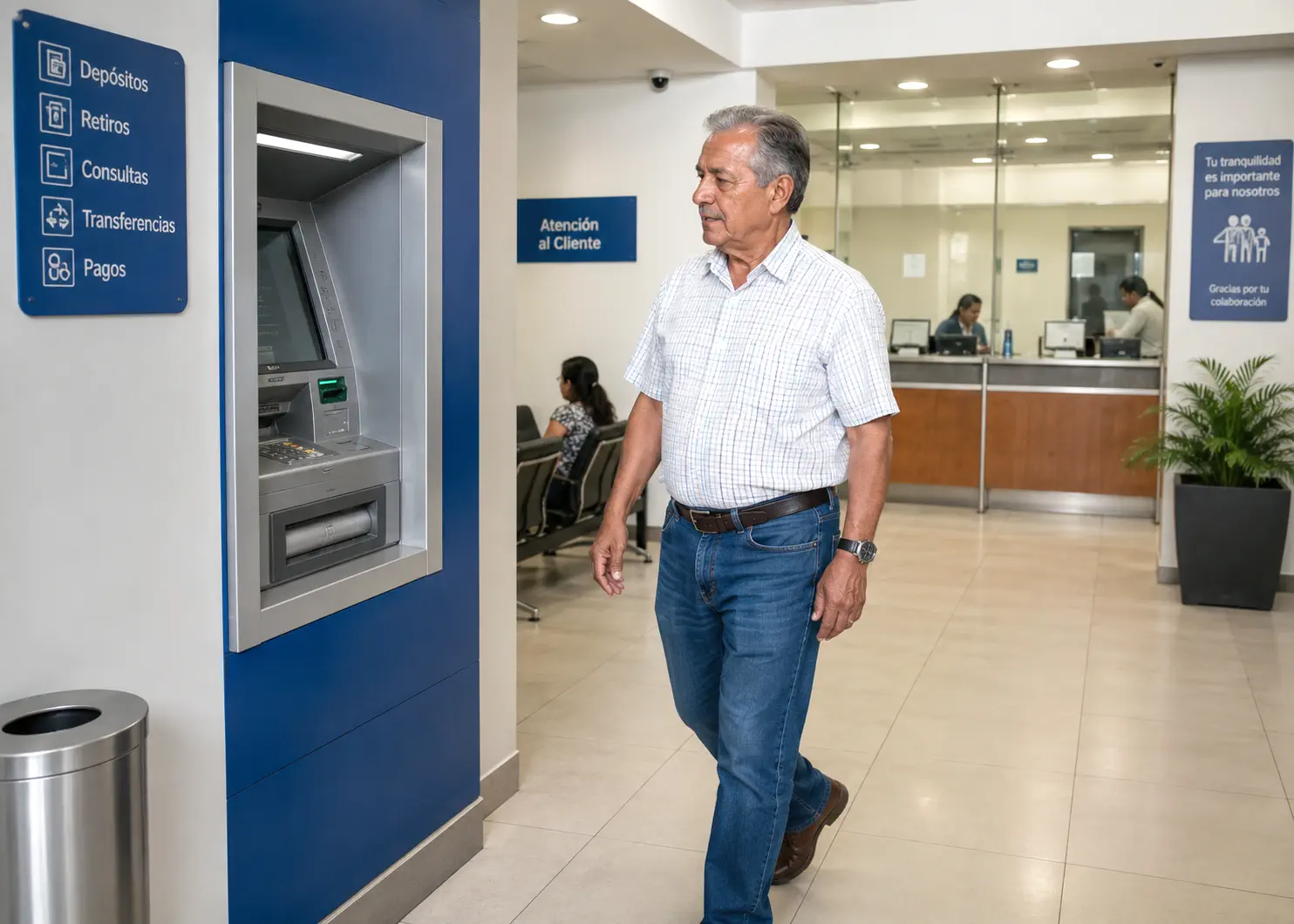
Here is the ATM situation stated plainly: if you use a standard U.S. debit card at a Panamanian ATM, you will pay approximately $5.25 in ATM operator fees per transaction — charged by the Panamanian bank whose machine you used — plus whatever your U.S. bank charges for international ATM use (commonly $3–$5). The machines also limit most withdrawals to $250 per transaction, and most banks allow only two withdrawals per card per day. For a couple relying entirely on ATM withdrawals for daily cash, the fees accumulate fast.
Panama ATM Fees — Foreign Card on Panamanian Machine
The Schwab Solution — The Account That Fixes This
The standard fix for the ATM fee problem is a Charles Schwab High Yield Investor Checking account. We covered this in our Banking post, but it belongs here too: Schwab charges no foreign transaction fees, no monthly fees, no minimum balance requirement, and reimburses all ATM fees charged worldwide — every month, automatically. The Panamanian bank charges $5.25 at their machine; Schwab credits it back to your account by month’s end.
Over a year of regular ATM use — say, eight withdrawals per month — Schwab’s ATM refund program saves a couple approximately $500–$600 per year compared to a standard U.S. checking account. That is not a theoretical savings. It is a real monthly credit.
Open Your Schwab Account Before You Leave the U.S.
Schwab requires a U.S. residential address to open the account. Once established, you can update your address to Panama and maintain the account indefinitely. You cannot open a new Schwab checking account with a Panama address. If you have not opened this account yet and you are close to relocating, make it a priority before you leave. This is one of the few financial tasks that becomes genuinely difficult — not just inconvenient — after you have moved.
The $250 Withdrawal Limit Workaround
The $250 per transaction limit on most Panama ATMs is the second frustration. It matters most when you need to pay rent (which landlords often expect in cash), make large purchases at cash-only businesses, or simply want to minimize the number of ATM visits. Several practical approaches:
Multiple machines, same visit: You can use multiple different ATMs in the same outing with the same card — the $250 limit is per machine, not per outing. Two machines = $500. This is cumbersome but effective when you need more cash quickly.
BAC and some Davivienda ATMs have a reputation among expats for allowing larger single withdrawals ($500 at some machines). The experience varies and is not guaranteed, but worth trying if you find one.
Once you have a Panamanian bank account: The limit problem largely disappears. Your Panama debit card at your own bank’s ATM lets you withdraw larger amounts based on your account’s daily limit, with no operator fee and typically no foreign card fee.
Wire-funded cash: For large one-time needs — rent deposit, car purchase, property transaction — wire the money to your Panama account in advance rather than relying on ATM withdrawals. This is the right approach for any transaction over $1,000.
The Right U.S. Accounts to Have
The Panama money management system works best with two U.S. accounts running alongside your Panama account. Here is what each does and why both matter:
Charles Schwab High Yield Investor Checking
Primary Day-to-Day Account — ATM Access
This is your daily spending card in Panama before you open a local account, and it remains useful long after. The ATM fee refund program is the headline feature. No monthly fee. No foreign transaction fee. No minimum balance. Linked to a Schwab brokerage account (which requires no minimum either). Use this card for ATM withdrawals, card payments at larger establishments, and as a backup when your Panama account needs topping up.
Open before you relocate. Requires a U.S. address. Apply at schwab.com — the combined checking + brokerage application takes about 15 minutes online.
Your Existing U.S. Bank Account (Chase, BofA, etc.)
Pension and SS Income Receiver — Wire Source
Keep your existing U.S. account even after opening Schwab and the Panama account. This is where Social Security and pension deposits land (or can land — more on direct deposit below). It is also the most convenient source for outgoing wire transfers to your Panama account, and it provides a backup if any other account has issues. Maintain it actively — do not close it. A dormant U.S. account that gets closed for inactivity creates real problems from Panama.
Your Panamanian Bank Account
Local Payments — Utility Bills — Direct Panama Transactions
Once established (see the Banking post for how to open one), your Panama account handles the transactions that a U.S. card cannot: utility payments, local bill pay, landlord transactions, and receiving wire transfers from your U.S. accounts for budgeted monthly expenses. When you use your Panama debit card at your own bank’s ATM, there is no operator fee. Using it at a different Panama bank’s ATM costs approximately $1 — trivial compared to the $5.25 charged to foreign cards.
Getting Money Into Panama — Every Option Explained
This is the section most expat guides underinform. Moving money from the U.S. to Panama is not difficult, but the cost varies significantly by method — and the most expensive method (a traditional bank wire) is unfortunately also the most commonly used because it is the most familiar.
Option A: Traditional Bank Wire Transfer
A wire transfer from your U.S. bank directly to your Panama bank is the most straightforward large-transfer method. The mechanics are simple: you initiate the wire from your U.S. bank’s online portal or branch, providing your Panama bank’s SWIFT code, your account number, and the recipient bank’s address. The money arrives in your Panama account typically within 1–3 business days.
The cost picture:
Wire Transfer Fees — U.S. to Panama Bank
The math on a monthly wire: if you send $3,000/month to fund your Panama account with a $43 total fee, that is 1.4% of the transfer. Annoying but manageable. If you send $1,500/month, it is 2.9%. The per-transfer cost is fixed regardless of amount, which means larger, less frequent wires are more efficient than smaller, more frequent ones.
Wire Larger, Wire Less Often
Because the fee is the same whether you wire $1,000 or $5,000, batching transfers is meaningfully more efficient. Instead of wiring $2,000 four times per month ($43 × 4 = $172 in monthly wire fees), wire $8,000 once a month ($43 in fees for the same total moved). Moving to quarterly wires of $24,000 is the most efficient approach for budgeters who can manage their Panama account balance month to month. The practical constraint is keeping enough float in your Panama account to cover expenses between wires.
Option B: Wise — The Cheaper, Faster Alternative
Wise (formerly TransferWise) is a money transfer service — not a bank — that has become the preferred transfer tool for millions of international residents worldwide, including American expats in Panama. Understanding how it works is worth a dedicated explanation, because it is genuinely different from a wire transfer in ways that matter.
How Wise Works — the Core Concept
A traditional bank wire moves money internationally through the SWIFT network — a series of correspondent banks that each take a cut, charge a fee, and slow the transfer. The fees are real, the correspondent bank charges are unpredictable, and the process is slow by modern standards.
Wise works differently. Instead of moving money internationally, Wise uses a network of local bank accounts in different countries. When you send $3,000 from your U.S. bank account to a Panama account via Wise, what actually happens is: you send $3,000 to Wise’s U.S. bank account (a domestic ACH transfer — free from your end). Wise then sends $3,000 from its Panama bank account to your recipient’s Panama account (a local domestic transfer in Panama). No international wire crosses a border. No correspondent banks take cuts. Wise charges a small, clearly disclosed fee — and for USD-to-USD transfers to Panama (where no currency conversion is involved), that fee is very low.
Wise Transfer — USD to Panama Bank Account
The savings are real. For a $3,000 transfer, Wise costs approximately $9–$12 total. A traditional wire costs $43 minimum. For transfers involving currency conversion (sending U.S. dollars to a country with local currency), the Wise savings are even larger because Wise uses the mid-market exchange rate with a small percentage fee, while banks use a marked-up exchange rate that can add 3–5% hidden cost on top of their wire fee.
For Panama specifically — a USD economy — the currency conversion benefit is less relevant since everything is in dollars. But the flat fee savings still make Wise meaningfully cheaper for regular monthly transfers, and the speed advantage (same-day vs. 1–3 business days) is a genuine practical benefit.
One Wise Limitation for Panama Residents
The Wise multi-currency card — the debit card that comes with a Wise account — is not currently available for residents of Panama. You can use Wise as a transfer service to send money from the U.S. to your Panama bank account. But if you are looking for a card to carry and use at Panamanian ATMs and merchants, Wise’s card is not the tool. That role belongs to your Schwab debit card (pre-account) and your Panama bank debit card (post-account).
Setting Up Wise — How It Works Step by Step
Set Up Wise Before You Move
Like the Schwab account, Wise is significantly easier to set up with a U.S. address. The identity verification and bank account linking are both smoother from the U.S. You do not need to use it immediately — set it up, link your U.S. bank, and add your Panama bank as a recipient once you have the account number. When you are ready to make your first transfer, everything is already in place.
Option C: ACH Transfer (U.S.-Only Routing)
ACH — the Automated Clearing House system — is how most domestic U.S. transfers work. It is free or very cheap, but it only works between U.S. accounts. You cannot send an ACH directly to a Panamanian bank. However, ACH is relevant as the input to a Wise transfer — you use ACH to fund your Wise account or to initiate a Wise transfer, which is what keeps Wise’s fees so low. The actual cross-border movement is Wise’s problem to solve, not yours.
Side-by-Side Comparison
| Transfer Method | Cost ($3,000 transfer) | Speed | Best Use |
|---|---|---|---|
| Traditional bank wire (Schwab + Banco General) | ~$43 total (both sides) | 1–3 business days | Large, infrequent transfers; established process |
| Wise (USD to Panama USD) | ~$9–$12 total | Same day — often minutes | Regular monthly transfers; faster and cheaper |
| ATM withdrawal (Schwab card) | $0 net (fees refunded) | Instant | Daily cash; amounts under $500/transaction |
| ATM withdrawal (standard U.S. card) | $8–$10 per $250 (3–4% effective rate) | Instant | Avoid — use Schwab instead |
| Credit card (for purchases) | 2–3% foreign transaction fee (most cards) | Instant | Use a no-FX-fee card or pay cash at small merchants |
| Traditional bank wire (major U.S. bank) | $55–$80 total (both sides + correspondent) | 2–5 business days | Avoid — high cost and slow |
Getting Your Social Security and Pension Into Panama
This is a question that comes up repeatedly: can Social Security and pension payments be deposited directly into a Panamanian bank account, bypassing the U.S. account entirely? The answer is yes — Panama is on the Social Security Administration’s list of International Direct Deposit (IDD) countries — and the mechanics are worth understanding, including a routing detail that trips people up.
International Direct Deposit (IDD) — Social Security
The Social Security Administration’s International Direct Deposit program sends benefit payments directly to foreign bank accounts in a defined list of participating countries that includes Panama. If your Panamanian bank participates — and the major ones (Banistmo, Banco General, Global Bank) do — you can have your Social Security payment deposited directly into your Panama account each month, in U.S. dollars, with no wire fees and no delay.
You complete SSA Form SSA-1199-OP21 (the Panama-specific direct deposit enrollment form), provide your Panama bank account details, and have your financial institution complete its section. Where it goes next depends on which benefit you receive: SSA retirement, survivors, and disability beneficiaries route through the Social Security Regional Office assigned to Panama, located in San José, Costa Rica. OPM, VA, and DFAS (military retiree) beneficiaries route their enrollment directly to the Federal Benefits Unit at the U.S. Embassy in Panama City. These are genuinely different offices — send your form to the wrong one and enrollment will be delayed.
Social Security International Direct Deposit — Key Facts
Two Things the Form Itself Warns You About
Start the paperwork early — the Embassy’s own guidance notes enrollment can take up to two months to become effective, so this is not a task to leave until your last U.S. paycheck or benefit deposit. And if you hold a joint account with someone who receives Social Security and that person dies, the SSA-1199-OP21 form is explicit: you must immediately contact both your bank and the SSA or FBU, and any payment deposited after the date of death must be returned. This is a real, specific legal obligation on the official form, not a general courtesy.
The Social Security Administration also requires you to report when you leave the U.S. for more than 30 days, and will periodically send a questionnaire (roughly every one to two years) to beneficiaries living abroad to confirm continued eligibility — failing to respond can suspend payments. Contact SSA to update your address when you establish Panama residency; the Federal Benefits Unit at the U.S. Embassy in Panama City (located in Clayton) assists with exactly this, even though SSA-specific IDD enrollment itself routes through the Costa Rica regional office.
Private Pension Direct Deposit
Private pension payments from former U.S. employers can typically be redirected to any bank account the recipient designates — including a Panamanian account. Contact your pension administrator directly and ask whether they support international direct deposit to Panama. Many do. Provide your Panama bank’s SWIFT code, account number, and bank address. The pension administrator initiates the wire on each payment date, and your pension bank charges may apply. For large monthly pension payments, the wire fee (if applicable) is a small fraction of the amount.
Alternatively, keep the pension depositing into your U.S. bank account and move money periodically to Panama via Wise or wire — the approach most expats use simply because it is familiar and the Panama account stays funded either way.
Cash vs. Card — Where Each Works in Panama
Panama is more cash-dependent than the United States, and significantly more cash-dependent than the tap-to-pay culture of modern Florida. Understanding where cards work and where they do not prevents frustration and the occasional embarrassing moment at the checkout counter.
| Situation | Cash or Card? | Notes |
|---|---|---|
| Supermarkets (Riba Smith, Super 99, El Rey) | Either | Visa and Mastercard widely accepted. No AMEX at most. |
| Larger restaurants | Either | Card generally accepted; some add a 3–5% surcharge |
| Small local restaurants / fondas | Cash only | “Solamente efectivo” signs are common |
| Street vendors and markets | Cash only | Always — no exceptions |
| Uber | Card (linked in app) | Works exactly as in the U.S. |
| Taxis (non-Uber) | Cash only | Small bills; drivers often claim no change for $20s |
| Metro | Rapi-Pass card (loaded with cash) | Dedicated transit card — not a bank card |
| Pharmacy chains (Arrocha, Farma Value) | Either | Cards accepted; Pensionado discount applies either way |
| San Blas Islands | Cash only | No ATMs, no card machines anywhere on the islands |
| Gas stations | Either | Most accept cards at the pump |
| Medical clinics / hospitals | Either (pay before leaving) | Payment at time of service — credit card widely accepted |
| Utility bills (electricity, water, internet) | Bank account or online payment | Best handled via your Panama account’s bill pay |
| Rent payments | Cash or bank transfer | Many landlords prefer cash or Panama bank transfers; card rarely accepted |
American Express is not widely accepted in Panama. Discover is essentially unusable. Stick to Visa and Mastercard. And always carry $40–$80 in small bills regardless of how card-forward your habits are — you will use it.
The Surcharge Question
Some restaurants and businesses in Panama add a 3–5% surcharge for credit card payments. This is legal and disclosed at the point of sale — look for small printed signs near the register. When the surcharge is in play, cash saves money. The Pensionado restaurant discount (25% off food) applies regardless of payment method — the discount and any surcharge are calculated separately.
The Credit Card Decision — Which Card to Carry
Credit cards serve a different purpose than debit cards in Panama. They are most useful for larger purchases, hotel bookings, online purchases from Panamanian merchants, and as a backup emergency resource. For day-to-day small spending in a cash economy, a credit card is not the right primary tool.
The essential criterion for any credit card you use in Panama: no foreign transaction fee. Most standard U.S. credit cards charge 2–3% on all international transactions — including U.S. dollar transactions in Panama, because the merchant is foreign. Cards with no foreign transaction fee include Chase Sapphire (Preferred and Reserve), Capital One Venture, and most travel-oriented rewards cards. If your current card charges foreign transaction fees, consider opening a no-fee travel card before relocating.
Building Credit in Panama
Once you have a Panamanian bank account, applying for a local credit card from that bank becomes possible. Banistmo, BAC, and Banco General all offer credit cards to permanent residents. A local credit card builds your Panama credit history (useful if you later want a mortgage), is accepted at local merchants without foreign transaction questions, and often comes with local rewards programs. It is not essential immediately, but worth considering in your second or third year as a resident.
Security — Protecting Yourself and Your Money
Money security in Panama is not dramatically different from any U.S. city, but a few specific practices matter more here.
Never carry large amounts of cash. Carry enough for the day — $40–$100 is typically sufficient for daily spending. For large cash transactions (rent, large purchases), withdraw specifically for that purpose and go directly.
Use ATMs inside banks, malls, or established commercial spaces. Free-standing ATMs on streets have higher risk of skimming devices. Banco General, Banistmo, and the ATMs inside Albrook Mall, Multiplaza, or grocery stores are the safer choice.
Set up transaction notifications on all cards. Your U.S. bank and Schwab both offer immediate push notifications for transactions. Enable them. You will know about unauthorized charges within seconds.
Keep your daily spending card separate from your main account card. Load a modest amount onto a secondary account or keep your Schwab card as the spending card, with your main U.S. savings or brokerage account never directly connected to a card in Panama.
Be aware on holidays. ATMs run out of cash on Panamanian public holidays — particularly national celebrations when bank branches are closed for extended periods. Check the holiday calendar and maintain a cash buffer heading into long holiday weekends.
The Complete Pre-Departure Money Setup Checklist
Here is the full setup sequence, in the order that makes the most practical sense:
The Bottom Line
Panama’s dollar economy makes the currency question trivial. What remains is a set of practical logistics that are all solvable: the ATM fees disappear with Schwab, the wire fees drop by 75–80% with Wise, the cash culture is manageable once you develop the habit of carrying small bills, and your Social Security or pension can deposit directly into your Panama account with no fees and no friction once enrollment is complete — provided you send the paperwork to the right office and start it early enough.
The setup takes an afternoon of paperwork spread over a few weeks. Once it is in place, money management in Panama is simpler than most people expect — and materially cheaper than what they left behind in the U.S. financial system.
Sources & Verification
- Official: Form SSA-1199-OP21 (Direct Deposit Sign-Up Form, Panama) — confirmed as Panama-specific, requiring the beneficiary’s and financial institution’s sections, with the joint-account death-notification and payment-return requirement stated directly on the form. SSA’s International Direct Deposit program includes Panama on its list of participating countries.
- Official: U.S. Embassy Panama’s published guidance confirming that OPM, VA, and DFAS beneficiaries route IDD enrollment directly to the Panama Federal Benefits Unit (Pa********@***te.gov), while enrollment can take up to two months to become effective; SSA beneficiaries specifically are directed to the Social Security Regional Office assigned to Panama, located in San José, Costa Rica.
- Official: SSA’s requirement to report departures from the U.S. exceeding 30 days, and its periodic (roughly 1–2 year) eligibility questionnaires for beneficiaries living abroad, with payments subject to suspension for non-response — per USAGov and SSA’s own guidance on benefits while living outside the United States.
- Community: ATM fees and limits, wire transfer fee ranges, Wise fee estimates, cash-vs-card practices by situation, and the pre-departure checklist. Synthesised from expat accounts and our own April 2026 experience opening and using U.S. accounts in Panama; individual bank fees change and should be reconfirmed.
- Not yet verified: Wise’s claim that a specific percentage of transfers arrive within 20 seconds — we could not confirm this statistic against a current Wise source and have described transfer speed qualitatively instead. The specific count of IDD participating countries (“approximately 30”) was also removed pending confirmation against SSA’s official country list.
Facts in this article last verified: July 2026.
Finance & Money in Panama Series
- 01 The Real Numbers: Our 13-Part Guide to Finances, Money, and Budgeting in Panama
- 02 Taxes in Panama: What the Territorial System Actually Means for American Expats
- 03 Banking in Panama: The Truth Behind the Social Media Fear
- 04 What Does It Actually Cost to Live in Panama City?
- 05 What Buying a Home in Panama Actually Costs You
- 06 Financing a Home in Panama
- 07 Home & Auto Insurance in Panama
- 08 Healthcare Costs in Panama
- 09 Travel Within Panama: Getting Around
- 10 ATMs, Wire Transfers, Wise, and Getting Your Income Here Reliably
- 11 Estate Planning for Gay Couples in Panama
- 12 Can a Foundation Let My Partner Inherit Our Panama Property Without Probate
- 13 Your Retirement Accounts Are Not Worth What You Think — RMDs, Taxes & Medicare
- 14 Building Your Reserve in Panama: The Financial Cushion That Makes a Retirement Budget Actually Work
Another great posting. One question, we are not planning on a full-time residency. With the pension visa in place, we’ll be treated as panama citizens while we’re in. panama, correct? So, 99% of what your posting states is OK.
In our minds, we can wire (?) funds from our US accounts to panama while we’re there, open up various bank accounts in panama, etc. Our full-time presence is not required. Correct?
BTW…..the palm springs area schwab office has NOT been very cooperative in setting up phone call/meetings with us. We’d rather do the setting up of the account in person, but it’s taking a lot longer than expected.
Thanks for the kind words on the post!
A quick but important correction on the Pensionado visa: it gives you residency, not citizenship. You’ll hold a Panamanian residency card (cédula de residente) as a permanent resident, but you remain a U.S. citizen the whole time — there’s no naturalization happening here, and Panama doesn’t treat you as a Panamanian citizen for any purpose. The terminology matters mostly for paperwork and expectations, but it’s worth having straight.
On the residency requirement itself: the Pensionado visa does not require full-time presence. You don’t have to live in Panama year-round to maintain it. That said, you do need to visit periodically to keep the residency active — the commonly cited rule is at least once every two years. We’re personally planning to go back at least every 18 months rather than cutting it close to the two-year mark. The reason is simple: it gives us a buffer against date mistakes. Travel gets delayed, life happens, and you really don’t want to find out the hard way that you miscounted months on something tied to your legal residency status. Eighteen months gives breathing room without being overly conservative.
So yes — your instinct is right. With the visa in place, you can absolutely wire funds from your U.S. accounts to Panama, open and maintain Panamanian bank accounts, and handle the financial side of things without being there full-time. None of that requires physical presence beyond the periodic visit requirement to keep the residency itself valid. You’ve been working with Morgan & Morgan, like us. Ask them for guidance and/or assistance in setting up local bank accounts. Having an attorney relationship can help facilitate opening a local bank account.
On Schwab — sorry to hear Palm Springs is giving you the runaround. We actually did the whole thing online and it was fast and painless: the combined checking + brokerage application took about 15 minutes, no branch visit needed. If you want a human, you don’t need to go through a local branch office at all — Schwab’s phone support is genuinely easy to reach, and a rep can walk you through setup or answer questions directly over the phone. We’d skip the in-person route entirely at this point and just call their main service line or do the online application — it’ll likely save you weeks of back-and-forth.