Panama Relocation Research
Before You Fall in Love With a View, Know How You Live
Choosing a neighborhood isn’t about what looks good in photos. It’s about whether your actual daily life fits there — and most people don’t figure that out until after they’ve signed a lease.
 Brian & Kent · GayExpatsPanama.com · April 2026 Research Trip
We once lived at the top of a hill in Hayward, California, with a sweeping view of the San Francisco Bay. The house was large, comfortable, and beautiful in exactly the way that looks great in photographs and turns out to matter almost not at all in daily life. Getting to a restaurant meant driving. Getting to a bar meant driving. Getting to a grocery store meant driving. Everything meant driving down a steep road first — and eventually we realized that the view we were paying for with every errand wasn’t actually a view we were living for.
That house taught us something we’ve carried through every move since. Not what we want a place to look like. What we want a place to be like — on a Tuesday afternoon, when nobody is taking photographs.
This matters when you’re choosing a country. It matters more when you’re choosing a neighborhood within that country. And it matters most when you’re moving somewhere you’ve never lived before, where you can’t yet read the difference between a lively street and a chaotic one, or between a quiet block and a dead one.
The Exercise Nobody Does But Everyone Should
Before you research neighborhoods in Panama — or anywhere — spend two weeks writing down every single time you leave your current home. Every trip. Every errand. Every social outing. Every gym visit, pharmacy run, dog walk, coffee stop, grocery haul, dinner reservation. All of it.
At the end of two weeks, read the list. Not to plan a schedule — to understand a pattern. Where do you go? How often? How do you get there? And here’s the question that actually matters: how would you like to get there?
Some people, when they do this exercise, discover that they drive everywhere and genuinely don’t mind. They like the car. They like the flexibility. They want a garage and a trunk and the ability to load up at Costco. That’s useful information. It means walkability is nice but not essential, and transit access is irrelevant, and what they actually need is parking.
Other people — and we are firmly in this category — discover that almost everything they do regularly, they’d prefer to do on foot. We grocery shop like everyone else, but the idea of walking to the store, walking to dinner, walking to a bar, walking to a coffee shop: that’s not just convenient. It’s the thing that makes a neighborhood feel like a neighborhood instead of a location.
The Two-Week Habit Log
Keep a note on your phone and log every time you leave the house for two weeks. Include where you went, how you got there, and how long it took. Then ask: in my new city, will I have the same access to these things? Will I be able to get there the same way, or a way I’d prefer? The answers tell you more than any neighborhood guide will.
When we moved to Marbella, Spain, after our Hayward experience, we chose a flat one block from the Mediterranean. We were in the center of the city. Restaurants downstairs. Bars within a ten-minute walk. The beach visible from the window. It felt, immediately and completely, like the right decision — not because the flat was impressive, but because it matched the way we actually wanted to live.
That’s the template we’re applying to Panama City now. Walkability to grocery stores. Easy access to bars and restaurants. Bus routes that are actually reliable. Metro access within a reasonable walk. The quality of the streetscape — what the neighborhood looks and feels like at street level. That last one is underrated: a neighborhood full of shuttered storefronts and chain pharmacies is a different daily experience than one with a mix of local businesses, cafés, market stalls, and the general sense that people actually live there.
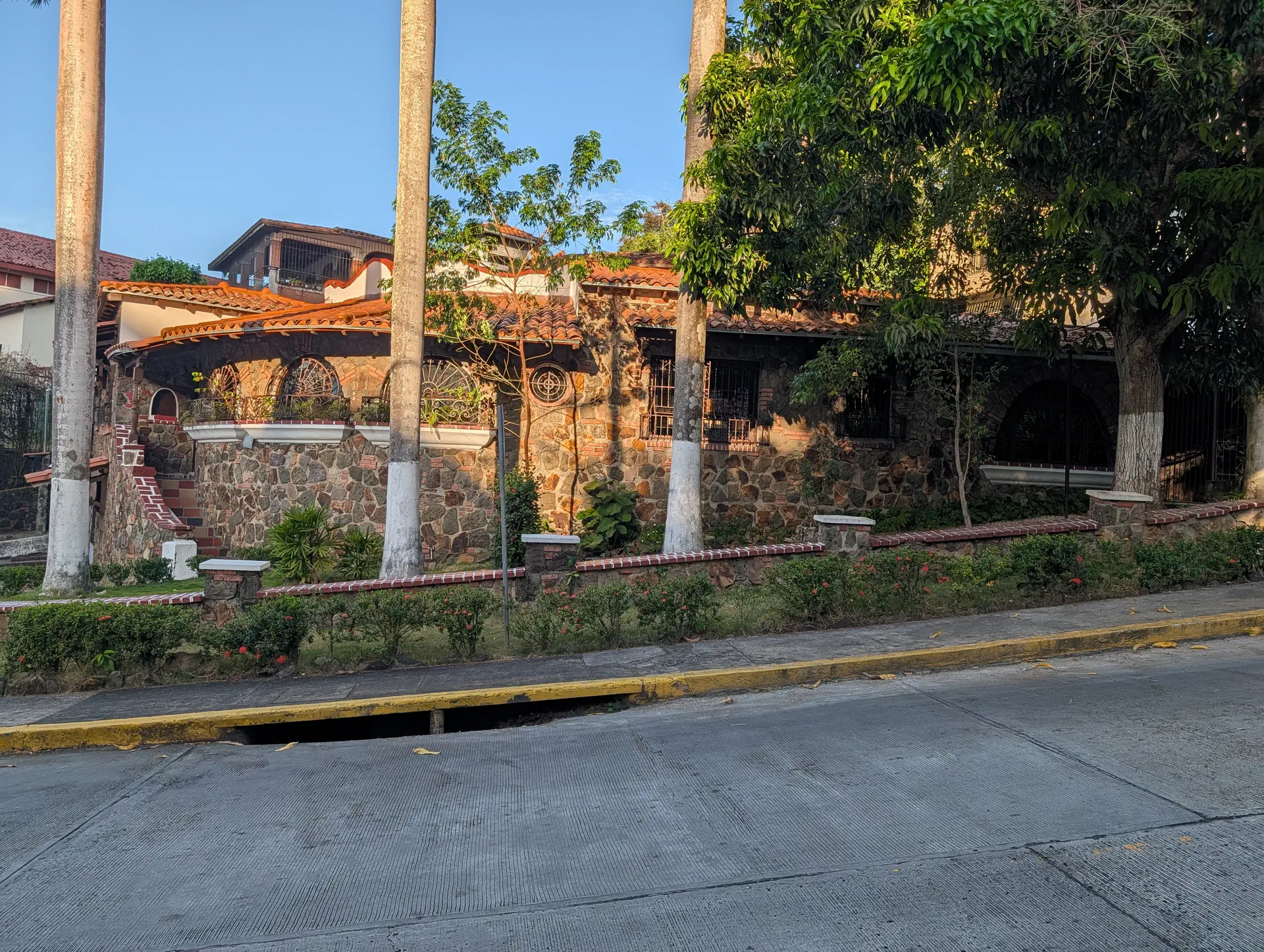
We saw some of the latter during our April 2026 trip in the San Francisco area of Panama City. It’s a fine enough neighborhood by some measures, but at street level it varied block by block. In some areas, you see a beautiful home right next to a car repair shop. That observation — which took about fifteen minutes of actually being there — is worth more than a hundred blog posts describing it in the abstract.
The House Hunters Trap (And Why Smart People Fall Into It)
If you’ve spent any time watching House Hunters International, you’ve seen the pattern. Couple arrives in Lisbon, or Chiang Mai, or Oaxaca. The real estate agent shows them three properties. Two are sleek, modern, well-maintained apartments with updated kitchens and functioning air conditioning. The third has a crumbling courtyard, original tilework from 1920, and visible evidence that the plumbing was last updated during the Salazar regime.
The couple, every time, gravitates toward the third one. “It just has so much charm,” one of them says, with a faraway look that suggests they are imagining themselves in a Hemingway novel. The agent smiles politely. The viewers shout at their televisions.
“Do you think Spanish and French people don’t live in modern buildings? Once you walk out the door, you are in Spain. The history and the culture surround you. The apartment is just where you sleep.”
Here is the thing about “authentic charm”: it is not inside the apartment. It is outside it. The charm of a Barcelona neighborhood exists in the mercado down the street, the noise of football from the bar on the corner, the way the light hits the paseo at dusk, the smell of bread from the bakery that has operated in the same location since your grandmother was young. None of that changes based on whether your bathroom has been renovated.
French people live in modern apartments in Paris. Spanish people live in modern apartments in Seville. Panamanian professionals live in modern high-rise towers with ocean views and functioning elevators. “Authentic” is not a design aesthetic — it’s what surrounds you when you step outside. And a comfortable home, whatever that means to you specifically, is not a betrayal of cultural immersion. It may actually be the thing that lets you tolerate the language struggles, the bureaucratic confusion, the moments where you’ve ordered the wrong thing in a language you’re still learning and you’re not sure if you should laugh or quietly leave.
The Charm Trap in Panama
Casco Viejo is beautiful. It is genuinely, photographically, historically beautiful — and if you visit Panama City, you should spend time there. But living there requires a serious evaluation of street-level noise, flooding risk during rainy season, the actual quality of the renovation on any given unit, and whether the neighborhood infrastructure supports daily errands. “It’s charming” is the beginning of a property evaluation, not the end of one.
The Factors That Actually Matter
We’ve put together the framework we’re using for Panama. Not every factor will carry the same weight for every person — that’s the point. Your two-week habit log tells you which of these matter most to you specifically.
Neighborhood Selection Framework
- Your actual daily habits. Run the two-week log before anything else. The results override aesthetic preferences in almost every case.
- Walkability to essentials. Map the distance on foot to: grocery store, pharmacy, bank or ATM, café or coffee shop, and at least one restaurant you’d go to regularly. Walk it, don’t Google it. Topography matters — a flat 800-meter walk is not the same as a hilly one.
- Public transit access. In Panama City, this means the Metro (clean, reliable, air-conditioned, $0.35 a ride) combined with buses (more complex, but extensive). Know which lines serve your neighborhood and how close the nearest stop is. Know the difference between the Metro network and the bus system and how to use both.
- Road and traffic conditions if you drive. Panama City traffic is serious. If you plan to own or rent a car, understand the commute patterns around your neighborhood, parking availability, and whether you’d actually want to drive in and out of that area daily. Understand that many houses have parking, but a lot of businesses don’t.
- Safety — by neighborhood, not by country. Panama is not uniformly safe or unsafe, and anyone who tells you otherwise hasn’t spent time there. Research specific neighborhoods. Talk to people who live in them. Walk them at different times of day. The macro answer (“Panama City is generally safe for expats in established neighborhoods”) doesn’t tell you anything useful about the specific block you’re considering.
- Noise profile. This is severely underresearched by most people. Proximity to a major road means traffic noise around the clock. A ground-floor unit near a bar district means weekends that don’t end until 4am. A unit below an air conditioning compressor stack means a frequency you will notice every single night. Ask about noise specifically. Visit at night. Visit on a weekend.
- The street-level mix. What’s actually in the neighborhood at ground level? Active local businesses — markets, cafés, barbers, small restaurants — generally indicate a neighborhood with street life. A strip of banks and chain pharmacies and closed shutters generally indicates one without it. Neither is wrong, but know which you’re choosing.
- Rainy season realities. Panama’s rainy season runs roughly May through November, and in some neighborhoods it doesn’t just rain — it floods. If you’re considering a ground-floor unit or a neighborhood with drainage issues, get specific information about how it performs in heavy rain. This is not mentioned in any listing.
- Infrastructure quality. Power reliability, water pressure, elevator maintenance (critical in high-rise buildings), internet speeds, and building management responsiveness. These are invisible until they’re not.
- Social fit and community. For gay expats specifically: is there a gay community you can access from this neighborhood? Are there bars, social groups, or gathering spots within reasonable distance? Panama City’s gay scene is concentrated in Bella Vista — worth knowing if proximity to that matters to you.
How We’re Applying This to Panama City
When we visited Panama City in April 2026, we weren’t just sightseeing. We were walking neighborhoods at the pace of daily life. We took the Metro — $0.35 per ride, clean, air-conditioned, genuinely useful — and we paid attention to which stops felt connected to actual urban life and which deposited you on a street corner with nowhere obvious to be. We took Ubers and watched how long they took and what traffic looked like. We walked blocks and counted how far we’d have to go to find a grocery store, a café, a pharmacy.
The heat is not incidental to this calculation. Panama City sits roughly nine degrees north of the equator. In April, before the rainy season has fully arrived, it is hot in a way that makes you reconsider your commitment to walkability. A fifteen-minute walk that would be pleasant in Marbella, Spain, becomes something you make decisions about in Panama. This is not a dealbreaker — it’s a variable. It means covered walkways matter. It means knowing where the shaded routes are. It means understanding that “walkable” in Panama has a slightly different threshold than it does in, say, Portland.
Our Current Working Criteria for Panama City
Metro/bus access within a 10-15 minute walk. Grocery store reachable on foot. Proximity to the Bella Vista area for social life. A neighborhood with active street-level businesses nearby. Good cross-ventilation or reliable building A/C. Away from major arterial traffic noise. These are the result of our two-week habit log applied to what we’ve actually observed in Panama City — your list will be different.
The Honest Version of This Conversation
Most neighborhood advice online is written to reassure rather than inform. It tells you the best areas and presents them in flattering terms. It doesn’t tell you about the specific intersection where the nightclub noise carries four blocks, or the building where the elevator has been under repair for three months, or the grocery store that looks close on the map but involves a grade change that’s uncomfortable in the heat.
Kent wanted to emphasize this point directly. He used Google Maps extensively to plan his walks through Panama City neighborhoods, and what looked navigable on screen repeatedly turned out not to be on foot. Neighborhoods that appeared connected on the map weren’t — and when you walked to find out why, the answer was usually a river, a ravine, or a hill steep enough to make the route impractical in the heat. Several residential areas that looked appealing sat in cul-de-sacs: fine for noise and a sense of safety, but many of those cul-de-sacs feed onto major arterial roads, which means that walking anywhere beyond the immediate neighborhood often requires going all the way around rather than through. Kent’s rule of thumb: look at Google Maps and find the places where neighborhoods don’t connect to each other. That gap almost always means something — a river, a ravine, terrain. It is the map telling you, quietly, that the walk you’re imagining isn’t the walk you’ll actually take.
That’s the gap we’re trying to fill — not from research, but from being there. From walking the blocks at noon and at nine at night. From taking the Metro from the airport and noticing that every other passenger appeared to be an airport employee, suggesting that we’d missed some local knowledge about how normal people actually travel in from Tocumen. From ordering what turned out to be the most aggressively tart lime slushy either of us has ever encountered and making a note to warn people about it.
The neighborhood you choose is the neighborhood your daily life happens in. Not the country — the neighborhood. It’s worth more research than almost any other single decision in the relocation process, and that research is most useful when it’s grounded not in what looks good or sounds desirable, but in what you actually do on a regular Wednesday.
Do the two-week log. Walk the neighborhood before you commit to it. And maybe hold off on the place with the charming original tilework until you’ve confirmed the plumbing works.
Sources & Verification
- Firsthand: Brian and Kent’s April 2026 walking observations across Panama City neighborhoods — including street-level variation in the San Francisco area, Metro fare and ridership patterns, and Kent’s Google Maps walkability findings regarding rivers, ravines, and cul-de-sac connectivity.
Facts and prices in this article last verified: April 2026.
Panama Relocation Research Series
Brian & Kent
We’re a gay couple based in St. Petersburg, Florida, in the middle of researching and planning a move to Panama. Brian is applying for the Pensionado visa. Kent does most of the research. Everything on this site is current — the attorney meetings are recent, the prices are from this year, and the mistakes are ours.