Quality of Life · Panama City · April 2026
Smoking in Panama: A Breath of Fresh Air
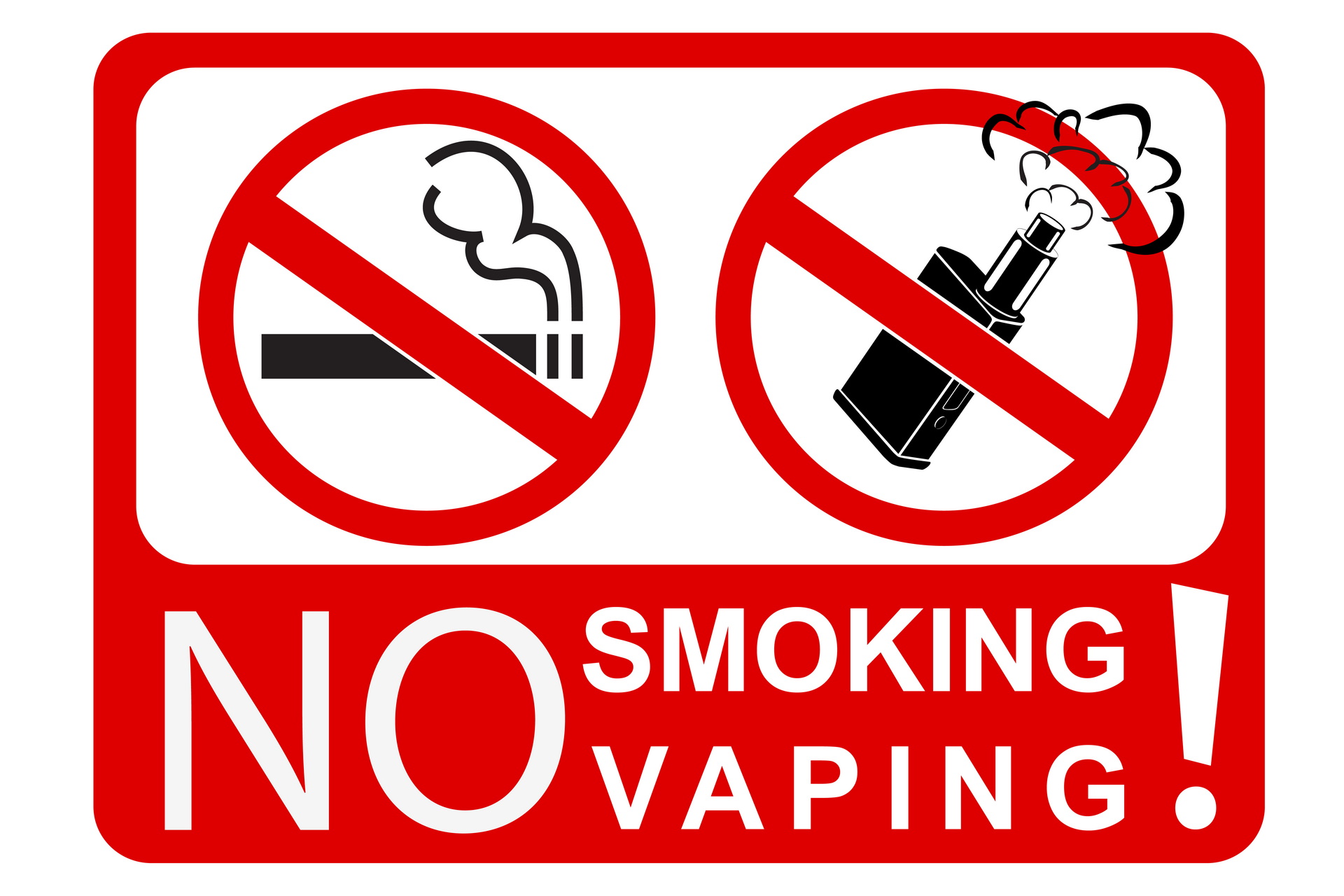
Twelve days. Three people smoking. Zero vapers. We noticed.
 Brian & Kent · GayExpatsPanama.com · April 2026 Research Trip
We spent twelve days walking the streets of Panama City in April 2026. In all that time — on the Cinta Costera, through Bella Vista, up and down Via España, in and out of malls, restaurants, bars, grocery stores, and the metro — we counted three people smoking cigarettes. Three. We never once saw anyone vaping.
Coming from St. Petersburg, Florida, where vape clouds and cigarette smoke are routine parts of any outdoor dining experience, this was startling. And genuinely pleasant. Two non-smokers walking a new city, and not once did we have to navigate around a smoke cloud or hold our breath passing a building entrance. It became one of those quiet things you notice after a few days and then can’t stop noticing.
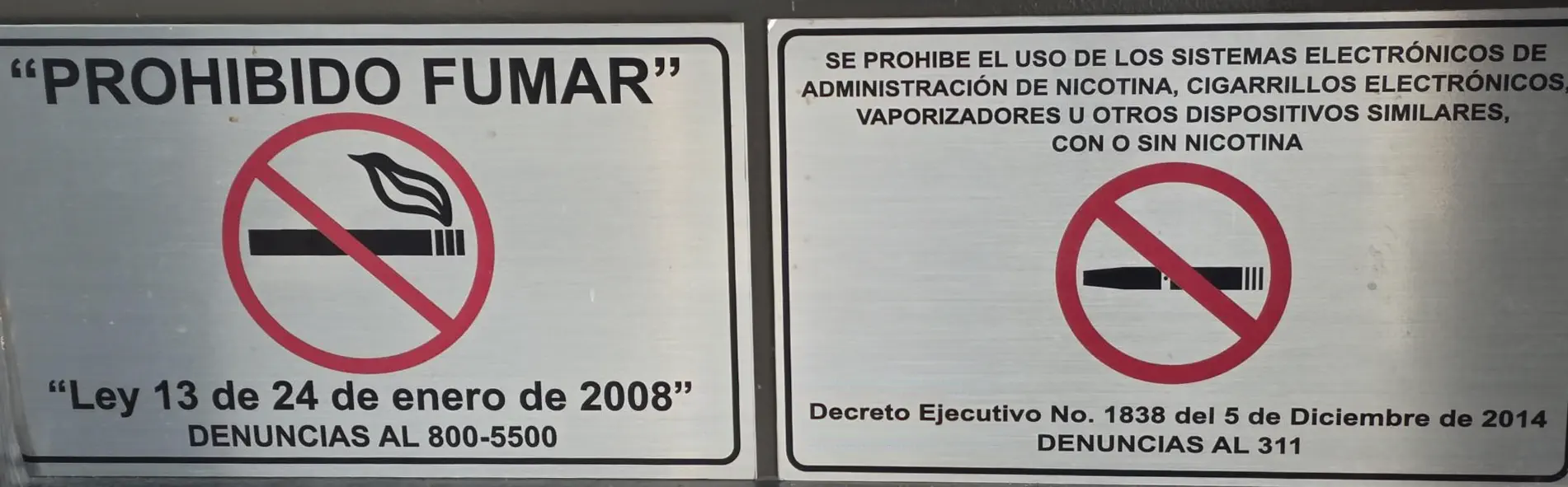
The no-smoking sign at our hotel. Not a suggestion — the ban covers all indoor areas including guest rooms.
The Law Is Real — and Enforced
Panama’s smoking restrictions aren’t a suggestion posted on a laminated card that nobody reads. Law No. 13 of January 24, 2008 — “Which Adopts Measures to Control Tobacco and its Harmful Effects on Health” — established a comprehensive indoor smoking ban that applies to bars, restaurants, nightclubs, hotels (including guest rooms), workplaces, public transport, and any enclosed space where people congregate. The accompanying executive order explicitly names bars, nightclubs, dance halls, and concert venues by name. There are no smoking sections. No exceptions for outdoor patios attached to indoor spaces. No loopholes.
Penalties range from 10 balboas to 100,000 balboas depending on severity. Venue owners are legally required to instruct violators to stop and remove them from the premises if they refuse. In practice, we never needed to see this enforced — because there was nothing to enforce. The compliance was simply there.
Panama Law — Indoor Smoking
Law No. 13 (2008) bans smoking in all enclosed public spaces: restaurants, bars, nightclubs, hotels (including guest rooms), workplaces, and public transport. This is not a partial ban with designated smoking areas — it is a complete prohibition. Vaping and heated tobacco products are separately banned under Law No. 315 of 2022.
Vaping Is Banned, Full Stop
Panama went further than most countries on vaping. Law No. 315 of July 30, 2022 prohibits the use, import, and commercial sale of e-cigarettes and heated tobacco products — period. This codified what had previously been two ministerial resolutions. Vaping in public spaces is banned. Vaping supplies are reportedly available through illicit channels, but you would not know it from walking the streets. We didn’t see a single vape device in use during our entire trip. Not one.
For Non-Smokers
If you’re a non-smoker considering Panama, this is one of the more underreported quality-of-life wins. Outdoor dining, bars, and sidewalk cafés in Panama City are genuinely smoke-free in a way that many American cities — despite their own regulations — simply are not.
The Numbers Back Up What We Saw
Our street-level observation isn’t anecdotal luck. Panama has one of the lowest smoking rates in the world. According to WHO trend data, smoking prevalence among Panamanian adults was over 15% in 2000. By 2015 it had dropped to around 6.5%. The projected rate for 2025 is roughly 4% — and for women, under 2%. More recent estimates put adult smoking prevalence at approximately 4.5% in 2024, comprising about 150,000 individuals in a country of roughly 4.4 million people. Panama is consistently listed among the countries with the lowest daily smoking prevalence globally.
Panama Smoking — By the Numbers
What This Means on the Street
The downstream effect of low smoking rates is something you feel before you consciously register it. The sidewalks are clean. We did not step over cigarette butts. We did not pass doorways ringed with discarded filters. The entrances to restaurants and malls — typically the smoking gauntlet in American cities — were just entrances. You walked in. No cloud. No holding your breath.
“The sidewalks are clean. We did not step over cigarette butts.”
In the U.S., cigarette litter is so normalized that most people stopped noticing it. You notice its absence. The streets of Panama City were not spotless by any urban standard, but the particular kind of litter that comes from a high-smoking-rate population — the butts, the cellophane wrappers, the discarded packs — was simply not there.
Contrast: The U.S. Trend Is Going the Wrong Direction
While Panama’s smoking rate has been in steady decline for two decades, the U.S. is dealing with a different problem. Traditional cigarette use has fallen among adults, but vaping has surged — particularly among younger people. The influence of social media, entertainment personalities, and lifestyle branding has made vaping aspirational for a demographic that grew up watching smoking decline. The gay community in the U.S. is not immune to this. Smoking and vaping have maintained higher visibility in some gay social spaces, normalized in part through the same cultural channels that make any behavior look fashionable.
Panama’s approach — a strict legislative ban, declining cultural acceptance, and robust enforcement — has produced a measurably different outcome. The data shows it. The streets show it. Twelve days of walking around a major capital city without once encountering someone vaping is not a coincidence. It is policy working as intended.
Traveling with a Vape or E-Cigarette?
Leave it home. Panama’s Law No. 315 (2022) bans the import, sale, and use of e-cigarettes and heated tobacco products. This includes devices brought in for personal use. Customs enforcement varies, but the legal risk is real and the social acceptance is essentially zero.
A Smaller Thing That Said a Lot
This is not the kind of item that makes anyone’s Panama pros-and-cons list. Nobody moves to another country because there’s less second-hand smoke. But after nearly two weeks in Panama City, it registered as one of those accumulating signals that a place takes its population’s health seriously. The metro is clean. The produce is fresh. The sidewalks are walkable. And the air — in a Central American capital city of nearly a million people — does not smell like cigarettes.
We found that remarkable. We thought you should know.
Sources & Verification
- Official: Panama’s comprehensive indoor smoking ban — Law No. 13 of January 24, 2008 — and the e-cigarette/heated tobacco ban — Law No. 315 of July 30, 2022, including penalty ranges and enforcement provisions.
- Official: Panama adult smoking prevalence trend data (2000, 2015, and 2024–2025 estimates) — World Health Organization.
- Firsthand: Twelve days of direct street-level observation in Panama City in April 2026 — three smokers observed, zero vapers observed.
Facts and prices in this article last verified: April 2026.
More From Our Panama Research Trip
Brian & Kent
Brian and Kent are a gay couple based in St. Petersburg, Florida, researching and relocating to Panama in real time. Brian is pursuing a Pensionado visa. Kent is the primary researcher. Everything on this site is from their direct, current experience — prices, appointments, observations, and mistakes included.