Expat Life · Community · Panama City
Making Friends in Panama: It Starts Sooner Than You Think
Moving abroad means leaving your support base behind. But in Panama, we found that people — locals and expats alike — are remarkably quick to close that gap.
 Brian & Kent · GayExpatsPanama.com · April 2026 Research Trip
Nobody warns you about the quiet. Not the kind you find in a new apartment at 10 p.m., or the particular silence of a Sunday morning when your phone isn’t buzzing because everyone you know is in a different time zone living their lives. You can prepare for the paperwork, the visa, the healthcare research. The social reset catches you off guard.
We knew this going in. What we didn’t know — what you can’t really anticipate until you’re standing on a Via España sidewalk looking slightly baffled at a Metro map — is how quickly Panamanians will step in to help you feel less lost. Literally and figuratively.
“Before we’d even figured out our social strategy, Panama had already started making friends for us.”
Panama’s Secret Advantage: The People
A few times during our April research trip, we’d be standing in a Metro station trying to work out which line went where, and someone would simply walk over and ask if we needed help. Not in an intrusive way — in a genuinely warm, matter-of-fact way. A couple of times, that person opened with an apology: “I’m sorry, I don’t speak much English, but — can I help you?” They were apologizing for not speaking our language while offering us a hand in theirs.
Kent’s Spanish was good enough to make those moments work. He’d explain where we were trying to go, they’d point us in the right direction, a little conversation would follow, and suddenly we were talking about the neighborhood, about what we were doing in Panama, about where to eat. That’s not a tourist experience. That’s a human one.
The Kent Method
When Kent would tell someone he was still learning Spanish, they’d often switch to English to be helpful. He’d ask them to stick with Spanish instead — and without fail, they appreciated it. It turned a short exchange into a real conversation. Speaking the language badly and honestly will get you further than speaking it perfectly from behind Google Translate.
The practical upshot: Panamanians are genuinely friendly and helpful, and that baseline goodwill is something you can build on. It’s not a guarantee of lasting friendship, but it’s a far better starting point than what many expats encounter in other countries.
For Gay Men Specifically — Scruff: The Most Useful Research Tool We Didn’t Expect
Let’s be direct about what these apps are primarily for. Scruff and Grindr are hookup apps. Anyone telling you otherwise is performing naivety. But in practice — especially in a new city — they function as something else too: the fastest way to find gay men who know the local scene and are often happy to talk about it.
We used Scruff heavily during our trip, and not just in the obvious way. We asked locals where to go. Which bars were actually worth visiting on which nights. Where to avoid. Which neighborhoods felt welcoming versus which required more situational awareness. We got better information in two days of Scruff conversations than we could have assembled from a week of blog research — because these guys actually live here.
The dynamic was interesting: many of them had already pre-selected us — indicated interest — before we’d said a word. That opened the door to conversation naturally, and from there, talking about life in Panama City was easy. Several became genuinely helpful contacts who went well beyond the surface level of what gay life looks like here. We learned which venues were actually gay-owned versus just gay-friendly, which nights had the most regular crowd, and a few things about the social codes that you won’t find in any guide.
Manage expectations clearly
Be honest about what you’re there for. If you’re looking for local insight and conversation rather than a hookup, say so upfront. Most people respect that. A few won’t engage at all — that’s fine. The ones who do are often exactly the kind of connected locals worth knowing.
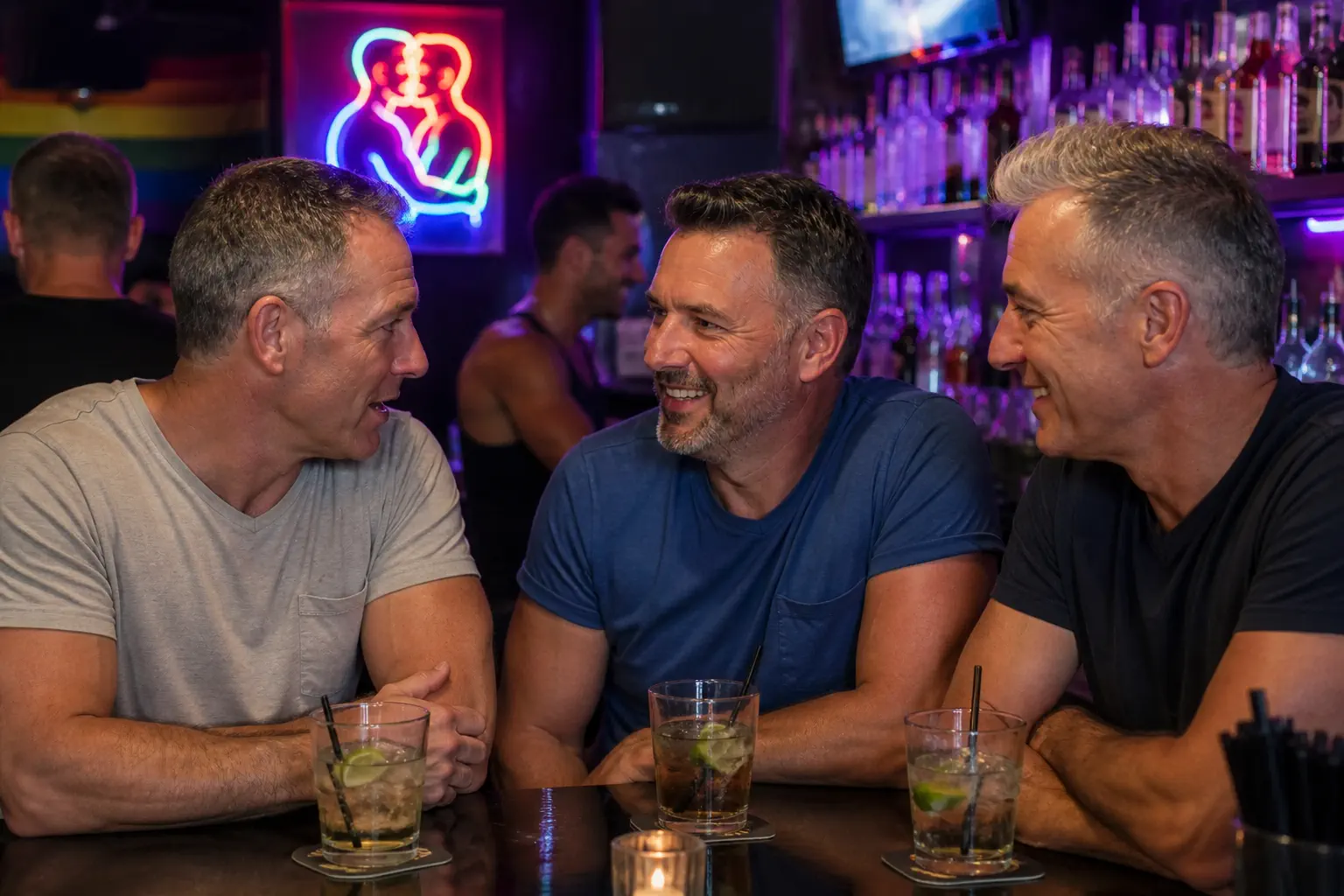
The Gay Bar Scene — The Bars, and Why Going Early Matters
The apps pointed us toward Panama City’s gay bars better than any published list. Here’s what we confirmed on the ground during April.
BLG (Bar Los Gatos)
Gay bar — iconic — Bella Vista
The bar that keeps coming up in every conversation. Established, community-rooted, not a megaclub. Multiple locals on Scruff told us this is where the regulars are. Go mid-week if you want to actually talk to people. Weekends are louder and younger.
Maluka Panama
Gay lounge, drag shows — Panama City
Drag shows here are genuinely good and the audience is mixed in the best way — gay men, their friends, couples. Drag show nights are excellent for meeting people because the event gives you something to talk about before you need anything else in common.
XS Club
Gay nightclub — largest — Panama City
Panama City’s biggest gay club. Good for dancing. Less good for the kind of conversation that leads anywhere. Treat it as a later-night destination, after you’ve already met the people you want to see there.
El Sotano / El Apartamento
Gay-friendly bar — sister venues — Bella Vista
Both in Bella Vista, both worth knowing. More mixed crowd, slightly lower key. The kind of places where a conversation at the bar can go somewhere without the music being at competition volume.
The regulars strategy
Pick one bar and go twice in the same week. Bartenders remember people who come back. Being recognized — even slightly — changes how a space feels and how people interact with you. It sounds obvious. Most newcomers don’t do it.
For Everyone — How Anyone Makes Friends Starting From Zero
The dynamics of adult friendship in a new country are the same regardless of who you are. You need repeated exposure to the same people, a reason to be in the same room, and enough low-stakes contact for real connection to develop. Here’s what actually works.
Language classes
This is the single most efficient move you can make. Not because Spanish is optional in Panama — it isn’t — but because a weekly class puts you in the same room with the same people, week after week, which is the actual ingredient friendship requires. The class topic is almost irrelevant. The repetition is everything. Kent’s Spanish practice also proved to be a social tool in itself: asking to be corrected is an invitation most people find flattering.
Internations and expat groups
Internations has an active Panama chapter with regular events in Panama City. The crowd skews toward working expats in their 30s and 40s, but there are retirees and relocators in the mix. Worth attending even once — you’ll quickly learn who organizes things and who’s worth staying in touch with. Meetup.com is thinner in Panama City than in larger expat hubs, but check it. Things change.
WhatsApp groups
This is how Panama actually communicates. Ask around — locals, your building manager, the person at the coffee shop — about English-speaking expat groups, neighborhood groups, or interest-specific groups. Once you’re in one, you exist in the community’s peripheral vision, which is exactly where friendships start.
Your building and neighborhood
Say hello in the elevator. Learn the name of the person at the front desk. Buy groceries at the same place. Panama City has real neighborhood character — if you’re in El Cangrejo, Marbella, or Bella Vista, you’re in walkable areas where the same faces keep appearing. Those faces become context. Context becomes conversation.
Volunteer
Panama has active animal rescue organizations, environmental groups, and community initiatives. Volunteering puts you alongside people who share values by definition, which is friendship bedrock. It also gets you out of the expat bubble faster than almost anything else.
The Honest Timeline — What Research Actually Says
The Thing Nobody Tells You
Most advice about making friends focuses on where to go and what to do. The harder truth is that the obstacle is usually internal. After a certain age, reaching out first feels presumptuous. Suggesting a follow-up feels needy. Repeating an invitation after one non-response feels like too much.
None of that is true in practice. The people worth knowing are busy and forgetful, not indifferent. Initiate before you feel ready. Suggest the coffee before you’re sure the first conversation went well. And tell people you’re new — not as an apology, but as a fact. “We’re just getting here and still finding our people” is not a confession. It’s an invitation. Most people want to be part of someone’s new chapter. Give them the opening.
The man who apologized to us for not speaking English while trying to help us find our Metro line — he wasn’t performing hospitality. He was just being Panamanian. That’s the baseline here. Build from it.
Our honest take
We arrived in Panama City as researchers, not yet residents. But within a week, we had WhatsApp numbers from locals we’d met through Scruff, a standing invitation to return to a bar where the bartender remembered our order, and at least two genuine conversations with strangers who turned into brief but real connections. Panama is not difficult to be in. That’s not a small thing.
Sources & Verification
- Firsthand: Brian and Kent’s April 2026 experiences — Metro-station encounters with helpful locals, Scruff conversations with local gay men, and visits to BLG, Maluka Panama, XS Club, and El Sotano/El Apartamento.
- Reported: The ~50-hour / ~200-hour friendship-formation timeline — commonly cited social-science research on adult friendship formation, not independently verified by us against the original study.
Facts and observations in this article last verified: April 2026.
Brian & Kent
A gay couple based in St. Petersburg, Florida, researching and relocating to Panama in real time. Brian is working through the Pensionado visa process. Kent is the primary researcher — and, it turns out, the more useful Spanish speaker in a pinch. Every price, observation, and mistake on this site is ours.