Living in Panama
The Tipping Point: How Much to Tip in Panama (and Whether You Should)
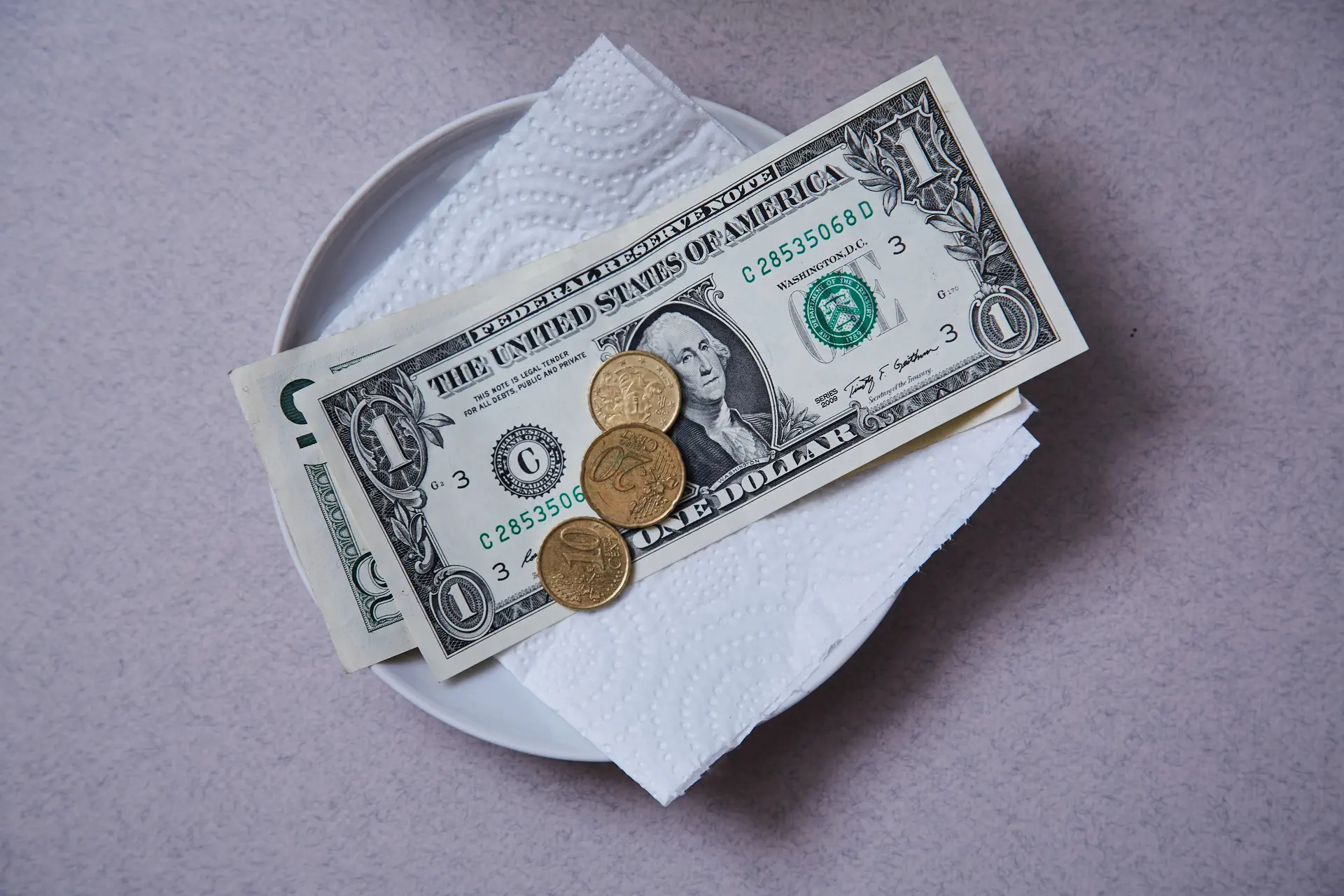
It’s legal, voluntary, and apparently the most divisive topic in every Panama expat Facebook group.
 Brian & Kent · GayExpatsPanama.com · Updated August 2026
In May 2026, Panama’s consumer protection agency ACODECO issued a public reminder: mandatory tipping is illegal. Establishments cannot add a tip to your bill without your consent. You can refuse it. You can file a formal complaint and get your money back. This is not new — the law has been on the books since 2016 — but ACODECO felt the need to say it again, loudly, which tells you something about how the tipping conversation is going.
That conversation is happening in every expat Facebook group right now. Panamanians are weighing in. Long-term expats are weighing in. Newly arrived Americans are weighing in. And practically no one agrees.
We’re going to try to give you a straight answer — what to actually tip, where, and how much — and then we’re going to give you the honest version of why this question is thornier than it looks.
First: The Law
Panama’s Law 34 of 2008, reinforced by the Consumer Protection and Competition Authority (ACODECO), makes it unambiguous: tipping in restaurants and shops is completely voluntary. No establishment is legally authorized to demand a tip, add one automatically to your bill, or pressure you into leaving one. If a venue does add a charge without your consent, ACODECO says you can present the tax receipt, file a formal complaint, and recover the money.
The Legal Bottom Line
No restaurant, bar, hotel, or service provider in Panama can legally require a tip or add one to your bill without consent. ACODECO (Panama’s consumer protection authority) reiterated this in May 2026. If it happens to you: keep the receipt, file a complaint at acodeco.gob.pa, and you can recover the charge. Many people don’t bother because the amounts feel small. ACODECO’s administrator has specifically noted this and encourages reporting regardless.
Worth Saying Plainly
A reader pushed back on an earlier version of this article, and they were right to: tipping here is a bonus for good service, not a wage subsidy. Paying staff a fair wage is the employer’s responsibility — not the customer’s, in Panama or anywhere else. Nothing in this guide is an expectation or an obligation. It’s a description of what locals do, and separately, what we and other tourists and expats have chosen to do.
In practice, many higher-end restaurants print a suggested tip line on the bill — 10%, 15%, 20% — which is legal as long as it’s labeled as a suggestion and your actual total without the tip is clearly shown. Some servers, when processing a card payment, will ask if you’d like to include a gratuity. That’s allowed. What’s not allowed is a line item that just appears, uninvited, as if it’s a tax.
Check your bill before you pay. That’s the habit to build.
What Locals Actually Do
A reader living in Panama corrected an earlier version of this section, and they were right to: tipping is not a customary practice for most Panamanians. Leaving nothing — at a sit-down restaurant, a fonda, a bar — is normal, unremarkable, and not read as rude. It is not what most locals do by default. When a Panamanian does leave something, it’s an occasional, discretionary gesture for genuinely exceptional service, not a habitual percentage. We don’t have a confirmed figure for what that occasional local tip typically looks like, and we’re not going to invent one to fill the gap — if we find a source we trust, we’ll add it here. They do not tip Uber drivers. They do not tip taxi drivers as a rule. Hotel housekeeping tipping is uncommon outside of upscale international properties.
There’s one thing that trips up a lot of newcomers: many mid-range and upscale restaurants already include a 10% servicio (service charge) in the bill. When that’s on your receipt, locals treat it as the tip and leave nothing additional. Look for it labeled as “servicio” before you add anything on top. Doubling up — paying the built-in 10% and then adding another 10–20% — is one of the ways American and Canadian tourists and expats inadvertently push the expected norm upward. The bill will also show the 7% ITBMS sales tax (10% on alcohol), which is entirely separate and not a gratuity.
The operative word in all of this is “good.” Panamanians understand tipping as a reward for attentive, earned service — not an automatic percentage applied to every transaction. A bad meal in a tourist trap does not obligate you to leave 18% because that’s what you do at home. Neither does a quick drink at a bar where the bartender handed you a bottle and walked away.
“Tipping is a way to show appreciation for a service, but it is not an obligation. Each person is free to leave a tip if they wish and in the amount they deem appropriate.” — ACODECO
The Quick Reference: What to Tip, Where
One more distinction worth making before the table: the “Local Norm” column below reflects that most Panamanians tip nothing, most of the time — that’s the norm, not an outlier. Where a norm includes an occasional exception (exceptional service at a sit-down restaurant, say), we’ve noted it. The “What Many Tourists & Expats Do” column is not a rule or a recommendation — it’s a description of the range we’ve observed and personally settled into, offered so you have a real number to start from if you want one.
| Situation | Local Norm | What Many Tourists & Expats Do |
|---|---|---|
| Sit-down restaurant, good service | Nothing, most of the time. Occasionally something modest for exceptional service — no confirmed figure. | 10–20%, entirely optional, depending on the service and the type of restaurant. |
| Sit-down restaurant, mediocre service | Nothing, or round up | Round up, or skip it. You are not obligated. |
| Casual fonda / counter service | Round up or nothing | Leave coins if you feel like it. No expectation. |
| Bar, full table service | $1–$2/round or 10% | $1–$2 per round is common. More if the bartender was exceptional. |
| Bar, ordering at the counter | Round up, or a coin | Round up is fine. No percentage math needed. |
| Hotel housekeeping | Not common; more so in international hotels | $1–$2/night is a kind gesture in any property. Leave it daily, not at checkout. |
| Hotel porter / bellhop | $1–$2 per bag | Same as the U.S. standard. This one is genuinely expected. |
| Uber | Not expected | The fare is the fare. A tip is welcome but carries zero expectation. |
| Metro taxi / metered taxi | Pay the fare; round up at most | Round up to the nearest dollar for convenience, not obligation. |
| Hotel concierge | $5–$20 depending on the ask | Scale to the effort. A restaurant booking: $5. Solving an actual problem: $10–$20. |
| Tour guide, half day | $5–$10 per person | $10–$20 per person for a good full-day guide is common and meaningful. |
| Boat crew / diving guide | $5–$15 per outing | Guides in tourism-heavy areas rely on tips as part of their income. Worth not skipping. |
| Grocery store bagger | $0.25–$1 depending on order size | This one surprises most expats. Baggers at Super 99 and El Rey are often unpaid or near-unpaid. Skipping this reads very differently than skipping a restaurant tip. |
| Spa / salon services | 10%, sometimes included | Check if service is included. If not, 10–15% for good work. |
| Grocery delivery / delivery apps | Not standard | A small tip ($1–$2) is appreciated and uncommon. Your call. |
The One That Gets Expats
Grocery store baggers. At Super 99, El Rey, and similar chains, the person bagging your groceries is frequently working without a salary — those tips are their income. A quarter to a dollar depending on the size of your order. It’s one of those local norms that doesn’t make it into most guides, and skipping it reads very differently than leaving nothing at a restaurant.
Pensionado Note
If you’re dining with a Pensionado card, you’re already receiving a 20% discount on the bill. Tipping on the pre-discount total is a generous and appropriate approach — the server didn’t discount your food, Panama did.
The Debate Nobody Warned Us About
Here’s where the straightforward tipping guide turns into something more complicated.
Spend any time in Panama expat Facebook groups and you will find this argument cycling through, reliably, every few weeks. The setup is always some version of: “I tipped 20% at [restaurant] and the server was so grateful” — followed immediately by a Panamanian commenter saying, essentially, please stop.
The concern from Panamanians isn’t ingratitude. It’s economic anxiety with a very specific mechanism. When a wave of American and Canadian expats arrives — people accustomed to 20–25% tipping as the baseline, in a country where tipping nothing at all has long been the norm — and tips at those rates, a few things start to happen. Servers begin to expect it. Restaurants notice. And the social norm starts to shift toward tipping being expected rather than optional. Not because anyone passed a law. Because the market learned what foreigners will pay.
“It’s a bit like urban gentrification: the well-to-do move in, prices go up, and the original residents are pushed out.”
That comparison — tipping gentrification — sounds dramatic until you do the math. A Panamanian family eating out on local salaries already feels the pressure of Panama City prices. If tipping norms shift from “not customary” toward 20% as a new baseline because that’s what the expat community normalized, it adds a real cost to every dinner out — one that didn’t exist for them before. For someone earning $600–$800 a month, 20% on a $20 dinner isn’t a pleasant gesture. It’s $4 they didn’t budget for.
And then there’s the flipside argument, made by the other half of those same Facebook threads: these are real people earning real wages for genuinely hard work, and if you can afford to retire in Panama on a U.S. Social Security check, leaving an extra $3 isn’t going to hurt you. The server carrying food in a hot restaurant is making a fraction of what they’d earn in the United States doing the same job. Surely that counts for something.
Both arguments are right. That’s what makes this genuinely difficult.
The Cost of Living Contradiction
Part of the appeal of Panama — the thing that pulled us here to research relocation in the first place — is the lower cost of living. A breakfast that costs $14.88 for two at El Trapiche instead of $30 at a Tampa diner. Metro rides at $0.35. Private doctor visits for $20–$70 with no referral required.
Those prices exist because Panama has its own wage structure, its own cost base, its own economy. The moment that economy starts to be shaped by the spending behavior of a financially distinct expat population, the math changes. Not just for tipping — for everything. Menu prices in tourist-heavy neighborhoods in Panama City already run notably higher than the same food in local-facing spots a few blocks away.
This is not a hypothetical. It has already happened in Boquete, the mountain town popular with North American retirees. Long-term residents — both expat and Panamanian — will tell you that prices have risen steadily in direct correlation with the influx of foreign retirees. Tipping is one piece of that; it’s not the only piece.
Something to Sit With
One of Panama’s main attractions is that your retirement income goes further here. But if expat spending habits reshape local price expectations, the affordability erodes — for locals first, and eventually for expats too. Over-tipping isn’t a moral crime. But it’s worth being conscious that what feels like generosity on your end lands differently on the economic ecosystem you’ve moved into.
What We’ve Decided to Do
We’re not going to tell you what to tip. That’s genuinely your call, and anyone who insists there’s only one correct answer is glossing over a real tension. But here’s where we’ve landed, as two Americans who grew up in a 20% tipping culture and are now thinking about it differently.
We generally tip 10–20% at sit-down restaurants, depending on the service and the type of restaurant — but we check the bill first. If a 10% servicio is already included, we factor that into the total rather than adding a full tip on top of it. We tip toward the higher end of that range, sometimes 20%, when service was excellent; toward the lower end, or nothing extra beyond an included servicio, when it was just okay. We do not apply a percentage to counter service, to fast food, or to grabbing a drink at a bar where the transaction took fifteen seconds. We round up Uber fares on longer rides if the driver was helpful. We leave $1–$2 per night for housekeeping in any hotel that provides daily service. And we keep small change for grocery baggers — that one caught us off guard when we first learned it.
We don’t tip 20–25% as a default. Not because we’re stingy — we tipped that way for decades in the U.S. without a second thought. But we’re not in the U.S. We moved here, in part, because we respect how Panama works. Respecting how Panama works means tipping the way Panama tips, not the way St. Pete tips. And it means being clear-eyed that tipping is entirely our choice to make, not something owed.
The server who brought your food did their job well. Ten percent of a $15 meal is $1.50. That’s a real and appreciated acknowledgment. Twenty-five percent of a $15 meal is $3.75 — nearly double — and the difference matters to the larger conversation about what Panama stays affordable for and who gets to live that life.
A Note on Gay Venues
At Panama City’s gay bars and clubs — BLG, XS Club, Maluka, and the others we visited — the same general norms apply. Tipping your bartender $1–$2 per round is appreciated and appropriate. If you’re sitting at a table with full waiter service, 10–20% on the tab is common depending on service. Drag performers who work the room for tips are a different category entirely — they’re working for those tips directly, and $1–$5 per interaction is the way to engage with that in a way that’s actually meaningful to the performer.
Nobody at Panama City’s gay venues is going to chase you down if you don’t tip. But the bar staff at smaller venues like Maluka are working hard for a room that may not be enormous. That context matters.
The Bottom Line
Tipping in Panama is voluntary — legally, culturally, and in every practical sense. The law says so. ACODECO says so. The long-standing local culture says so: most Panamanians tip nothing, most of the time, and that is the norm, not an oversight. If you choose to tip anyway, 10–20% for good sit-down service — depending on the service and the type of restaurant — is the range we and other tourists and expats commonly land on. But it’s a choice you’re making, not a local expectation, and paying workers fairly is never the customer’s job to backfill.
The debate about whether American-style tipping damages the local economy is real, not performative. It’s being had by Panamanians who live with the consequences of how expats spend, and it deserves to be taken seriously rather than dismissed as ingratitude.
You can be generous. You can also be culturally aware. Those two things are not in opposition — but getting the balance right takes a bit more thought than just doing what you always did back home.
Quick Reference — Tipping in Panama
Sources & Verification
- Firsthand: Our own tipping practice — generally 10–20% at sit-down restaurants, depending on service and restaurant type — from multiple trips to Panama City, most recently April 2026.
- Official: Panama’s Law 34 of 2008 on voluntary tipping; ACODECO consumer-protection reminder issued May 2026.
- Community: Recurring tipping-culture debate observed across Panama expat Facebook groups — cited sparingly, always as anecdotal pattern evidence, not statistics. A reader living in Panama also corrected this article’s earlier claim that Panamanians typically tip 10% at sit-down restaurants; that figure was a general-research estimate that got mislabeled as locally confirmed, not something we or the reader actually verified, and it’s been removed rather than replaced with another unconfirmed number.
- Not yet verified: We don’t have a confirmed source for what Panamanians typically leave on the rare occasions they do tip, or for formal wage data on restaurant servers and grocery baggers. We’re not filling that gap with an estimate; we’ll add real figures if and when we have sources we trust.
Facts and prices in this article last verified: August 2026.
More on Living in Panama
Brian & Kent
We’re a gay couple from St. Petersburg, Florida, researching and relocating to Panama in real time. Brian is pursuing a Pensionado visa. Kent does most of the research. Everything on this site is from our direct experience — the prices, the observations, the mistakes.
You write that the norm is to tip 10-15% at a sit down restaurant. Panama is not a country where you have to tip at all. It is very much a choice. And the owner of the restaurant has to pay the salary of their employees and not the customer, which goes for any business.
Thanks for this — you’re right, and we want to be precise about it. Tipping in Panama is entirely discretionary, and paying employees a living wage is the employer’s responsibility, not the customer’s. The 10–15% figure isn’t a local expectation; it’s what we personally do, and what we’ve seen a lot of tourists and expats do, coming from tipping-heavy home countries. We’re updating the article to make that distinction clearer. Appreciate you taking the time to flag it. Brian