Healthcare in Panama · Part 2 of 8
Healthcare by Location: What You Can Count On — and What You Can’t — in Every Region of Panama
Panama City’s hospitals would not embarrass Miami. The rest of the country is a different conversation.
 Brian & Kent · GayExpatsPanama.com · April 2026 Research Trip
Where you live in Panama is one of the most important healthcare decisions you will make — whether you frame it that way or not. Choosing Boquete over Panama City, or Pedasí over Coronado, is also choosing what happens if one of you has a cardiac event at 2 a.m. That is not a reason to rule out the interior. It is a reason to go in with clear eyes about what is available and how far you are from what is not.
This post is our attempt at an honest region-by-region map. Not the brochure version. Not the “Panama has excellent healthcare” paragraph that ends every relocation guide without specifying what that means in Bocas del Toro on a Saturday night. The actual picture, as best as we can verify it from April 2026 research and published expat sources.
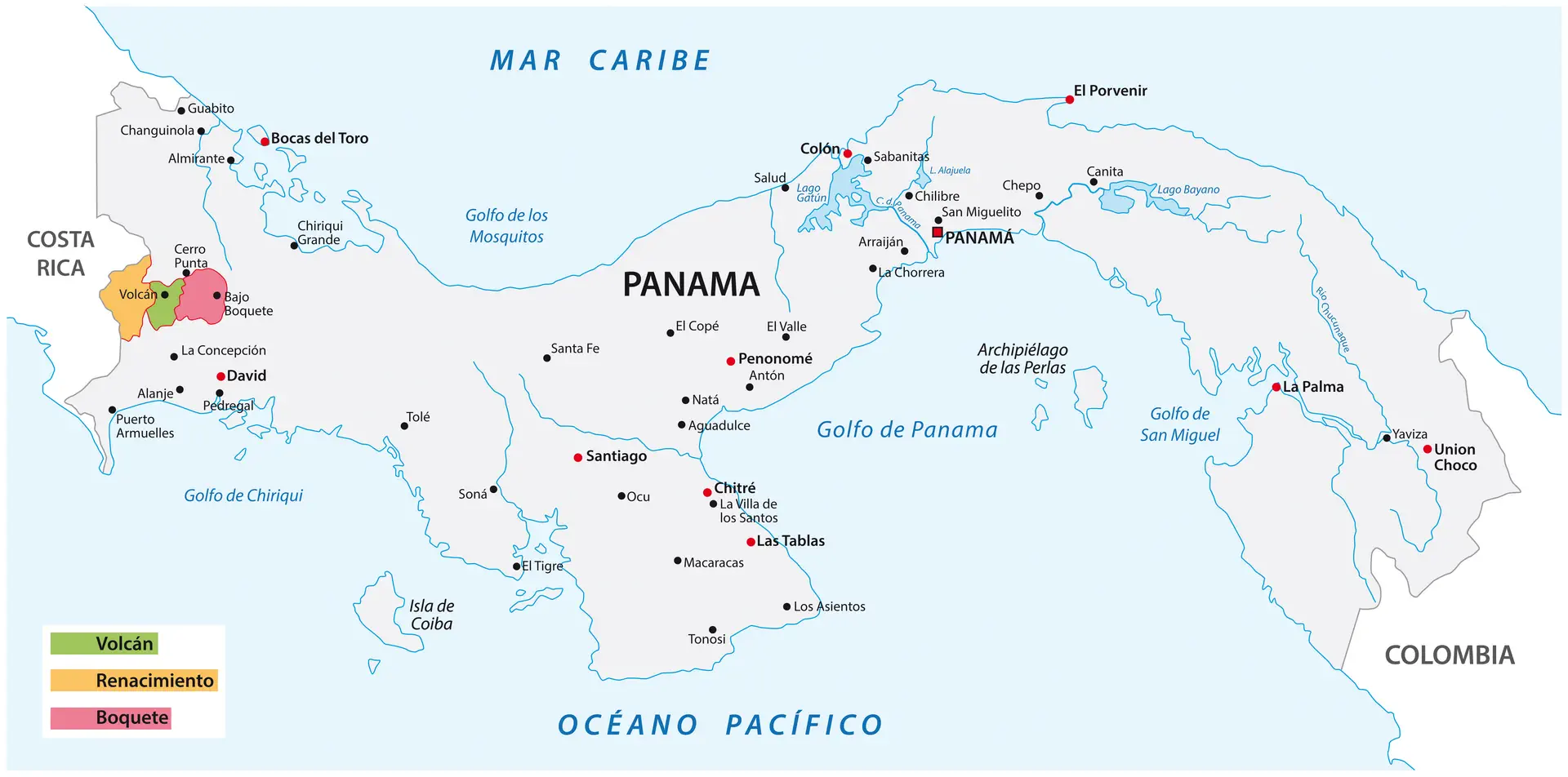
Panama is a small country — roughly the size of South Carolina — so no expat location puts you more than a few hours from a major hospital. But a few hours is a long time in some emergencies, and “a few hours” in Bocas del Toro involves a water taxi, a mountain road, and a calculation about whether you can afford to wait. These are things worth knowing before you sign a lease.
Before You Choose Where to Live — Ask These Questions
The One Rule That Applies Everywhere
Panama’s private hospitals in the major cities are genuinely good — many physicians trained in the U.S., modern equipment, reasonable prices. The public system (CSS and MINSA) is affordable but built for Panamanians who pay into it, not for expats. For anything beyond a minor issue, private care is the standard most expats use. For anything serious anywhere outside Panama City — plan for transfer.
Healthcare in Panama: The Complete Expat Guide
Eight articles covering every healthcare decision a Panama expat needs to make — from choosing insurance before you move to knowing when it's time to go back to the US for care.
- Health Insurance & Costs: An Honest Guide for U.S. Expats
- Healthcare by Location: What You Can Count On in Every Region You are here
- Medical Emergencies, Medicare & What Every Expat Needs to Plan
- Aging Well in Panama: Assisted Living Options for Expats
- Assisted Care by Location: A Region-by-Region Guide & Hiring Checklist
- When Do You Go Back? The Question Every Panama Expat Will Eventually Ask
- LGBTQ+ Healthcare: PrEP, PEP, HIV Care, Affirming Doctors & Privacy
- Prescription Medications in Panama
How to Read This Guide
We have organized this by the regions where expats actually concentrate, not by Panama’s official provinces. For each region, we cover: what private care looks like locally, what the transfer situation is for serious emergencies, what English-language access is like, and our honest take on the healthcare trade-off you are making by living there. We end with a quick-reference comparison table.
One note on sourcing: we did not visit every region during our April 2026 trip. We were in Panama City. The regional assessments are built from verified expat sources, hospital data, and firsthand expat accounts — not from personal experience at those facilities. Where we know something from the room rather than the page, we say so. Where we are synthesizing others’ experience, we say that too.
Panama City
Panama City
Best healthcare access in the country · All major private hospitals
Panama City is where the serious hospitals are, and by regional standards they are genuinely impressive. Four private institutions are the core of what expats use.
Pacífica Salud (Hospital Punta Pacífica) is the one most expat guides lead with, and for good reason. It is the only hospital in Latin America affiliated with and managed by Johns Hopkins Medicine International. It is JCI-accredited, has a dedicated international patient office with English-speaking staff, and covers cardiology and oncology at a level that draws medical tourists from across the region. It is also the most expensive of the major private hospitals. Located in Punta Pacífica, near Cinta Costera.
The Panama Clinic is the newest major player and the one most relevant to U.S. expats right now, because it is the only hospital in Panama with Medicare Advantage direct billing — along with GEHA, Federal Blue Cross and Blue Shield, TRICARE, and CHAMPVA. It has TEMOS international accreditation, a rooftop helipad (the only one in Panama City), 30-plus specialties, and a reputation for cutting-edge technology including robotic surgery. Located at the Pacific Center complex in Panama City. For any expat with U.S. federal insurance or Medicare Advantage, this is the first call.
Before You Count on Medicare Advantage Here — Read This
Medicare Advantage direct billing at The Panama Clinic is real and useful, but it comes with a legal complication most expats are not aware of: federal regulation requires you to maintain your primary residence within your plan’s U.S. service area to stay enrolled. If Panama is your permanent home, you may not meet that requirement. The coverage also applies to emergency care only, not routine visits, and comes with caps and deductibles. Read our full breakdown of Medicare Advantage, the residency requirement, and what it means for permanent Panama residents →
Hospital San Fernando was the first hospital in Panama to receive JCI accreditation and one of the oldest private hospitals in the country, founded in 1949. It is affiliated with Miami Children’s Hospital, Baptist Health International of Miami, and Tulane University Health Sciences Center. The international relations office handles insurance liaison and there is English-language support — dial #2 for English. Located on Vía España. Generally considered slightly more affordable than Pacífica Salud while maintaining comparable quality for most procedures.
Hospital Nacional is centrally located in Bella Vista, known for bilingual staff and a practical balance of quality and cost. Run by the American Hospital Management Company, affiliated with the Kendall Medical Center in Florida and the University of Nebraska Medical Center. Over 100 specialists on staff. This is the hospital that often comes up in expat conversations as the “most accessible” of the major private facilities — shorter wait times and slightly lower costs than Pacífica Salud for routine and moderate-complexity care.
Centro Médico Paitilla (Avenida Balboa and 53rd Street, Marbella) rounds out the major private options. Solid reputation for general care and well-located for expats living in the Marbella or Bella Vista neighborhoods.
MiniMed operates 14 clinics across Panama City (and one hospital), with 24-hour urgent care at two locations. The Expat Health Membership at $22/month ($243/year) gives significant discounts on consultations, labs, diagnostics, and prescriptions. No exclusions for pre-existing conditions or age. Useful for routine care and urgent-but-not-emergency situations without navigating a major hospital system.
Panama City — Gay-Specific Note
Panama City has the largest and most visible gay community in the country, concentrated in Bella Vista. Private hospitals there are used to treating gay men and gay couples without obvious issue — multiple expat accounts confirm professional, matter-of-fact care. The legal gap remains: without a healthcare power of attorney naming your partner as decision-maker, he has no automatic standing in an emergency. That paperwork matters regardless of how welcoming the staff is. See our Medical Emergency Planning post for specifics.
Chiriquí Province — David and Boquete
David & Boquete (Chiriquí Province)
Western Panama’s expat heartland · Two solid private hospitals in David
Chiriquí is the most popular alternative to Panama City for expat retirement, with Boquete drawing the largest highland community and David serving as the regional commercial and medical hub. The healthcare picture here is genuinely better than most comparable-sized cities in Central America — but it is not Panama City, and the difference matters for certain situations.
Hospital Chiriquí is the leading private hospital for western Panama, consistently rated highly by the expat community. It has a cardiac catheterization lab — which means it can handle heart attacks on-site rather than stabilizing and transferring — a critical distinction. It covers a range of specialties and is widely accepted by international health insurers. Located in David, approximately 30–45 minutes from central Boquete depending on road conditions.
Centro Médico Mae Lewis (also in David) is smaller than Hospital Chiriquí but well regarded for attentive, personalized care. It accepts Aetna, Cigna, and TRICARE with direct billing — a notable practical advantage. It is the preferred choice among some expat residents of the province specifically because of the insurance billing relationships.
A Note on Medicare Advantage at Mae Lewis
Mae Lewis accepts TRICARE and Cigna directly, which are straightforward federal and private plans. Medicare Advantage is a different matter. If you are counting on a Medicare Advantage plan for care here — or anywhere in Panama — there are legal residency requirements that may affect whether you are actually eligible to maintain that coverage as a permanent expat. Read our full explanation of the Medicare Advantage residency rules and the legal risks for Panama residents →
Boquete itself does not have a full private hospital. There is a public polyclinic equipped to stabilize emergencies and prepare patients for transfer to David. A new, larger polyclinic has been under construction in Boquete but completion has not been confirmed as of our April 2026 research. For anything beyond basic care, the working assumption is a drive to David.
The Specialist Coverage Gap — A Real Expat Account
One expat documented her husband’s severe heart attack in the David area: the interventional cardiologist needed for the stent procedure was out of town with no replacement available. The situation resolved, but the gap was real and the timing mattered. Hospital Chiriquí has improved significantly and now has a cath lab, which addresses this for cardiac emergencies. But specialist availability outside a major hospital system is always more variable than it is in Panama City. Ask specifically about specialist coverage for any condition you currently manage before you decide where to live.
English proficiency in David’s hospitals is more limited than in Panama City’s major institutions. You will encounter it, but it is inconsistent by staff member. Download Google Translate and learn the Spanish vocabulary for your specific conditions and medications before you need it under pressure.
Boquete’s expat community is active and is the best real-time source for specific physician recommendations in the David facilities. Ask in the Boquete Facebook groups — the recommendations there are current in a way that any published guide, including this one, cannot be.
Boquete Emergency Registration Service
Boquete has a local emergency registration service — approximately $90/year — where you register your home location, medical history, vehicle description, and emergency contacts including a dog sitter if needed. They provide 24-hour service in English and Spanish and can coordinate response to your location when there are no street addresses. Ask in the Boquete expat community for the current provider.
Pacific Beach Region — Coronado and Panamá Oeste
Coronado & Panamá Oeste
Pacific Coast, ~1 hour west of Panama City · Clinic-level local care
Coronado is about an hour west of Panama City — close enough that many expats treat Panama City hospitals as their primary care destination and use local facilities only for minor issues. That proximity is a genuine asset.
The primary private facility in Coronado is Clínica San Fernando Coronado, a satellite of the San Fernando Hospital group. It is a clinic, not a full hospital — it has an emergency room and can handle diagnostics and basic interventions, but it is affiliated with the main San Fernando facility in Panama City for anything requiring higher-level care. For a genuine emergency, the working plan is Panama City.
Clínica Hospital Brisas is another option in the Panamá Oeste region, popular among the local expat community for routine care.
The practical healthcare model for most Coronado expats: use local clinics for routine visits, maintain a relationship with a Panama City specialist for any ongoing conditions, and know your route to Panama City’s major hospitals for anything serious. The drive is manageable in normal traffic. It is less manageable at 3 a.m. on a rainy night if someone is deteriorating.
Azuero Peninsula — Chitré and Pedasí
Azuero Peninsula (Chitré & Pedasí)
Panama’s cultural heartland · 3.5–5 hours from Panama City
The Azuero Peninsula draws a different kind of expat than Boquete — often more adventurous, more oriented toward a genuinely Panamanian life, more willing to trade convenience for authenticity. The healthcare trade-off is real and worth stating directly.
Chitré is the commercial center of the Azuero and has substantially better healthcare access than its size might suggest. It has two large public hospitals and more than five private clinics and hospitals. The most significant recent addition is the Clínica Especializada de Azuero, a new private hospital inaugurated in 2024. It has a 24-hour emergency room, clinical labs, radiology and imaging, outpatient surgery, an ICU, operating rooms, and a maternity ward — making it the best-equipped hospital in the Azuero as of 2026.
Hospital Anita Moreno in La Villa de los Santos and the Dr. Gustavo Nelson Collado Hospital in Chitré are the established regional public facilities. The Collado hospital has a range of specialties and has historically been the backup reference for the region.
Pedasí is the charming end-of-the-road town that draws expats looking for the quieter version of Panama. It has a public health clinic (Centro de Salud) that handles basic ailments, and a couple of private clinics for general consultations and basic labs. For anything beyond that, the nearest real facility is about an hour away in Chitré or Las Tablas. For specialist care or genuine emergencies, the honest answer is Panama City — five hours by car.
Most Pedasí expats pay out of pocket for routine care, which is genuinely affordable: $15–$25 for a consultation. For emergencies, the math changes entirely. A significant number of Pedasí expats “go naked” — no insurance — which is a calculation that makes more sense at 45 than at 70, and more sense for routine care than for cardiac events.
Pedasí is the town for the pioneering expat. Its healthcare situation matches that description exactly.
English proficiency in Azuero medical facilities is limited. Chitré has a small but growing expat community and some practitioners have functional English. In Pedasí, plan to communicate in Spanish or with a translation app.
Bocas del Toro
Bocas del Toro
Caribbean archipelago · The most honest healthcare conversation in Panama
We are going to be direct about Bocas, because some of what gets written about it glosses over a situation that expats living there describe quite candidly.
Bocas del Toro is an archipelago on Panama’s Caribbean coast. Getting anywhere from it involves a water taxi. The main island, Isla Colón, has a public hospital that has been rebuilt and improved — it can handle cuts, infections, basic trauma, and minor emergencies. It is not equipped for major surgery, cardiac intervention, or anything requiring specialist care.
One expat put it plainly: “If you ended up having a heart attack or something as serious as that, you would want to go to either David or Panama City.” Getting to David from Bocas involves a water taxi to the mainland followed by a four-hour mountain road drive — or a helicopter, if you have the coverage and the time. Getting to Panama City is approximately eleven hours by road. Costa Rica is sometimes a more practical option for emergencies given the geography.
There is also a private clinic on Isla Colón — Centro Medico Dr. Thomas S. Harricks — for basic care and daily needs. Changuinola, on the mainland, has a public regional hospital about an hour away (including water taxi time) and is larger than the Bocas facility, though still a public institution with the limitations that implies.
A Documented Outcome Worth Reading
One published account describes a Canadian man in Bocas who had a diabetic crisis while on a remote island. Local services could do little for him. The following day he was placed on a helicopter to Panama City. He died on the way. We include this not to catastrophize Bocas — it is a beloved place where many expats live full and healthy lives — but because “it’s fine most of the time” is not the same as “it is appropriate for someone managing a serious chronic condition.” Know what you are choosing.
Medical evacuation coverage is non-negotiable if you live in Bocas. The logistics of extracting someone in a genuine emergency from a Caribbean island are complicated and expensive. A MedJet Assist membership or equivalent is not optional for a Bocas resident managing any health condition more complex than excellent general health.
The expat community in Bocas is warm and experienced and will give you the most current on-the-ground healthcare picture. Ask there, not just here.
El Valle de Antón and the Central Highlands
El Valle de Antón & Central Highlands
Mountain valley community · ~2 hours from Panama City
El Valle de Antón is a popular day-trip from Panama City that has attracted a smaller but genuine expat community looking for cooler mountain temperatures and a quieter pace. It is serviced by a polyclinica with basic care. The nearest significant hospital is approximately 30 minutes away in a nearby larger town, with Panama City about two hours in normal traffic.
The healthcare model here is similar to Coronado — use local clinics for routine matters, go to Panama City for anything else. The mountain road is the variable. El Valle sits in a volcanic crater and access roads can be complicated in heavy rain. Factor that into your emergency planning.
The Regional Comparison
| Region | Best Local Private Option | Emergency Capacity | Distance to Panama City | Our Honest Assessment |
|---|---|---|---|---|
| Panama City | Pacífica Salud, The Panama Clinic, San Fernando, Hospital Nacional | Full — including cardiac, neuro, trauma | You’re there | Best healthcare access in Central America at this price point. The right base for anyone managing complex conditions. |
| David / Boquete | Hospital Chiriquí (cath lab), Mae Lewis (TRICARE/Cigna direct billing) | Good — cardiac cath lab on-site. Specialist coverage variable. | ~6 hours by road; domestic flights from David | Solid for western Panama. Boquete is 30–45 min from David’s hospitals. Acceptable trade-off for most expats. |
| Coronado | Clínica San Fernando Coronado (clinic, not full hospital) | Stabilize and transfer. Major emergencies go to Panama City. | ~1 hour | Proximity to Panama City makes this manageable. Treat it as an extension of the capital for healthcare purposes. |
| Chitré / Azuero | Clínica Especializada de Azuero (new 2024, ICU, 24hr ER) | Moderate — new private hospital a genuine improvement. Specialist coverage limited. | ~3.5 hours | Better than it was. Clínica Especializada de Azuero has changed the calculation for Chitré-area expats meaningfully. |
| Pedasí | Basic public clinic; private clinics for GP visits | Very limited. Stabilize only; transfer to Chitré or Panama City. | ~5 hours | Beautiful place. Honest healthcare trade-off. Medical evacuation coverage is essential, not optional. |
| Bocas del Toro | Centro Medico Dr. Thomas S. Harricks (private clinic); public hospital on Isla Colón | Very limited. Water taxi + mountain road to David (4 hrs) or airlift. | ~11 hours by road; air access variable | The highest healthcare risk location for expats in Panama. Appropriate for healthy people who plan carefully. Not appropriate for anyone managing significant chronic conditions without exceptional evacuation coverage. |
| El Valle de Antón | Polyclinica | Stabilize only. Transfer to nearby towns or Panama City. | ~2 hours | Mountain access adds complexity to emergency response. Manageable for healthy expats with Panama City as their primary care base. |
The Honest Framework: Choosing Where to Live
We think about this in terms of two questions. First, what is your current health situation — and what is your realistic health trajectory over the next decade? Someone at 54 with no managed conditions and no family history of cardiac disease is making a different calculation than someone at 67 managing atrial fibrillation. The region you choose should reflect the honest version of that answer, not the optimistic one.
Second, what is your tolerance for the transfer scenario? In Panama City, a serious emergency happens inside the city’s hospital system. In Boquete, a serious emergency means 30–45 minutes to David — manageable. In Pedasí, it means an hour to Chitré or five hours to Panama City. In Bocas, it means a water taxi and a mountain road or an airlift. You are not choosing between “safe” and “unsafe.” You are choosing how much time you are willing to accept between the emergency and the hospital that can address it.
Medical Evacuation Coverage Scales With Distance
Panama City: you may never need it. David/Boquete: get it. Coronado: get it. Azuero: get it, particularly if you’re in Pedasí. Bocas: it is non-negotiable. The further you are from Panama City, the more critical evacuation membership becomes — and the more it should be MedJet Assist or Global Rescue specifically, not just travel insurance with an evacuation rider. The difference is who calls the shots on where you go.
One Thing Every Region Has in Common
Regardless of where you live in Panama, the legal documents we covered in our Medical Emergency Planning post are relevant. Panama does not recognize same-sex marriage. Your partner has no automatic legal standing in any Panamanian hospital in any region if you are incapacitated. A healthcare power of attorney executed under Panamanian law — naming your partner as your authorized decision-maker — is the fix, and it applies whether you are in a Bella Vista private hospital or a polyclinica in El Valle. Execute those documents before you arrive. Carry a copy in your wallet.
The One Thing Expat Facebook Groups Are Actually Good For
Current, specific, local doctor recommendations. Every region we have covered has an active expat Facebook group, and those groups contain real-time information about which specific physicians at which specific facilities are excellent, which have left, and which should be avoided. No published guide — including this one — can stay current the way a 2,000-member Facebook group can. Use them for physician referrals specifically.
Sources & Verification
- Official: Hospital accreditations and affiliations cited by name (Pacífica Salud’s Johns Hopkins Medicine International management and JCI accreditation; The Panama Clinic’s TEMOS accreditation; Hospital San Fernando’s JCI accreditation and Miami Children’s/Baptist Health/Tulane affiliations) — publicly published institutional credentials, not independently audited by us.
- Official: Panama does not legally recognize same-sex marriage; a partner has no automatic medical decision-making standing without a Panamanian healthcare power of attorney — consistent with the legal picture established elsewhere in this series.
- Community: All region-by-region assessments outside Panama City (David/Boquete, Coronado, Azuero, Bocas del Toro, El Valle) — including facility quality, English-language access, transfer logistics, the Boquete emergency registration service, and the documented Bocas del Toro fatality account. As stated in the article itself: built from verified expat sources, hospital data, and firsthand expat accounts, not from our own personal experience at these facilities, since our April 2026 trip was based in Panama City.
- Firsthand: The Panama City hospital and clinic assessments, drawn from our own April 2026 research trip.
Facts and observations in this article last verified: April 2026.
Brian & Kent
A gay couple based in St. Petersburg, Florida, researching and relocating to Panama in real time. Brian is applying for a Pensionado visa. Kent is the primary researcher. The research is current, the attorney meetings are recent, and the prices are from this year.