Pensionado Visa
Your Panama Immigration Appointment:
What to Expect on Filing Day
It looks overwhelming when you arrive. It isn’t. Here’s exactly what happens from the moment you leave your hotel to the moment you walk out holding a residency card.
 Brian & Kent · GayExpatsPanama.com · April 2026 Research Trip
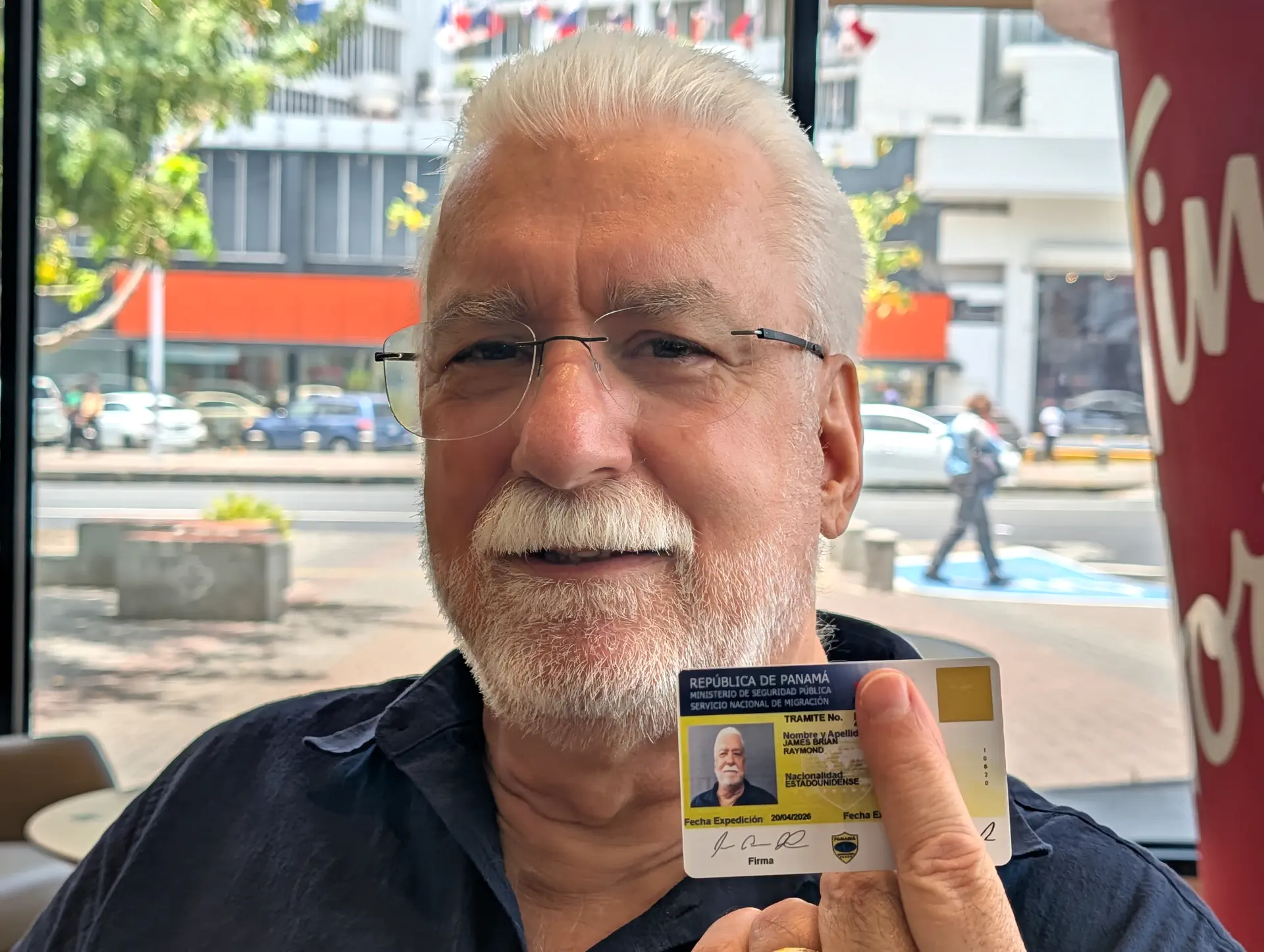
After the attorney meetings, the apostilled documents, the health certificate, and the week your passport spends out of your possession — filing day is the moment everything has been building toward. Brian went through his in April 2026. We documented it in detail so you know exactly what’s coming.
The short version: it looks chaotic, it runs more smoothly than it looks, and you will leave holding a card. The longer version is below.
Panama Pensionado Visa Series
Everything we've learned going through the Panama Pensionado visa process ourselves — the attorney, the documents, the appointments, and what actually happened on filing day.
- The Panama Pensionado Visa: Simpler Than You Think
- Can Gay Couples Get the Panama Pensionado Visa Together? What Actually Changes
- No, You Can't Just Fly to Panama and File Your Pensionado Visa Yourself
- Finding Your Panama Attorney: The Right Firm Changes Everything
- Your Pension Letter: The Document Panama Needs — and What Social Security Actually Sends You
- Your FBI Background Check for Panama — How to Get It, Fast
- What Is an Apostille — and Why You Need One for Panama
- The Medical Certificate: What to Expect at Your Panama Visa Exam
- Your Panama Immigration Appointment: What to Expect on Filing Day You are here
- My Panama Permanent Residency Was Approved — The Actual Timeline, Day by Day
Before You Go: What Your Attorney Arranges
You do not schedule your own appointment with Panama Immigration. Your attorney does. They coordinate directly with the Servicio Nacional de Migración and set the appointment time on your behalf — which is one more reason why having the right attorney matters before you get anywhere near that building.
Appointments are typically in the morning. Ours was at 9:30am, which meant leaving the hotel at 8:45am. That buffer turned out to matter.
Don’t Schedule This Yourself
Your immigration appointment is arranged by your attorney — not by you, not through an online portal. Confirm the appointment time and logistics with your attorney’s office at least a day in advance, and make sure they’re sending a staff member to meet you there. Navigating the Immigration building alone on your first visit would be significantly harder than it needs to be.
Getting There: The Address and the Traffic
The National Immigration Service — Servicio Nacional de Migración — does not have a conventional street address. Panama uses Plus Codes for many locations, and this is one of them. The Plus Code is 2F98+PH2 on Vía Ricardo J. Alfaro. Type that directly into Google Maps and it takes you to the front door.
Getting There — The Essentials
Leave Early — The Traffic Is Real
The streets around the Immigration office during morning rush hour have very heavy traffic. This is not occasional — it is consistent. Our Uber driver bypassed the worst of it by taking the Northern Corridor Auto Vista toll road, which added a small cost and saved a meaningful amount of time. If your driver suggests a toll road to avoid the gridlock, say yes without hesitation.
Build in at least 30–45 minutes of buffer beyond what you think you need. Arriving early at a government immigration appointment is fine. Arriving late is a problem you do not want to create for yourself on this particular day.
What You’ll See When You Arrive
When you pull up to the building, the first thing you’ll notice is people. A lot of people. The outdoor waiting area will likely be full. The entrance area will be full. Inside will be full. People moving in multiple directions, documents being carried, voices in Spanish, officials at windows.
Our honest reaction when we arrived: it looks overwhelming. It isn’t. The process is organized and runs smoothly — it’s just not fast. What looks like chaos from the outside has a clear structure once you’re inside it and have someone guiding you through it.
“It looked like everyone in Panama who needed anything from the government decided to need it on the same Monday morning. The outdoor waiting area was full. Inside was full. And then it turned out to be organized.”
This is exactly why having your attorney’s staff member meet you there is not optional — it’s the difference between having a clear path through the building and standing in the entrance wondering which direction to go first.
Inside: Step by Step
Here is the actual sequence of what happens once you walk through the door. Every step is managed by your attorney’s representative — you follow their lead.
- Document intake. Your attorney’s staff member takes your paperwork to the document intake window on the right as you enter. The clerk reviews everything, stamps the papers, and returns them. This is where your application is formally received.
- Downstairs. From intake, you’re guided to a staircase heading down to the lower level, where lines run in multiple directions for various services. Your guide takes you to the correct one — the line for photos and temporary residency cards.
- The outer chairs. There is a row of chairs leading toward a door into the interior office. As one person goes through the door, everyone in the outer row stands up and moves one seat closer. An actual stand-up-and-move exercise, repeated until you reach the door. Expect roughly fifteen minutes here.
- The interior office chairs. Once through the door, you’ll find three rows of chairs arranged in a grid — twelve more seats in the interior room. This is not the end. Move through these the same way. Total time from entering the outer line to reaching a desk: approximately thirty minutes.
- The cubicle. You’re called to one of the cubicles arranged around the perimeter of the interior office. The official reviews your paperwork, checks your file number, examines your passport. Then: “Remove your glasses.” Your photo is taken.
- The card. Your name is called. You walk to an officer sitting in front of several small printers. A card slides out. You sign a book. The card is handed to you. That’s it — you’re a temporary resident of Panama.
The Chair System
The musical-chair process sounds unusual, but it’s genuinely orderly once you’re in it. Everyone does the same thing, it moves at a consistent pace, and the staff manage it efficiently. Expect the wait, don’t fight it, and bring something to read or listen to.
What the Card Means — Immediately
The temporary residency card issued on filing day is not a placeholder. It is legal residency status in Panama, and several Pensionado discounts become active immediately upon issuance.
| Benefit | What Changes |
|---|---|
| Legal status | You are a legal temporary resident of Panama from the moment the card is in your hand |
| Metro fare | Drops from $0.35 to $0.24 per ride with your Pensionado card |
| Cultural attractions | Panama Canal Museum: $2.50 vs. $15.00 standard. Miraflores Locks: $1.50 vs. $17.22. |
| Medical discounts | 20% off most private medical services |
| Path to permanent residency | 3–6 months from filing to a formal resolution — Brian’s own case took roughly 3 months |
The Full Timeline, From Attorney Meeting to Permanent Card
Based on our process through Morgan & Morgan in April 2026, here is how the Pensionado timeline actually runs:
| Stage | What Happens | Timing |
|---|---|---|
| Attorney meeting | Documents reviewed, application prepared, appointment scheduled | Monday (in our case) |
| Passport registration | Passport registered with the Immigration Authority | Tuesday |
| Filing | Residency permit petition filed by your attorney | Wednesday–Thursday |
| Immigration appointment | Photo taken, temporary residency card issued | Friday or following Monday |
| Permanent residency | Resolution issued after Immigration reviews your full file | 3–6 months from filing — Brian’s own case: ~3 months |
| eCédula | National ID card — applied for after permanent residency | After permanent card is issued |
A Note for Same-Sex Couples
If you’re applying as a couple, both partners go through this process — but separately. Each application is independent. Each partner has their own appointment, their own photo taken, and their own card issued. There is no joint filing option because Panama does not legally recognize same-sex partnerships. We cover the full financial and strategic picture of that independence in a dedicated article earlier in this series: Can Gay Couples Get the Panama Pensionado Visa Together?
The upside that isn’t immediately obvious: each partner ends up with fully independent legal standing in Panama, which actually matters for long-term planning — property ownership, banking, and legal documents all flow from that standing. The less comfortable reality is that you’ll go through the significant moments of this process at different times.
For Same-Sex Couples
Budget emotionally for the fact that filing day is separate — one partner goes first, the other follows later. It’s not a problem with the process; it’s just how independent applications work. Both partners end up in exactly the same position. The sequence is different, the outcome is the same.
Day-Of Checklist
Everything your attorney needs should already be assembled and filed by the time your appointment arrives. But run through this before you leave your hotel:
- Long pants (required for men in government buildings — not a suggestion)
- Your passport — or confirm with your attorney whether they’re holding it and bringing it
- Confirmation of your attorney’s staff member meeting you there, and their contact number
- The Plus Code address (2F98+PH2, Vía Ricardo J. Alfaro) copied into your phone
- Extra time built in — leave at least 30 minutes earlier than feels necessary
- Something to read or listen to while you work through the chair lines
- Glasses removed before you reach the photo step — they’ll ask you to take them off
Sources & Verification
- Firsthand: Brian’s own filing-day experience at Panama’s National Immigration Service — the Plus Code location, the document intake and chair-queue process, the photo and card-issuance steps, and his permanent residency timeline (filed 17 April 2026, confirmed 24 July 2026, approximately 3 months).
- Firsthand: The metro fare discount ($0.35 to $0.24), consistent with figures independently confirmed elsewhere in this project.
- Not yet verified: The Panama Canal Museum ($2.50 vs. $15.00) and Miraflores Locks ($1.50 vs. $17.22) Pensionado discount pricing — reported figures not independently re-confirmed for this retrofit.
Facts in this article last verified: July 2026.
Panama Pensionado Visa Series
- 01 The Panama Pensionado Visa: Simpler Than You Think
- 02 Can Gay Couples Get the Panama Pensionado Visa Together? What Actually Changes
- 03 No, You Can't Just Fly to Panama and File Your Pensionado Visa Yourself
- 04 Finding Your Panama Attorney: The Right Firm Changes Everything
- 05 Your Pension Letter: The Document Panama Needs — and What Social Security Actually Sends You
- 06 Your FBI Background Check for Panama — How to Get It, Fast
- 07 What Is an Apostille — and Why You Need One for Panama
- 08 The Medical Certificate: What to Expect at Your Panama Visa Exam
- 09 Your Panama Immigration Appointment: What to Expect on Filing Day
- 10 My Panama Permanent Residency Was Approved — The Actual Timeline, Day by Day
Brian & Kent
A gay couple based in St. Petersburg, Florida, researching and relocating to Panama in real time. Brian completed his Pensionado filing in April 2026 and walked out of the Immigration office holding a temporary residency card; his permanent residency was approved in July 2026. Everything on this site happened to us, cost what we say it cost, and is from this year.