Pensionado Visa
Finding Your Panama Attorney:
The Right Firm Changes Everything
Why the attorney you choose is the most consequential decision of your entire relocation — and exactly what to ask before you sign anything.
 Brian & Kent · GayExpatsPanama.com · April 2026 Research Trip
Before you book a flight, before you look at apartments, before you do almost anything else — you need an attorney in Panama. Not eventually. First. This is the person who will make or break your visa, and potentially handle the most important legal and financial decisions of your expat life.
We knew this going in. What we didn’t fully appreciate until we sat down with Carolina Tejada Vaprio at Morgan & Morgan in Panama City was just how much choosing the right firm — not just the right attorney — matters for the long term.
Panama Pensionado Visa Series
Everything we've learned going through the Panama Pensionado visa process ourselves — the attorney, the documents, the appointments, and what actually happened on filing day.
- The Panama Pensionado Visa: Simpler Than You Think
- Can Gay Couples Get the Panama Pensionado Visa Together? What Actually Changes
- No, You Can't Just Fly to Panama and File Your Pensionado Visa Yourself
- Finding Your Panama Attorney: The Right Firm Changes Everything You are here
- Your Pension Letter: The Document Panama Needs — and What Social Security Actually Sends You
- Your FBI Background Check for Panama — How to Get It, Fast
- What Is an Apostille — and Why You Need One for Panama
- The Medical Certificate: What to Expect at Your Panama Visa Exam
- Your Panama Immigration Appointment: What to Expect on Filing Day
- My Panama Permanent Residency Was Approved — The Actual Timeline, Day by Day
Why You Cannot File This Yourself
This isn’t a technicality or a bureaucratic inconvenience. It is the law. Decree Law No. 3 of 2008, Article 28, requires that all Pensionado visa applications be filed by a licensed Panamanian attorney. Full stop. There is no workaround, no exception, no online filing portal. We cover this requirement in full in the previous article in this series.
Legal Requirement
Self-filing a Pensionado visa is illegal under Panamanian law. Any service offering to file your application without a licensed Panamanian attorney is operating outside the law. Do not use them, regardless of the price.
This also means that when you see forum posts from people who “did it themselves” — they either had an attorney they’re not mentioning, got very lucky, or their application hasn’t been reviewed yet.
Our Meeting at Morgan & Morgan
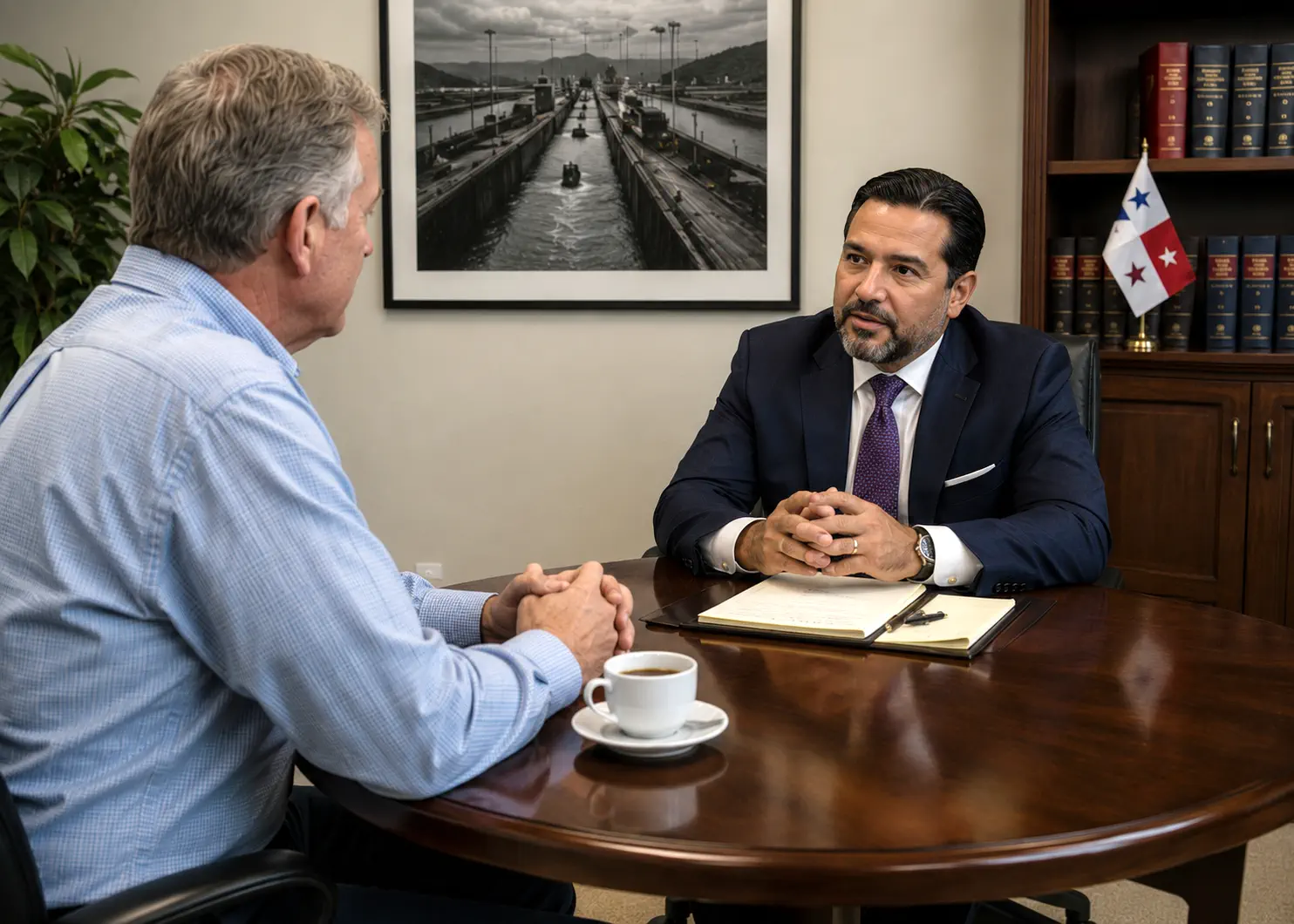
We met with Carolina Tejada Vaprio at Morgan & Morgan during our April 2026 research trip. Morgan & Morgan is one of Panama’s largest and most established law firms — they handle everything from individual visas to major commercial transactions. Which is exactly why we wanted to meet with them.
The conversation covered the Pensionado process in detail, the documentation required, realistic timelines, what actually happens on the day you file, and what we should expect in the months that follow. We recorded it. Watch it below.
Our attorney consultation with Carolina Tejada Vaprio at Morgan & Morgan, Panama City — April 2026.
The Real Cost of a Pensionado Visa — Ask Everything Upfront
Attorney fees for a Pensionado visa in Panama vary. Some firms advertise surprisingly low numbers. And then the invoice arrives and it’s considerably higher. This is not bait-and-switch in the criminal sense — it’s often that the advertised price was simply the base attorney fee, and a long list of additional costs was never discussed upfront.
The Low Quote Problem
A number of firms advertise Pensionado visa fees that look attractive. What they often don’t advertise is that those fees exclude government filing costs, document translation, apostille certification, and other fees that are in reality unavoidable. Always get a complete itemized quote before committing.
Here is every cost category you should ask about explicitly before you hire anyone. Do not assume these are included unless you have it confirmed in writing.
Cost Checklist — Ask About Every Line Item
How to Ask
A good attorney will not be offended by this question: “Can you send me a complete estimate that includes all government fees, translations, apostille requirements, and any other anticipated disbursements — not just your professional fee?” If they bristle, that tells you something.
What the Timeline Actually Looks Like
Based on our meeting with Carolina and our own research, here is a realistic timeline from the day you file. This is a genuinely two-stage process — a temporary card first, then a separate resolution granting permanent residency — not a single approval:
| Stage | What Happens | Approximate Timing |
|---|---|---|
| Filing day | Attorney submits complete application to Panama Immigration | Day 1 |
| Temporary residency card | Card issued — you are legally resident and can remain in Panama | Same week as filing (often same day) |
| Application review | Immigration processes your file for permanent residency | 3–6 months |
| Permanent residency | Resolution issued; permanent card and Pensionado status confirmed | Brian’s own case: ~3 months from filing |
| eCédula | National ID card — applied for after permanent residency | After permanent card, on a separate visit |
The Multiple Entry Question
During the application period, ask your attorney whether you need a specific exit and re-entry authorization to leave Panama and return. Requirements and procedures here can shift. Don’t assume you can travel freely during processing without checking first.
Think Bigger Than Just the Visa
Here is the strategic point most people miss when they’re focused on getting through the Pensionado process: the attorney you hire for your visa is also the attorney you’ll likely turn to for everything else that comes next.
“You’re not just hiring someone to file a form. You’re establishing a legal relationship in a country where you’ll be living your life.”
Before you hire anyone for your visa, think through what else you might need in the coming years — and ask whether the firm can handle it.
| Legal Need | Why It Matters for Expats |
|---|---|
| Property purchase | Panama has specific rules around foreign ownership, titled vs. right-of-possession land, and condo legislation. You want an attorney who knows all of it. |
| Panamanian taxes | If you receive foreign-source income, Panama’s territorial tax system generally doesn’t tax it — but the rules have nuances. You want someone who can advise correctly. |
| Corporation formation | Many expats open a Sociedad Anónima (S.A.) for asset protection, property holding, or business activity. This is standard practice and your attorney should handle it routinely. |
| Right to work authorization | A Pensionado visa does not automatically grant the right to work. If you plan to work in Panama — even part-time or remotely for a Panamanian employer — this requires a separate authorization. |
| Wills and estate documents | A Panamanian will for assets held in Panama is advisable alongside any U.S. estate planning. Not the same document. |
| Powers of attorney | Useful for managing affairs if you travel frequently or spend time outside Panama. |
| Additional visa types | Future visas, renewals, dependent family visas, or visa changes if circumstances shift. |
Legal Protections for Same-Sex Couples
Panama does not currently recognize same-sex marriage or civil unions. That is the legal reality, and it has practical consequences. Each partner in a same-sex couple files their own Pensionado application independently — two complete, separate applications, each meeting every requirement on its own. We cover exactly what that means for cost, timing, and visa strategy in a dedicated article earlier in this series.
Beyond the visa, there are legal tools that provide meaningful protection even without marriage recognition. A good attorney will raise these proactively. If yours doesn’t, ask directly.
- Cohabitation agreements — establish the terms and protections of your domestic partnership under Panamanian law
- Mutual powers of attorney — critical for medical emergencies, property decisions, and financial management if one partner is incapacitated
- Beneficiary designations — for Panamanian bank accounts, property, and any locally held assets
- Joint property ownership structures — how to title shared property when marriage isn’t an option
- Healthcare directives — ensuring each partner’s wishes are legally respected in a medical situation
- Wills — a Panamanian will for Panama-held assets, aligned with your U.S. estate plan
For Gay Couples: Don’t Skip This Conversation
The protections that marriage provides automatically in the U.S. must be built deliberately through legal instruments in Panama. An attorney who shrugs at this question or suggests it isn’t necessary is not the right attorney for a gay couple relocating here. These documents are not paranoid — they are responsible planning in a country where the law does not do this work for you.
The Full Document-by-Document Breakdown
This section covers what to ask a prospective attorney. For the complete walkthrough of every document a gay couple needs — the Panamanian will, the durable power of attorney, medical directives, and joint titling, in the order to get them done — see our Finance & Money series’ Estate Planning for Gay Couples in Panama article. And if you haven’t yet read how the independent-filing requirement itself shapes cost and timing for a couple, that’s covered in Can Gay Couples Get the Panama Pensionado Visa Together? What Actually Changes, earlier in this series.
Questions to Ask Every Attorney You Interview
Treat this like any significant professional hire. Talk to at least two firms before you commit. Here is what we recommend asking:
| Question | What You’re Really Evaluating |
|---|---|
| Can you provide a complete, itemized fee estimate — including all government fees, translations, apostille, and disbursements? | Transparency. Willingness to be specific upfront. |
| How many Pensionado applications have you filed in the past 12 months? | Active experience vs. occasional practice. |
| What happens if my application is challenged or returned for corrections? | Are additional fees triggered? What is the process? |
| Will I be working directly with you, or with a junior associate? | Know who’s actually handling your case. |
| Does your firm handle property purchase, corporation formation, and tax matters? | Full-service capability for long-term needs. |
| Are you experienced with same-sex couple protections and domestic partnership documents in Panama? | Comfort and competence with LGBTQ+ legal needs. |
| What is the process for the eCédula after permanent residency is granted? | Do they guide you through this, or leave you to figure it out? |
| Can you explain the exit and re-entry situation during processing? | Practical guidance on whether you can travel during the wait. |
A Note on Morgan & Morgan
We met with Morgan & Morgan specifically because they are a full-service firm — one of the largest in Panama, with practices covering immigration, real estate, corporate, tax, and litigation. For us, that matters. We don’t want to manage three different attorneys for three different matters. We want one firm that knows our situation and can advise across it.
That said, we are sharing our experience and our questions — not issuing a formal recommendation. Brian’s application was filed and his permanent residency was approved in July 2026, and we’ll continue reporting on the process as it develops — including the permanent card and eCédula pickup planned for November. What we can say from the process so far is that Carolina was thorough, direct, and didn’t talk around difficult questions. That’s the baseline you should expect from anyone you hire.
Morgan & Morgan — Contact Details
Our Process
We met in person during our April 2026 trip specifically so we could have a real conversation, not an email exchange. If you can, do the same. You’re making a significant legal and financial decision — a video call or in-person meeting is worth the effort before you wire a retainer.
Sources & Verification
- Official: Decree Law No. 3 of 2008, Article 28, requiring all Panama visa applications to be filed through a licensed Panamanian immigration attorney; Panama’s non-recognition of same-sex marriage and civil unions.
- Attorney-confirmed: The process timeline, fee-structure questions, and the itemized cost categories, as explained directly by Carolina Tejada Vaprio, Morgan & Morgan, during our recorded April 2026 consultation.
- Firsthand: The $25 health certificate fee at Wellmed Clinic, and Brian’s own permanent residency timeline — filed 17 April 2026, resolution 9 July 2026, confirmed 24 July 2026, approximately 3 months.
Facts in this article last verified: July 2026.
Panama Pensionado Visa Series
- 01 The Panama Pensionado Visa: Simpler Than You Think
- 02 Can Gay Couples Get the Panama Pensionado Visa Together? What Actually Changes
- 03 No, You Can't Just Fly to Panama and File Your Pensionado Visa Yourself
- 04 Finding Your Panama Attorney: The Right Firm Changes Everything
- 05 Your Pension Letter: The Document Panama Needs — and What Social Security Actually Sends You
- 06 Your FBI Background Check for Panama — How to Get It, Fast
- 07 What Is an Apostille — and Why You Need One for Panama
- 08 The Medical Certificate: What to Expect at Your Panama Visa Exam
- 09 Your Panama Immigration Appointment: What to Expect on Filing Day
- 10 My Panama Permanent Residency Was Approved — The Actual Timeline, Day by Day
Brian & Kent
A gay couple based in St. Petersburg, Florida, researching and relocating to Panama in real time. Brian’s permanent residency was approved in July 2026. Kent does most of the research. Everything on this site happened to us, cost what we say it cost, and is from this year.