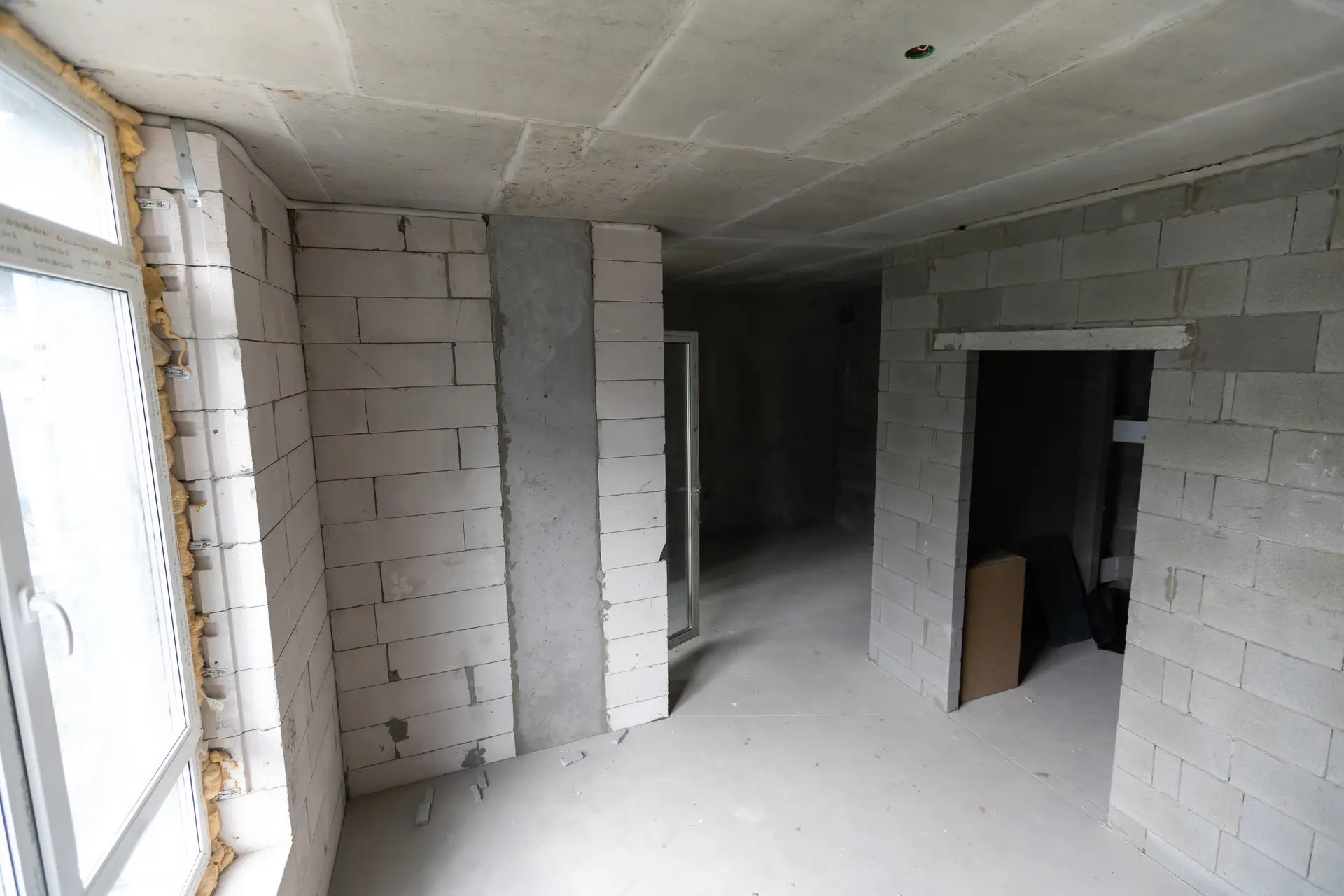
Buying & Remodeling a Home in Panama — Part 2 of 10
Wires, Pipes & the Jackhammer Problem
Running electrical, plumbing, and drains through solid concrete is a different trade entirely. Here’s what we’ve confirmed, what we’ve been told, and what you need to price before you make an offer.
 Brian & Kent · GayExpatsPanama.com · April 2026 Research Trip
Kent has rewired rooms, replumbed bathrooms, and pulled permits for residential remodels. None of that experience is useless in Panama — but almost none of it transfers directly. The materials vocabulary overlaps. The physical logic does not. When your walls are solid concrete block, moving a light switch from one side of a doorway to the other is a project, not an afternoon.
This is the second article in our series on Panamanian construction. In the first article, we covered what the house itself is made of — walls, roofs, floors, drop ceilings. This part goes inside those walls: how the systems get in there, how you add or move them during renovation, and what it actually costs to do it. Electrical and plumbing standards here are less uniformly enforced than in the U.S., so where something is genuinely settled we’ll just say it plainly, and where we’re repeating what a contractor or another expat told us rather than something we’ve confirmed ourselves, we’ll say that too. Full source detail is in the box at the end of this article.
Buying & Remodeling a Home in Panama Series
Ten articles covering construction methods, materials, contractors, and the practical realities of remodeling a home in Panama.
- The House Is Made of What? Panama Construction 101 for Americans
- Wires, Pipes & the Jackhammer Problem You are here
- Repello, Zinc & Plycem: The Panama Materials Vocabulary You Need
- Remodeling for Energy Efficiency in Panama: What the Rules Actually Require
- What You Must Know Before You Buy to Remodel
- Who's Licensed to Swing a Hammer in Panama?
- Finding Reliable Labor in Panama: What Actually Works, What Doesn't, and What Nobody Tells You in Advance
- Paying Contractors in Panama: Cash Culture, Receipts & the Protections You Do (and Don't) Have
- Panama Construction Spanish: The Vocabulary Guide for Expat Homeowners
- The Attorney Question: When You Need One, When AI Helps, and What It Actually Costs
Electrical: The Good News and the Honest News
Panama runs on 110–120 volts at 60 Hz, with Type A and Type B outlets — the same as the United States. This is one of the few areas where American expats get a genuine break, and it’s about as settled as anything in this series. Your U.S. appliances work here without converters. Your U.S. breaker box logic applies. The wiring color conventions, outlet shapes, and basic panel architecture are all recognizably American.
Panama Electrical — Confirmed Basics
The panel architecture and breaker logic you already know will be familiar. That’s the good news.
The honest news is about what happens between the panel and the outlet — specifically, how wiring gets through concrete walls.
How wiring runs through concrete — new construction.
In new concrete-block construction, conduit is supposed to be embedded in the walls before the concrete fill is poured and the repello finish is applied. PVC conduit runs are planned in advance, junction boxes are set into the block at the right height, and wires are pulled through the completed conduit after the walls are cured. When done correctly, a finished Panamanian concrete wall looks identical to a finished U.S. wall — outlets, switches, and fixtures exactly where you want them, nothing exposed.
When done incorrectly — and we’ve been told this is common in older construction and in lower-cost builds — the conduit planning is skipped. Wire is run directly through the block core cavities, or sometimes just surface-mounted and plastered over, or left exposed. We saw evidence of all three approaches in properties we viewed in April 2026. The quality of the original electrical installation varies enormously and there’s no reliable way to know what’s inside a wall without opening it.
The Electrical Inspection You Must Do
Before buying any Panamanian home you plan to renovate, have a local licensed electrician inspect the panel and as much of the accessible wiring as possible. Look specifically for: panel amperage (many older homes have undersized 60–100 amp service), correct grounding, mixed wiring from multiple eras, and any evidence of direct wire runs without conduit. These are not cosmetic issues — they affect your renovation cost significantly and, in some cases, your safety.
How wiring moves during renovation — three methods.
When you need to add an outlet, move a switch, or run a new circuit in a concrete-block home, you have three realistic options. The methods themselves are consistent across every contractor and expat account we’ve heard — the specific per-job costs are still something we’re pinning down with local quotes, so treat the price expectations here as directional rather than firm.
Method 1: Wall chasing. A wall chaser is a power tool with twin diamond blades that cuts a precise narrow channel — a “chase” — into concrete block or plaster. The wire or conduit goes into the channel, and the chase is filled with fresh repello and painted over. The result is invisible and permanent. This is how Panamanian contractors typically handle new runs in existing walls. The downside: it’s dusty, loud, and time-consuming. It also requires a skilled plasterer to finish the repello flush, which is a separate trade. Running a single new circuit from panel to a new outlet location could involve multiple walls, multiple chases, corners to navigate, and full replastering of every affected surface. What feels like a simple electrical job in the U.S. becomes a construction project.
Method 2: Surface-mounted conduit. In utility spaces, garages, exterior walls, or where aesthetics are less critical, PVC conduit can be surface-mounted on the face of the wall, running to surface-mounted outlet boxes. This is fast, accessible, and completely reversible. It’s common in workshops, laundry areas, and electrical service rooms. In Panama, we’ve seen this approach used in commercial spaces and in more pragmatic residential applications. It looks utilitarian but it works, and it’s dramatically cheaper than wall chasing for long runs.
Method 3: Through the drop ceiling cavity. Where a property has drop ceilings — which is many Panama City apartments and some houses — the ceiling cavity above the tiles is the easiest service path in the building. Running new conduit or wire through this cavity is straightforward: you lift tiles, route, replace tiles. No wall damage, no replastering. This is why the drop ceiling is so valuable in concrete construction. If you’re evaluating a property, the presence of a drop ceiling with a service cavity is a genuine renovation asset.
Kent’s Take — From Someone Who’s Done This in the U.S.
In the United States, adding a circuit means finding the right stud bay, drilling a hole, fishing Romex through hollow wall cavities, and stapling cable. The wall is drywall. Everything bends, cuts, and staples. The total job for a new outlet from an existing circuit might take two or three hours.
In Panama, that same job — same outlet, same circuit — involves locating existing conduit (if it exists), chasing through solid concrete if it doesn’t, running new conduit, pulling wire, closing the chase, replastering, curing, and painting. Two to three days minimum if you need replastering. This is not a complaint about Panama — the walls don’t rot, don’t get termites, and don’t flex. But your renovation budget needs to reflect the reality that labor here is not about time-per-task in the American sense. It’s about the sequence of trades required.
Plumbing: PEX Is Here, and That’s Good News
When we built our bar in Spain, we encountered PEX for the first time. In the United States as of the early 2010s, copper was still the default residential supply pipe in much of the country. In Spain — and across much of Europe — PEX was already standard. We came to appreciate it quickly: it’s flexible enough to bend around corners without fittings, easier to route through tight spaces, doesn’t corrode, and handles expansion and contraction from heat much better than rigid copper. For a tropical climate with high humidity and significant temperature fluctuations, PEX has obvious advantages.
The good news from our April 2026 research: PEX is now in common use in Panama’s newer residential construction — that’s based on what we saw ourselves walking properties, not something we’ve cross-checked against an independent industry source, but it matched every home we toured that had recent plumbing work. Some older homes and buildings still have copper supply lines, and in some older residential stock you may find galvanized steel pipe, which corrodes badly and is the thing you most want to replace when you find it. But newer construction — and any home that’s been replumbed in the last decade or so — is likely to have PEX for supply lines.
Panama Plumbing Materials — What to Expect
Why PEX matters for renovation specifically.
In a wood-frame home, supply pipes run through wall cavities and floor bays. Accessing them for repair or extension means opening drywall. PEX’s flexibility makes routing it through new paths relatively forgiving — you can snake it through a ceiling cavity or a chase with fewer fittings than rigid copper would require.
In a Panamanian concrete-block home, these same properties matter even more. Rigid copper in a concrete wall is essentially permanent — any modification requires jackhammering the wall, rerouting, and replastering. PEX’s flexibility means a skilled plumber can sometimes route new supply runs through the drop ceiling cavity or by threading through an existing chase, avoiding major wall demolition. This isn’t always possible, but it’s a meaningful advantage compared to rigid pipe in a concrete structure.
When You Find Copper, Ask the Right Question
Copper supply lines are not automatically a problem — copper is durable and performs well in moderate conditions. The questions to ask are: How old is it? What’s the water quality like in this specific neighborhood? (Acidic or high-chlorine water corrodes copper faster.) Are there any pinhole leaks already? Old copper in good condition may be worth leaving. Old copper with existing leaks or deterioration in the walls should be factored into your renovation budget as a full repipe.
Drain, Waste & Vent: The Concrete Slab Problem
This is the section that separates serious renovators from casual ones — and it’s also where we’re most confident about the physics and least confident about exact costs, so we’ll lay out both plainly as we go. Supply plumbing — the water coming in — runs through walls and can often be rerouted through ceiling cavities. Drain plumbing has to go downhill, by gravity, to where it exits the building. In a concrete-slab home, the drain lines for your toilets, showers, and sinks are embedded in or under the slab itself.
In U.S. wood-frame construction on a raised foundation, drain lines hang below the floor in open crawl space. Moving a toilet or relocating a bathroom means accessing the crawl space, cutting existing pipe, rerouting, and reconnecting. It’s not trivial, but it’s accessible.
In a Panamanian concrete-slab home, moving a toilet to a new location — or adding a bathroom where one didn’t exist — means breaking the concrete slab. This is not a figure of speech. You hire someone with a concrete saw and a jackhammer, they open the slab, you reroute the drain pipe, and then the slab is repoured and the tile floor is relaid. The job is loud, produces significant concrete dust and debris, requires multiple contractors (structural, plumbing, concrete, tile), and takes considerably longer than the equivalent work in a wood-frame home.
“Moving a toilet in Panama isn’t a plumbing project. It’s a demolition project with plumbing at the end of it.”
What does not require slab breaking: most kitchen plumbing changes (sinks typically drain to wall connections), bathroom vanity sink relocations within the same wet wall, and shower upgrades where you’re keeping the drain in the same location. The rule of thumb is simple — if gravity currently takes the drain to where it needs to go without touching the slab, you’re in the easy category. If you need to change where the drain enters the slab, you’re in the expensive category.
The Bathroom Location Is Not Negotiable Without Major Cost
If a property has one bathroom and you want two, or you want to move the bathroom from one side of the house to the other, or you want to add a wet bath where there was a dry room — all of these require slab work. This is common knowledge among expats who’ve renovated in Panama and we’ve heard the same thing consistently. We’re still verifying specific costs with local contractors; what we can say is that this work adds a meaningful multiplier to a renovation budget compared to equivalent work in a U.S. wood-frame home. Do not budget for it as if it were a U.S. bathroom addition.
Water Heaters: A Different Philosophy Entirely
In the United States, a 40 or 50-gallon tank water heater sits in a utility room and supplies hot water to the entire house. In Panama, this centralized approach exists in some newer construction, but the default in the majority of residential properties is something different: the electric tankless shower head. This is one of the most consistently documented facts about Panamanian housing, and it’s the first thing that surprises most American expats.
The shower fixture itself contains an electric heating element. Cold water enters, is heated at the point of use, and comes out warm. There’s no tank anywhere. The flow rate is low by American standards — these units don’t produce the high-pressure hot shower experience most Americans are used to. But they’re inexpensive to install, cheap to run (you only heat water you’re actually using), and they work reliably in a climate where “cold” water from the tap is rarely actually cold.
Higher-end properties and newer construction are more likely to have central tankless water heaters (gas or electric) that provide better flow and temperature. If a hot shower at American-style pressure is important to your quality of life, verify the hot water system before you buy — and if you’re renovating, budget for an upgrade to a central tankless system if the electric shower heads aren’t adequate for you.
Hot Water Systems in Panama — What You’ll Find
The Permit Question
Renovation permits exist in Panama. The requirement is that any significant structural or systems modification requires an architect or engineer to submit a remodel permit. In practice, what we’ve been told by multiple expats who’ve renovated in Panama City is that enforcement is inconsistent — smaller renovations frequently proceed without permits, while larger structural projects are more likely to require them formally. We haven’t confirmed this directly with an attorney yet, so treat it as a reported pattern rather than a settled fact. We want to be clear that we are not recommending unpermitted work. We’re reporting what we’ve heard, because you’ll encounter this situation and you need to understand the reality on the ground.
What we are confident in: if you’re buying a renovated property, ask about permits for the renovation work. If the previous owner did significant electrical or plumbing work without permits, that’s a disclosure issue and potentially a resale complication. Verify with a local attorney what the current permit requirements are for the specific type of work you’re planning. This is on our list to ask Carolina Tejada Vaprio at Morgan & Morgan when we meet with her to discuss the property purchase side of our planning.
What “We’re Still Verifying” Means in This Series
Several things in this article are things we’ve heard the same way from multiple expats and contractors but haven’t yet verified directly with licensed professionals in Panama City. We’re explicit about the difference between “we confirmed this” and “we’ve been told this” throughout — and the Sources box at the end lays out exactly which is which. The pre-purchase checklist article later in this series will be updated as we continue to gather verified information before our own property search begins.
Putting It Together: The Renovation Cost Multiplier
The single most useful thing we can tell you from this research, confirmed by everyone we’ve spoken to who’s actually renovated in Panama: the labor day rate for Panamanian construction workers is genuinely lower than in the United States. Reports from expats suggest rates in the range of $20–$35 per day for general construction labor in more rural areas, though Panama City rates are higher and specialty tradespeople — licensed electricians, experienced plumbers — charge more. We want to flag that these numbers are from older secondhand reports, not something we’ve confirmed ourselves, and the salary-survey data we checked suggests the real range may be wider — and in some cases higher — than this. Treat it as a rough starting point, not a quote.
The misconception is that lower labor rates mean cheaper renovations. They don’t, necessarily, because of two factors that offset the labor rate advantage:
First, the number of trades and steps required for any given project is higher in concrete construction than in wood-frame. What’s a one-trade job in the U.S. (electrician) is a three-trade job in Panama (electrician, wall chaser, plasterer). Second, tradespeople who work in the North American style — with the attention to planning, timeline, and finish quality that most American expats expect — are a subset of the available workforce and they cost more. The general advice from the expat community, repeated consistently, is that the highest-cost mistake in Panamanian renovation is hiring cheap and then paying twice.
The Rule We’ve Heard from Every Expat Who’s Renovated Here
Get references from other expats who’ve worked with the specific contractor you’re considering. Not just a name — speak to the actual person, see the actual finished work. Panama’s contractor market for expat renovation jobs is not regulated in a way that gives you the U.S. equivalent of checking a license board. References from people you can actually talk to are the quality control mechanism.
Our Panama Construction Materials Vocabulary article — next in this series — covers the vocabulary you’ll need to talk fluently to Panamanian contractors: repello, Plycem, Covintec/M2 panel, zinc roofing, and the specific products available at Do-It and Hopsa that we’ve actually priced. If you can walk into a hardware conversation knowing what these things are, you’re already ahead of most buyers.
Sources & Verification
- Firsthand: Kent’s U.S. residential remodeling and permitting experience, plus our own PEX plumbing experience building a bar in Spain.
- Firsthand: Direct observation of wiring quality, conduit methods, and plumbing materials across properties viewed during our April 2026 Panama City research trip.
- Official: Panama’s electrical standard (110–120V, 60 Hz, Type A/B outlets) matching U.S. norms — confirmed across multiple independent electrical-standards references, 2026.
- Community: Reports from other expats and contractors regarding wall-chasing costs, inconsistent permit enforcement, and typical renovation trade sequencing — gathered informally, not yet independently verified with licensed professionals.
- Not yet verified: Specific labor day-rate figures ($20–$35/day general labor) are drawn from older secondhand expat reports rather than current data we’ve confirmed ourselves; salary-survey data we checked suggests a wider and sometimes higher range depending on region and formality of employment. Treat these figures as directional, not a quote.
- Not yet verified: Renovation permit enforcement patterns are based on informal expat accounts, not confirmed with an attorney or the relevant Panamanian permitting authority. We plan to verify this with Carolina Tejada Vaprio at Morgan & Morgan.
Facts and prices in this article last verified: July 2026.
Buying & Remodeling a Home in Panama Series
- 01 The House Is Made of What? Panama Construction 101 for Americans
- 02 Wires, Pipes & the Jackhammer Problem
- 03 Repello, Zinc & Plycem: The Panama Materials Vocabulary You Need
- 04 Remodeling for Energy Efficiency in Panama: What the Rules Actually Require
- 05 What You Must Know Before You Buy to Remodel
- 06 Who's Licensed to Swing a Hammer in Panama?
- 07 Finding Reliable Labor in Panama: What Actually Works, What Doesn't, and What Nobody Tells You in Advance
- 08 Paying Contractors in Panama: Cash Culture, Receipts & the Protections You Do (and Don't) Have
- 09 Panama Construction Spanish: The Vocabulary Guide for Expat Homeowners
- 10 The Attorney Question: When You Need One, When AI Helps, and What It Actually Costs
Brian & Kent
Brian and Kent are a gay couple based in St. Petersburg, Florida, currently researching a move to Panama. Brian is applying for the Pensionado visa. Kent is the primary researcher — and the one who has crawled under enough Florida homes with a fish tape to have strong opinions about the advantages of a crawl space. GayExpatsPanama.com is the honest record of what they find.