Our Story & April 2026 Trip – Part 15 of 16
Day Twelve — The Last Full Day, Albrook One More Time, and What We Actually Learned
We slept in, took our time, went back to the mall, ate at a local food court chain, and then sat down in the hotel room and let out a long, slow sigh. Twelve days. Here’s the honest accounting.
 Brian & Kent · GayExpatsPanama.com · April 2026 Research Trip
No 6:15am alarm. No early Metro run. No architecture reconnaissance. We slept until 8:30am and let the sun find us on its own schedule for once. It is our last full day in Panama. Tomorrow we fly home to St. Petersburg.
Tim Hortons. Two iced French Vanillas each. This needs no further explanation at this point in the trip.
Our Story & Panama Journey Series
Articles sharing our story, our earlier life abroad, and the day-by-day experience that helped us decide whether Panama was right for our future.
- Almost 40 Years, 12 Homes — and We’re Doing It Again
- We Lost Everything in Spain. We’re Still Glad We Went.
- Going to Panama — and You’re Coming With Us
- Day One: Wheelchairs, Wind, and a Metro Lesson
- Day Two: The Shorts Crisis and the World’s Biggest Mall
- Day Three: Grocery Prices, Neighborhoods, and a $12 Drink
- Day Four: The Attorney, the Doctor, and the Pensionado Visa
- Day Five: The Fish Market, Multiplaza, and Maluka
- Day Six: Neighborhoods, Hardware Stores, and a Fixer-Upper
- Day Seven: Breakfast, Laundry, and Furniture Shopping
- Day Eight: The Canal Museum, La Cresta, and Casco Viejo
- Day Nine: Hato Pintado, Carrasquilla, and Hardware Stores
- Day Ten: Miraflores Locks, the Ciclovía, and Hamman
- Day Eleven: Getting the Pensionado Residency Card
- Day Twelve: What Panama Actually Taught Us You are here
- Day Thirteen: Going Home — Is Panama Still the Answer?
Albrook — one final look
We started late and the sun was already fully committed to its work by the time we left the hotel. The decision was easy: air conditioning and the mall. We took the Metro to Albrook for what turned into a genuinely useful final visit — not shopping so much as confirming what we now understood about where to find things.
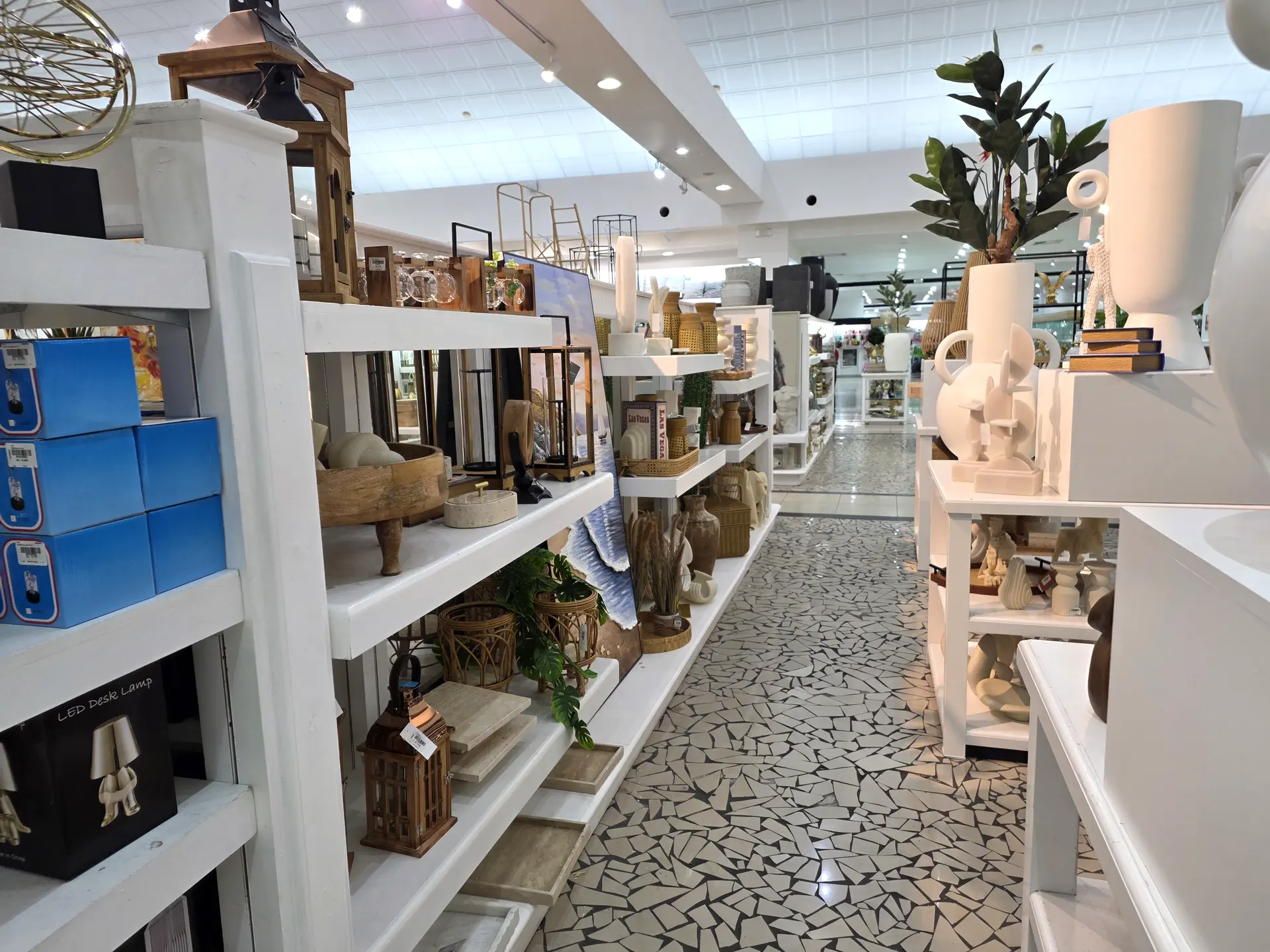
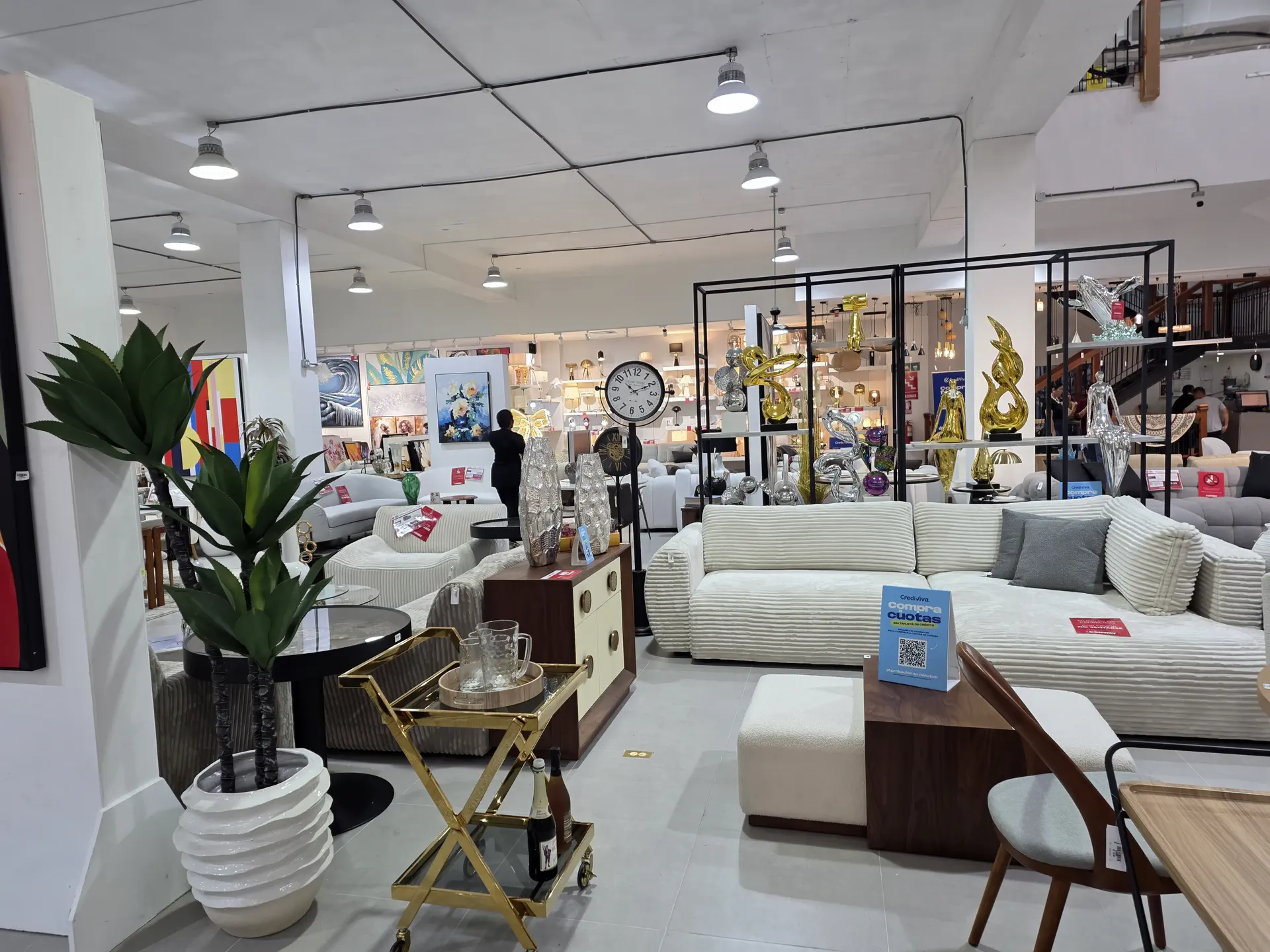
Albrook on a Tuesday afternoon — the department stores, the furniture section, the everything-you-need quality of the place becoming more legible now that we’ve been here twice. Panama City is not a hardship posting for retail.
We found things we hadn’t noticed on the first visit. Tucked into a section that looked quiet and half-empty: a Smart Fit gym. Multiple locations across the city, as it turns out. We both go to the gym at least twice a week — it matters more, not less, as you get older — and finding a well-equipped chain within the mall itself was a useful data point for daily life logistics.
We also walked past a furniture section we’d largely bypassed on our first Albrook visit, and past displays in the big department stores that gave us a clearer sense of what home goods cost here versus Florida. The picture is broadly encouraging. At some point while we were wandering through housewares, we heard a crash from somewhere in the store — then several more in quick succession, the sound of a display going down. Staff ran toward it. We did not go to look. Some things are better left as ambient Panama City atmosphere.
After two visits to Albrook and one to Multiplaza Pacific, we left with a settled feeling about retail. You can find what you need in Panama City. Most of it costs less than it does in the U.S. Some of it costs more. The infrastructure of daily life is there.
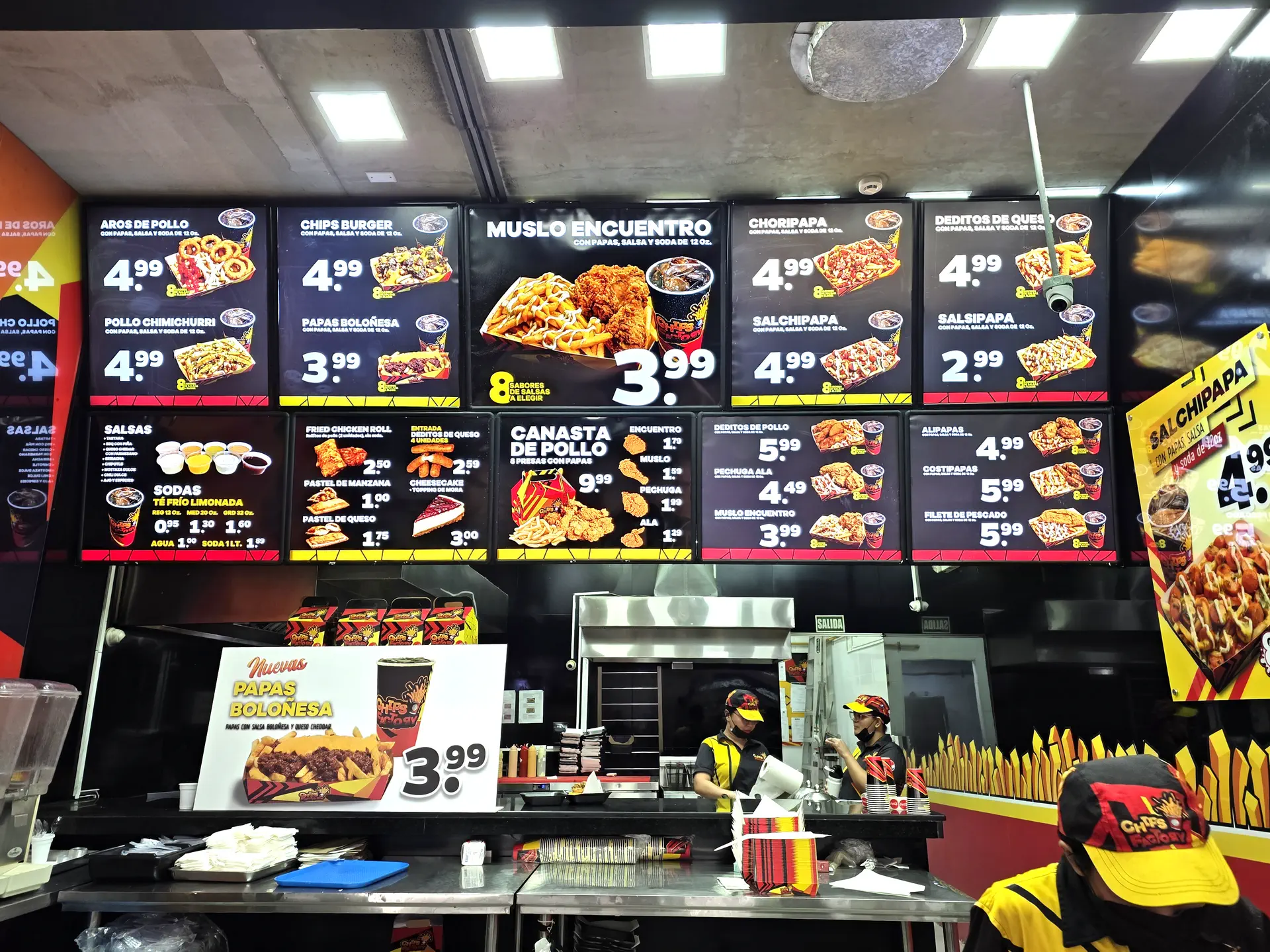
The food court at Albrook — every U.S. fast food chain you can think of, and tucked among them, local Panamanian chains where the prices are noticeably lower and the food is noticeably more interesting. We finally ate at one of the local options on our last day, which is the correct order of things.
At the Albrook food court — skip the American chains
Every U.S. fast food chain you know is represented in the Albrook food court at prices nearly identical to what you’d pay at home. The local Panamanian chains sitting among them are cheaper and considerably more worth your time. We should have figured this out on day two instead of day twelve. Learn from our experience.
Back at the hotel — what we actually learned
We got back to the hotel in the late afternoon, sat down, and both let out a long breath at roughly the same moment. Twelve days. Here’s what they actually produced.
Yes, I got my residency card. But the more important thing is that we lived the city. We walked it, priced it, sweated through it, and came to understand it well enough to make a real decision.
The honest cost of living summary
| Category | Panama vs. U.S. | The honest detail |
|---|---|---|
| Groceries — local produce | Significantly cheaper | Pineapple, bananas, citrus, peppers — grown locally, priced locally. Better quality than U.S. supermarkets. Bananas stay ripe longer than in Florida. |
| Groceries — imported goods | Comparable or slightly higher | Imported products carry customs costs. Buy local where you can — the quality is better anyway. |
| Hardware and home improvement | Cheaper on most items | Dual wall switch: $2.99–$5.99 vs $13.88 at Home Depot. Toilets from $69.99. Tile at Hopsa: ~$10.99 per square meter — not per piece. |
| Furniture | Appears cheaper | Limited comparisons but sectionals at Ancón were below what we paid in Spain nearly twenty years ago. Ashley Furniture has a major store at Fernández de Córdoba Metro. |
| Windows | Cheaper | Note: Florida window prices are inflated by hurricane-rating requirements that don’t apply in Panama. |
| Name-brand U.S. clothing | About the same | The brands are there. The prices travel with them. Off-brand Panamanian clothing is cheaper. |
| Restaurants | Similar to U.S. | Panama City restaurant prices are not the bargain the rest of the cost of living suggests. Budget similarly to a mid-size U.S. city. Local fondas and food courts are the exception. |
| Metro transit | Very cheap | $0.35 per ride, $0.24 with Pensionado card. Clean, reliable, air-conditioned. The best transit value in Central America. |
| Uber | Cheap | $3–$6 for most city trips. Essential for getting around during the hottest parts of the day without arriving somewhere looking like you swam there. |
| Tim Hortons iced French Vanilla | $3.99 | Same price as everywhere. Worth every cent. Non-negotiable line item in any Panama budget. |
This table aggregates prices documented throughout the trip — see grocery prices from day three, hardware prices from day six, and furniture pricing from day seven for the receipts behind these figures.
The neighborhood map — what Kent’s miles produced
Kent walked somewhere between fifty and sixty miles through the central neighborhoods of Panama City over twelve days. He talked to contractors mid-renovation, noted terrain gradients, photographed houses with se vende signs, and came home every afternoon with a clearer mental map than any listing service could have produced.
The summary of what he found:
El Cangrejo — vibrant, established, walkable, with excellent access to services. Almost exclusively condos and apartments. Not right for us. Right for many expats.
San Francisco — the neighborhood that most consistently rose to the top. North of Calle 50, single-family homes exist in real numbers. Rolling rather than steep terrain. Active renovation market. Prices higher than El Cangrejo but the housing stock is what we want.
La Cresta — extraordinary character, extraordinary views, extraordinary architecture. Zero businesses. Steep stairs as the only pedestrian connection. The heart wants it. The logistics say no.
Hato Pintado — genuine potential in the southern section where the terrain flattens and the lots get larger. Worth a second trip with specific properties in mind.
Carrasquilla — mixed from north to south. The southern end dropped off significantly. Not on our list.
Bethania and the ridge neighborhoods — steep hills that may be worth it for the right house with the right view. Kent is still doing renovation math in his head. Brian is still on the fence about the hills.
What we’re still not sure about
We didn’t get to everything. Bethania’s outer edges, Altos del Golf, and the areas west of the city are still unexplored. The Pacific beach towns — Coronado and similar — deserve their own trip. Boquete in the highlands is on the list. Bocas del Toro is on the list. This trip was about Panama City, and specifically about whether Panama City works for us. The answer is yes, with caveats, and the caveats are all workable.
The honest challenges
I want to name what won’t be easy, because this site doesn’t do the brochure version.
The heat. I overheated repeatedly and visibly throughout this trip. Panama City in April is not forgiving for someone whose body runs warm. The first six months will require a genuine adjustment — more shade, more water, more A/C than I’m used to budgeting for. It is manageable. It is not nothing.
Spanish. Kent is further along than I am. I need to make a real effort between now and whenever we move. Panama City is functional in English for expats but only just, and daily life at the level we want — having actual conversations, navigating government processes, understanding a contractor — requires meaningful Spanish. I’m ready for the work. I’m aware of how much work it is.
The separation of the visa process. I have my temporary residency. Kent doesn’t yet. We’ve been together for nearly forty years and this is the first significant thing we’ve done separately — on paper, at least. The legal logic is clear. The feeling of it is its own thing.
Tim Hortons will be there — but the math will change
We sat at Tim Hortons on day twelve the same way we sat there on day one, except that by now the staff had our order in the register before we finished saying hello. Regulars. In a city we don’t live in yet.
The truth is we won’t do two iced French Vanillas each every morning once we move to Panama. The Pensionado income budget doesn’t quite cover that level of Tim Hortons commitment at scale. But we’ll be there regularly. And being known somewhere — being the people whose order gets started when they walk through the door — is not a small thing when you’re building a life in a new country. It is, in its way, the whole point.
What twelve days in Panama actually produced
Brian has a temporary residency card. Kent has fifty miles of neighborhood data in his feet. We have grocery prices, hardware prices, furniture prices, restaurant prices — real numbers from real shelves, photographed and documented. We have an attorney we trust, a law firm that handled everything correctly, and a health certificate signed by a Panamanian doctor who laughed with us about blood pressure readings. We have a neighborhood shortlist. We have a Tim Hortons we’re already regulars at. We are comfortable with Panama. We are ready for what comes next.
Tomorrow: a 5:45am Uber to the airport. The app told us we needed to leave that early. We are new enough to this country that we accepted its recommendation without argument.
For now: pack the last things, set the alarm, and go to sleep in a hotel room that is, as it has been for twelve straight nights, approximately four degrees colder than necessary.
Sources & Verification
- Firsthand: Day twelve of our April 2026 trip — our final Albrook visit, and the cost-of-living and neighborhood summaries synthesized from prices and observations documented throughout the twelve-day trip and photographed on-site.
- Reported: The claim that Florida window prices run higher due to hurricane-rating building code requirements — general knowledge about U.S. building codes, not verified against current Florida or Panama code as part of this article.
Facts and prices in this article last verified: July 2026.
Brian & Kent
We documented our April 2026 research trip in real time, and we’re continuing from here — more detail, more pricing, more of the practical reality of moving to Panama as a gay couple. Questions? he***@*************ma.com