Panama Electricity Guide
Gas Appliances: The Fastest, Cheapest Route to a Lower Electric Bill
There are no gas pipelines in Panama. There is still gas at almost every door. Here is how the whole system works.
 Brian & Kent · GayExpatsPanama.com · April 2026 Research Trip
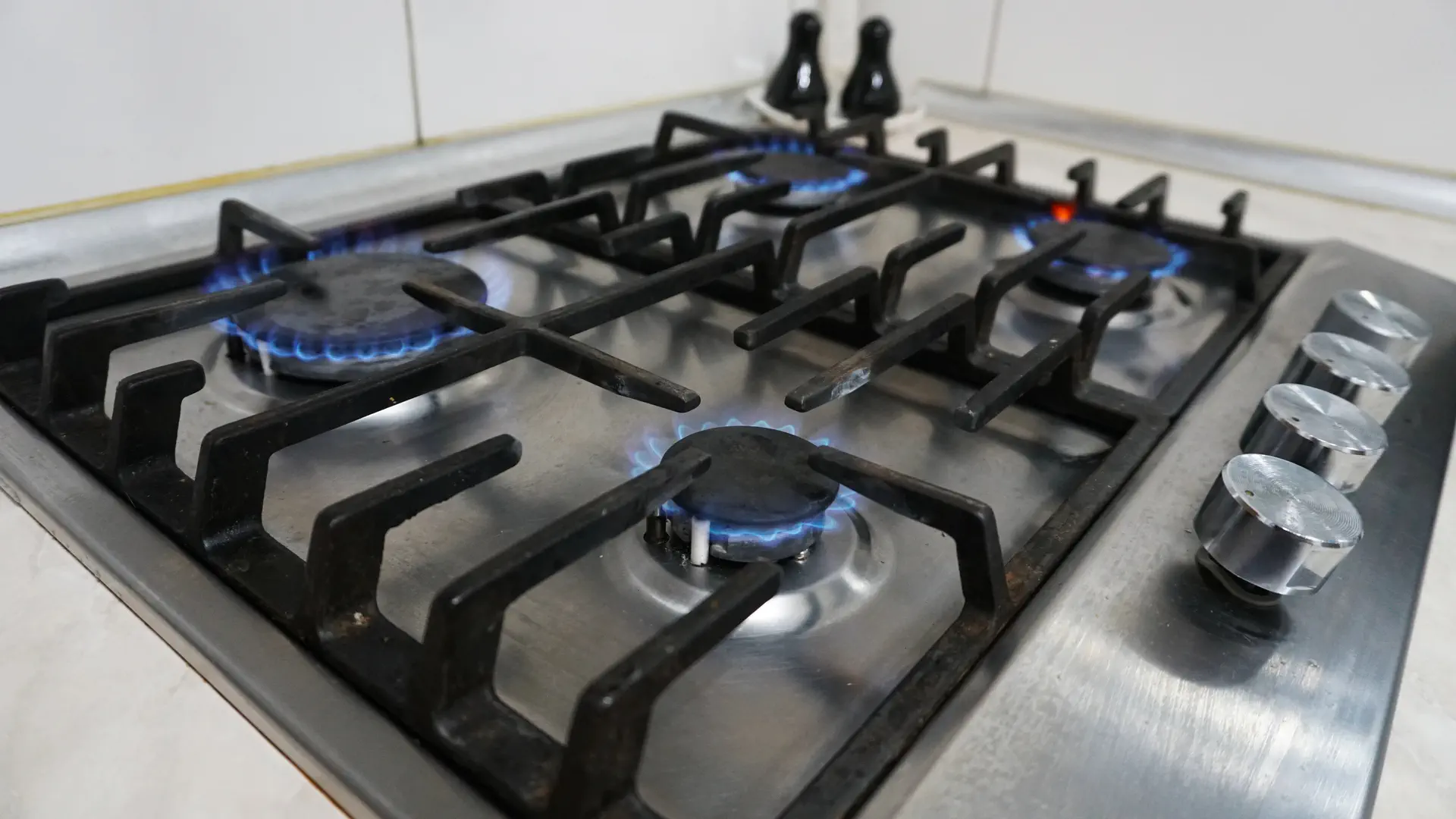
The first thing most Americans assume when they hear “gas appliances” is a pipeline — that familiar meter on the side of the house, the monthly gas bill from the utility, the infrastructure that makes natural gas invisible and automatic in most U.S. cities. None of that exists in Panama. There is no residential natural gas pipeline network. What exists instead is something more direct, more visible, and — for anyone who grew up not thinking about it — mildly surprising: a steel cylinder, delivered to your door, sitting in your kitchen or utility area, connected to your stove by a rubber hose and a pressure regulator.
Panama Electricity Guide
Everything we've learned about electricity in Panama — rates, reliability, wiring hazards, mini splits, solar, and what to check before you buy.
- Panama Electricity Guide for Expats: Rates, Reliability & the Billing Trap That Triples Your Bill
- Voltage, Plugs & Appliances: The One Big Advantage American Expats Have
- Wiring, Inspections & Electrical Hazards in Older Panama Homes
- Mini Splits, Solar, Windows, and the Home Buyer's Electricity Checklist
- Jalousie Windows and the Hidden Electricity Cost
- SEER Ratings: What to Buy — and What to Avoid
- Gas Appliances & the $4.37 Cylinder Most Expats Miss You are here
- Solar Panels: What the Math Actually Says
- Panama's Clean Energy Grid: What Expats Need to Know
- Power Outages, UPS Systems & Backup Power
Virtually every Panamanian household cooks with this system. It has been that way for generations. The economics that made it universal among Panamanians are the same economics that should interest every expat arriving with a fully electric apartment: gas is substantially cheaper than electricity as a heat source, and the appliances that run on it — stove, water heater, dryer — are the appliances that drive the largest optional electricity loads in a home.
What Kind of Gas Is It?
Panama uses LPG — Liquified Petroleum Gas, known locally as gas licuado de petróleo or GLP. In practice, the mix is primarily butane with some propane, blended depending on supply. This is different from the natural gas (predominantly methane) that most American pipeline systems distribute. LPG has higher energy density than natural gas per unit of volume — it packs more BTUs into each cubic foot — which is part of why cylinder delivery is practical at all. The gas is stored as a liquid under moderate pressure in the cylinder and vaporizes as it exits through the regulator.
The LPG-versus-natural-gas distinction matters for appliances. Appliances are calibrated differently for the two fuel types — burner orifice sizes differ, and regulators deliver different pressures. An appliance designed for natural gas will not operate correctly, safely, or efficiently on LPG without a conversion kit. In Panama, all residential gas appliances sold locally are configured for LPG. If you ship an appliance from the U.S. that was designed for natural gas, confirm with a licensed gas plumber whether a conversion kit is available and appropriate before connecting it.
Why Gas Cuts Your Electric Bill
The math starts with how electricity is priced relative to energy content. In Panama, electricity runs approximately $0.17–$0.22 per kilowatt-hour at the rates most expat households pay. A kilowatt-hour contains approximately 3,412 BTUs of energy. LPG from the two main suppliers — Panagas and Tropigas — costs roughly $0.62–$0.68 per pound at current 100-lb cylinder prices. One pound of LPG contains approximately 21,000 BTUs. That energy density advantage is the foundation of gas’s cost edge.
For cooking, a standard electric coil burner on medium uses approximately 1,000–1,500 watts — $0.17–$0.33 per hour at Panama rates. A comparable gas burner uses about 5,000–8,000 BTUs per hour on medium — roughly 0.25–0.38 pounds of LPG — costing approximately $0.16–$0.26. The gas burner responds instantly to flame adjustment and turns completely off the moment you turn the knob. The electric coil keeps radiating heat for minutes after you turn it off, consuming energy you did not ask for and adding to your kitchen’s heat load, which your AC then fights.
For water heating, the comparison is even more significant — but that gets its own section below.
Even the unsubsidized 100-lb cylinder delivers energy at roughly 40–50% the cost of an equivalent electric heating load.
Cylinder Sizes, Prices, and What Each Is For
Two companies dominate the residential LPG market in Panama City: Panagas (LPG de Panamá S.A.) and Tropigas. Both deliver the same product in the same cylinder sizes, at similar pricing set periodically by ASEP, Panama’s public services regulator. The 25-lb cylinder price is fixed by government subsidy — we have seen this described as the lowest subsidized cylinder price in Central America, though we could not independently verify that specific regional comparison.
| Cylinder | Price (approx.) | Legal Use Restriction | Best For |
|---|---|---|---|
| 25 lbs (11.3 kg) | ~$4–$5 subsidized | Residential — no BCBP permit or inspection required | Small households; cooking only; apartments with limited storage |
| 60 lbs (27 kg) | ~$41–$42 | Residential and commercial — BCBP-certified installer required | Medium households; cooking plus water heater; fewer refill trips |
| 100 lbs (45 kg) | ~$62–$68 | Residential and commercial — BCBP-certified installer required | Larger homes; multiple gas appliances; restaurants and condominiums |
| Bulk (granel) 120–2,000 gal. | Priced per delivery by volume | Commercial, industrial, large buildings, penthouses | Buildings with piped central gas systems; heavy commercial users |
The 25-lb cylinder is Panama’s most common — government-subsidized and available at supermarkets, minisupers, kiosks, and gas stations nationwide. For an expat couple running a gas stove and a tankless water heater from one 100-lb cylinder, expect that cylinder to last roughly three to five months depending on usage. Cooking alone from a 100-lb tank can last six to eight months.
Current Panagas Pricing — April 2026
How Gas Is Delivered
For the 25-lb subsidized cylinder, delivery is not offered — you exchange your empty cylinder for a full one at any supermarket, minisuper, kiosk, or gas station. SuperFarma, El Rey, Super 99, and most corner stores carry them. You bring the empty, pay the subsidized price, and leave with a full one. Building doormen and security desks in Panama City high-rises are entirely accustomed to residents receiving cylinder exchanges.
For 60-lb and 100-lb cylinders, both Panagas and Tropigas offer home delivery. You call their call center (Panagas: 800-5111), use the Panagas app, order via their online store, or WhatsApp them at 6999-0880. A truck brings a full cylinder to your door and swaps it for the empty one. You pay on delivery — cash or Yappy. No contract. No monthly standing charge. No account setup beyond an address. You pay only when you need gas, which for most households is every few months.
The Panagas App
Panagas has a delivery app covering Panama City and Panama Oeste (including Arraiján, Arboledas, Costa Verde, and Montelimar). You order, pay via Yappy or bank transfer, and schedule delivery. The app also shows retail locations that carry 25-lb cylinders near you. Tropigas has an equivalent online ordering system at tropigas.com.pa. Long-term residents report the delivery system is reliable and routine — this is infrastructure that has served the country for decades.
What Gas Appliances Actually Save You
Three appliances are worth converting to gas in almost every Panama household where it is feasible: the water heater, the stove, and the clothes dryer. Each removes a significant electric load from your monthly bill.
Water Heater: The Largest Single Win
An electric tank water heater — the kind that keeps 30–50 gallons of water hot continuously — is one of the largest electrical loads in any home. In Panama, a 4,500-watt electric water heater running a cumulative three to four hours per day (typical for a couple) consumes 13–18 kWh daily, or roughly $65–$108 per month just for hot water at $0.17–$0.22/kWh.
A tankless gas water heater (calentador instantáneo) eliminates that standing load entirely. It heats water only when a tap opens, firing a burner of approximately 120,000–150,000 BTUs and delivering hot water in seconds. No tank to maintain at temperature. No standby loss. No cycling at 3 a.m. The LPG cost to provide equivalent hot water for a two-person household in Panama runs approximately $8–$15 per month from a 100-lb cylinder. That is a monthly saving of $50–$95 on the electric bill — every month, compounding for the life of the appliance. A good tankless gas water heater costs $150–$350 at Do-It, Cochez, or a plumbing supply house in Panama City. The savings pay back the unit cost in two to three months.
The Water Heater Case, Simply
- Electric tank water heater monthly cost: ~$65–$108 in electricity
- Tankless gas water heater monthly cost: ~$8–$15 in LPG
- Monthly saving: ~$50–$95
- Unit purchase cost: ~$150–$350
- Payback period: 2–4 months
- This is the single highest-return gas conversion available in Panama. Do this first.
Gas Stove: The Daily Quality-of-Life Win
Monthly electricity savings from switching a cooking range from electric coil to gas are real but more modest than the water heater — cooking is intermittent, not continuous. Expect $10–$25 per month in savings for a household that cooks regularly. The payback on a gas range itself (typically $250–$600 for a solid four-burner unit in Panama) is longer than the water heater, but the quality-of-life argument is immediate and significant: instant flame, instant off, precise temperature control that an electric coil cannot match. If you cook seriously, this is not a financial decision that needs to pencil perfectly. It is a kitchen decision that happens to also save money.
There is a secondary thermal benefit worth noting: a gas burner concentrates its heat upward into the pan and produces far less ambient heat spillage than an electric coil or ceramic top that keeps radiating heat for minutes after you turn it off. In Panama’s kitchen climate, that residual electric heat works against your AC. Marginal per session, but real over time.
Gas Dryer: The Replacement Decision
An electric dryer running a standard load consumes 4,000–5,500 watts over 45–60 minutes — $0.50–$0.75 per load at Panama rates. A gas dryer running the same load uses approximately 18,000–22,000 BTUs — roughly 0.9–1.0 pounds of LPG — costing approximately $0.60–$0.68. Per-load savings are modest: $0.10–$0.15. The real advantages of a gas dryer are speed (runs hotter, dries 20–30% faster) and fabric longevity (less tumbling time per load). The economics of switching dryers specifically for bill reduction are not compelling on their own. If you are buying a dryer anyway, buy gas. If you have a working electric dryer, let it finish its life before switching.
The Legal Framework: What the Law Requires
Panama has a clear regulatory framework for residential gas installation, and the requirements are enforced through the Benemérito Cuerpo de Bomberos de Panamá (BCBP), the national fire department. Compliance is not optional, and the consequences of ignoring it range from insurance voidance to genuine safety risk.
The 25-lb Cylinder: No Permit Required
For a standard 25-lb subsidized cylinder connected directly to a stove with the supplied regulator and hose, no permit and no inspection is required. This is designed to be self-service — the same setup used by most Panamanian families. The cylinder sits on the floor near the stove (or in a ventilated cabinet), the regulator screws onto the valve, and the hose connects to the stove. The Panagas starter kit includes the regulator, hose, and clamps. Follow the assembly instructions. Inspect the hose periodically. Replace it every three to five years.
60-lb and 100-lb Cylinders and Piped Systems: Licensed Installation Required
For any installation involving 60-lb or 100-lb cylinders and for any internal gas piping — tubing run through walls, floors, or utility spaces — Panamanian law requires the following, confirmed directly against Panagas’s own published installation procedures and BCBP’s published requirements:
Legal Requirements — 60-lb, 100-lb, and Piped Installations
- Work must be performed by a licensed gas plumber (plomero idóneo) certified (“idoneidad”) by the BCBP’s Oficina de Seguridad and accredited by the Junta Técnica de Ingeniería y Arquitectura (JTIA).
- The completed piping system must pass a hermeticity test (prueba de hermeticidad / prueba de escape) — confirmed by the licensed plumber and approved and sealed by the BCBP. The official government fee for this certification is B/.50.00, and processing takes approximately 1 week to 1 month depending on inspection scheduling.
- New homes additionally require a certificate of occupancy before gas supply is connected.
- Existing homes without internal piping must have piping installed and certified before larger cylinders can be connected.
- The gas supplier (Panagas or Tropigas) obtains the installation permit from the BCBP prior to tank placement, following a site inspection. The supplier handles this — you do not navigate it alone.
- Installation of 60-lb and 100-lb systems must be performed by BCBP-certified technicians. Panagas and Tropigas both employ or contract such technicians and can coordinate installation as part of the service setup.
Bulk (Granel) Systems for Buildings and Penthouses
For apartment buildings, penthouses, and high-consumption residential properties, both suppliers offer stationary bulk tanks — 120 to 2,000 gallons — installed on the property or rooftop and refilled by truck on a scheduled or on-call basis. These require the same BCBP permitting and licensed-plumber installation as cylinder systems, plus a site survey by the gas supplier to determine tank size and placement. Buildings with central piped gas distribute from the bulk tank to individual units through internal piping. If you are evaluating a building that advertises piped gas, confirm with the building administration that the system’s hermeticity certificate is current before signing anything.
The Hermeticity Test: What It Actually Involves
This is the compliance step most new gas users never hear about until they need it. Any residential gas installation with internal piping must pass a hermeticity (pressure) test before it can be connected and certified by BCBP. Based on BCBP’s own published procedure, the test pressurizes the gas piping system with air — not gas, which would be dangerous — and holds pressure for a set period to confirm no leaks exist in pipe joints, fittings, or connections. The application requires specifying the pipe type and diameter, whether the installation is exposed, embedded, or buried, the number of gas outlets, and the test date, duration, and pressure (PSI) used. The government certification fee is B/.50.00, and the process typically takes one week to one month depending on inspector availability and how quickly any noted issues are resolved.
We have seen it stated that this certification must be renewed on a recurring basis — commonly cited as every three years — but we could not independently confirm a specific mandatory recurring interval from BCBP’s own published procedures, which describe the test primarily as a requirement tied to new installation, new construction, or connecting a larger cylinder or piped system. Treat a periodic retest as good practice regardless, and ask your gas supplier directly what interval they recommend or require for your specific installation.
Ask Before You Sign
If the property you are buying or renting has an internal gas piping installation, ask the seller or landlord to produce the current hermeticity certificate (prueba de hermeticidad, sellada por bomberos). If they cannot produce one, either require it as a condition of the transaction or budget for recertification immediately after taking possession. An expired or missing certificate is not a crisis — it is a plumber visit and a B/.50 government fee plus labor — but it should be disclosed and resolved, not discovered after you have signed.
Retrofitting a Home to Gas: What It Actually Takes
If you are moving into an all-electric apartment or house and want to add gas for the stove, water heater, or dryer, the process depends on what infrastructure already exists.
No Gas Infrastructure at All — Starting From Zero
Hire a BCBP-certified gas plumber to design and install internal piping from the cylinder location to each appliance, obtain the BCBP hermeticity certification for the new piping, purchase the appliances, and arrange first delivery from Panagas or Tropigas. The plumber handles the piping, certification, and coordinates the BCBP inspection. The gas company handles the cylinder delivery and tank placement permit.
| Item | Approx. Cost | Notes |
|---|---|---|
| Licensed gas plumber — labor + certification coordination | $400–$900 | Varies by complexity and number of appliance connections |
| Internal piping materials (copper or galvanized steel) | $150–$400 | Depends on run lengths through walls and floors |
| BCBP hermeticity certification (government fee) | B/.50.00 | Plus plumber’s labor to prepare for and attend the test |
| Tankless gas water heater (unit only) | $150–$350 | Do-It, Cochez, plumbing suppliers in Panama City |
| Gas stove / 4-burner range (unit only) | $250–$700 | Wide range by brand and features |
| Gas dryer (unit only) | $400–$800 | Less common than electric; confirm local availability |
| First 100-lb cylinder delivery | ~$65–$70 | Exchange-based on subsequent refills |
| Total (stove + water heater, no dryer) | ~$1,000–$2,400 | Payback on water heater alone: 2–4 months |
Existing Piping, No Current Certificate
Hire a BCBP-certified gas plumber to inspect the existing system and perform the hermeticity test. If the piping is sound, the certificate is issued. If joints or sections have deteriorated, those require repair before certification. Typical cost: $200–$500 for inspection and certification, plus repairs if needed — on top of the B/.50 government fee.
Existing Certified Gas System
Best scenario. Confirm the certificate is current. Check which appliances are connected. Install any remaining gas appliances you want. Begin ordering from Panagas or Tropigas. No further structural work required unless you are adding a new appliance connection point.
The Apartment and Rental Complication
In a condominium or rental, a 25-lb cylinder connected directly to a stove (no internal piping) is generally within a tenant’s rights and requires no permit. Any internal piping is a structural modification that typically requires written landlord or building administration approval. Confirm your lease terms before planning a retrofit. Many older Bella Vista and El Cangrejo apartments already have internal gas piping — check before assuming the previous tenant did not install it.
Gas Safety: The Non-Negotiables
Carbon Monoxide Detector
LPG combustion produces carbon monoxide. In a well-ventilated kitchen — which most Panama apartments have, given the climate and construction style — this is not a daily hazard. In a tightly sealed, heavily air-conditioned kitchen with no ventilation openings, it can become one. Install a CO detector in any kitchen with gas appliances. They cost $25–$60 at Do-It or Cochez, require nothing beyond batteries and a mount, and are available locally. This is not optional. It is a $30 decision.
Hose Inspection and Replacement
The rubber hose between the cylinder and the appliance is the most common failure point. In Panama’s heat and UV environment, hoses degrade faster than in temperate climates. Inspect them monthly for cracks, stiffness, or any visible deterioration. Replace every three to five years regardless of visible condition. A replacement hose costs $5–$15 at any hardware store. Do not optimize this decision.
Cylinder Storage Ventilation
LPG is heavier than air — unlike natural gas, which dissipates upward, LPG gas from a slow leak pools at floor level. Store cylinders in ventilated spaces with floor-level ventilation: kitchen utility areas, outdoor enclosures, or utility rooms with open louvers near the floor. Do not store cylinders in sealed enclosed spaces or sealed closets. The standard Panamanian setup — cylinder in the laundry or utility area adjacent to the kitchen — is correct.
Cylinders in Elevators
Many Panama City building rules prohibit transporting gas cylinders in passenger elevators. Ask your building administration before carrying a cylinder to the lobby. Most buildings designate the service elevator or a specific procedure. A minor inconvenience, not a barrier.
Where Gas Makes Sense — and Where It Does Not
Gas is not the answer for every electrical load. Air conditioning cannot run on residential LPG — there are no practical gas-fired mini-splits in Panama’s residential market. Your AC runs on electricity, and that is your largest bill item. Gas savings on stove, water heater, and dryer are real and meaningful, but they do not touch the AC load — we cover AC efficiency separately in this series’ SEER Ratings article.
Induction cooktops are a meaningful alternative to gas in performance terms. Induction heats faster than gas, provides precise temperature control, and produces zero combustion byproducts in your kitchen. At Panama electricity rates, induction costs modestly more per hour of cooking than gas — roughly $0.05–$0.10 per cooking hour — amounting to $20–$40 more per year for a couple who cooks daily. If you prefer induction and already have an electric stove, the economics of gas conversion for cooking alone are not compelling. The water heater conversion is always compelling regardless of your cooking preference.
Gas in Panama — Quick Reference
We have not made any gas conversions yet ourselves — we are researching and planning before we commit to a property. What we can say is that the case for switching a tank water heater to a tankless gas unit is the clearest financial decision we have found in this entire series. The payback is measured in months, not years. It is the first thing we plan to do when we settle on a property, and we will write about the actual process and the real numbers when we do.
Sources & Verification
- Official: Panagas’s own published installation procedures (panagas.net) confirming that 60-lb and 100-lb cylinder installation requires a BCBP-certified technician, that the completed piping requires a hermeticity test approved and sealed by BCBP, that Panagas itself obtains and pays for the tank installation permit, and the documentation requirements for new versus existing homes.
- Official: Panama’s Benemérito Cuerpo de Bomberos (BCBP) published procedure for requesting hermeticity certification, including the required application details (pipe type/diameter, installation method, number of gas outlets, test parameters), the official fee of B/.50.00, and processing time of 1 week to 1 month depending on inspection scheduling and issue resolution.
- Not yet verified: The specific claim that hermeticity certification must be renewed every three years on a recurring basis — we found BCBP’s published procedures describing the test as tied to new installation/construction, but did not find a specific source establishing a mandatory recurring interval. Also unverified: the comparative claim that Panama has the lowest subsidized LPG cylinder price in Central America.
- Community: Cylinder pricing by size, appliance cost ranges, water heater and stove electricity-savings math, and appliance retrofit costs. Synthesised from expat accounts, supplier pricing, and our own April 2026 research; we have not personally converted any appliances to gas in Panama.
Facts in this article last verified: July 2026.
Panama Electricity Guide
- 01 Panama Electricity Guide for Expats: Rates, Reliability & the Billing Trap That Triples Your Bill
- 02 Voltage, Plugs & Appliances: The One Big Advantage American Expats Have
- 03 Wiring, Inspections & Electrical Hazards in Older Panama Homes
- 04 Mini Splits, Solar, Windows, and the Home Buyer's Electricity Checklist
- 05 Jalousie Windows and the Hidden Electricity Cost
- 06 SEER Ratings: What to Buy — and What to Avoid
- 07 Gas Appliances & the $4.37 Cylinder Most Expats Miss
- 08 Solar Panels: What the Math Actually Says
- 09 Panama's Clean Energy Grid: What Expats Need to Know
- 10 Power Outages, UPS Systems & Backup Power
Brian & Kent
A gay couple based in St. Petersburg, Florida, researching and relocating to Panama in real time. Brian’s permanent residency was approved in July 2026. Kent is the researcher. Everything on this site comes from what we are actually doing, paying, and figuring out — not what a brochure told us.