Panama Electricity Guide
Panama Electricity Guide for Expats: Rates, Reliability & the Billing Trap That Triples Your Bill
Reliability, outages, rates, utility companies, and the billing trap that turns a $150 bill into a $500 one. We went through the research so you don’t have to.
 Brian & Kent · GayExpatsPanama.com · April 2026 Research Trip
Before we moved a single box, we spent a lot of time on the electricity question. Not because it’s the sexiest topic in the Panama relocation stack — it is very much not — but because getting it wrong turns “affordable retirement” into a monthly gut punch. We’ve read the forums, gone through the official rate schedules, and cross-referenced enough expat horror stories to know what actually matters. This is the honest version.
Panama Electricity Guide
Everything we've learned about electricity in Panama — rates, reliability, wiring hazards, mini splits, solar, and what to check before you buy.
- Panama Electricity Guide for Expats: Rates, Reliability & the Billing Trap That Triples Your Bill You are here
- Voltage, Plugs & Appliances: The One Big Advantage American Expats Have
- Wiring, Inspections & Electrical Hazards in Older Panama Homes
- Mini Splits, Solar, Windows, and the Home Buyer's Electricity Checklist
- Jalousie Windows and the Hidden Electricity Cost
- SEER Ratings: What to Buy — and What to Avoid
- Gas Appliances & the $4.37 Cylinder Most Expats Miss
- Solar Panels: What the Math Actually Says
- Panama's Clean Energy Grid: What Expats Need to Know
- Power Outages, UPS Systems & Backup Power
We’re splitting the electricity subject into several posts across this series. This one covers the lay of the land: who supplies power, how reliable it is, how the billing works, and why the tiered rate structure is the most misunderstood thing in Panama expat personal finance. The rest of the series covers the practical side — mini splits, solar, windows, what to look for when buying a home, and specific ways to keep your bill in the range where Panama actually feels affordable.
Who Supplies Your Power
Panama’s electricity distribution is divided between two main operators, and which one serves you depends entirely on where you live — not something you choose.
ENSA (Elektra Noreste, S.A.) covers eastern Panama: Colón, Darién, the Kuna Yala region, and roughly 57% of Panama City itself. If you’re in Casco Viejo, San Felipe, El Cangrejo, or most of the eastern metro, ENSA is your utility. ENSA serves 548,535 customers in total, 81% of them concentrated in Panama province including the metro area.
Naturgy (via Edemet and Edechi) covers western Panama. Edemet handles the metro west — Arraiján, La Chorrera, and the communities on the other side of the bridges — plus Coclé, Herrera, Los Santos, and Veraguas, serving roughly 590,000 customers. Edechi covers Chiriquí and Bocas del Toro. If you’re in Boquete, David, or Coronado, you’re a Naturgy customer.
Worth Knowing
A common myth on expat forums says rates vary dramatically by neighborhood or zone. In reality, the rate difference between ENSA and Naturgy is modest. The far larger driver of your bill is how much power you use — which determines which tier you land in.
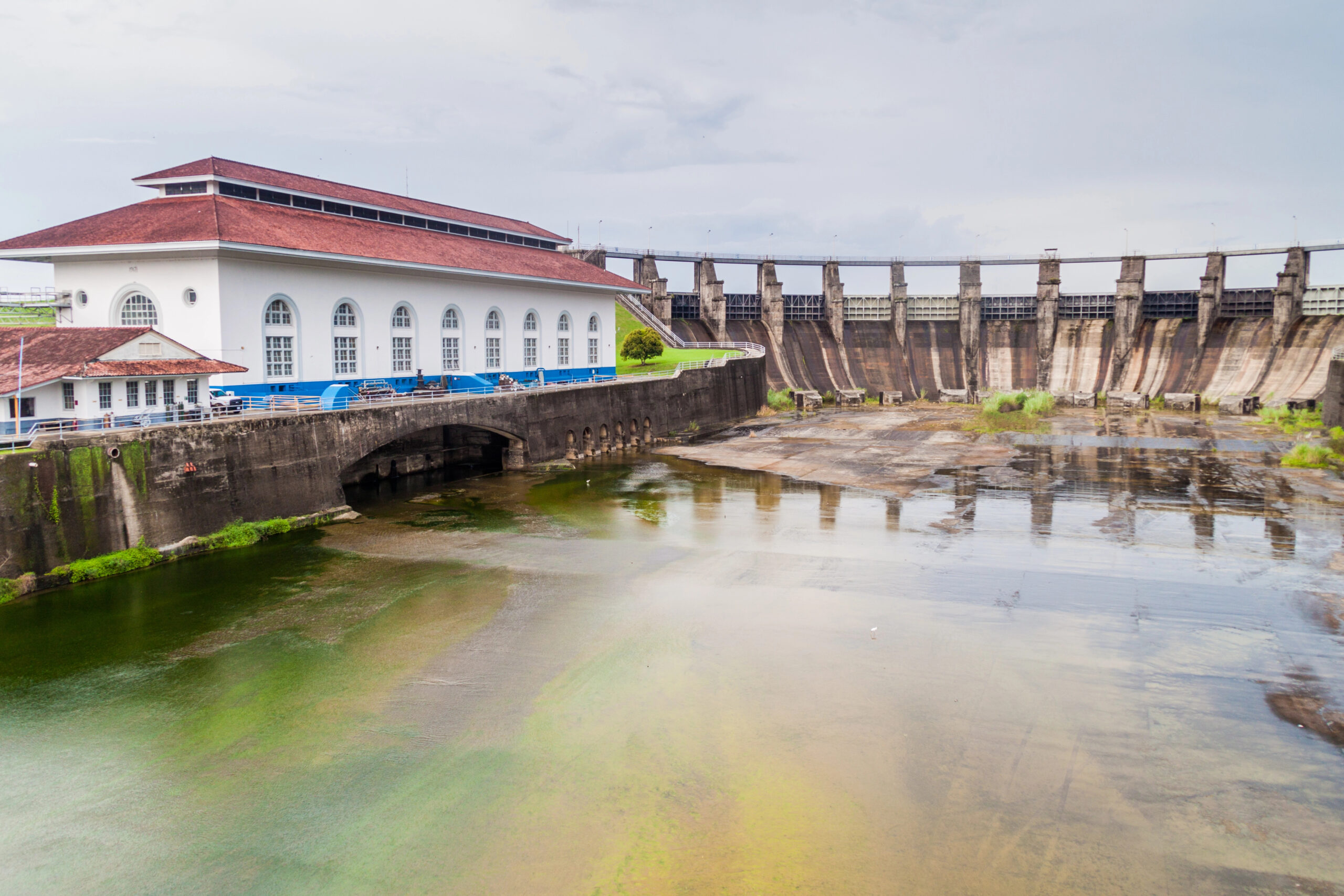
Panama’s power generation is primarily hydroelectric — two major dam systems supply the country’s backbone. That’s relevant to the next section.
Reliability: The Honest Picture
Here’s where the forums give wildly contradictory answers, because both of these things are true: Panama City electricity is generally reliable, and outages happen more than in a typical US city. Reconciling that requires some specificity.
Panama City
In established urban neighborhoods — Marbella, El Cangrejo, Bella Vista, San Francisco, Costa del Este — most residents report outages ranging from brief flickers to a few hours, perhaps a few times per month. Full-day outages are infrequent, and multi-day outages essentially don’t happen for routine events. Modern condo buildings in Panama City almost universally have backup generators that kick in automatically for common areas, elevators, and in many cases individual units.
The March 2025 Exception
Just before midnight on Saturday, 15 March 2025, an explosion and fire in a transformer at the privately-operated Pan-Am thermoelectric plant in La Chorrera triggered the national grid’s protective systems, cutting power across the entire country. Etesa, Panama’s electric transmission company, declared the system fully restored by 6:08 AM the following morning. This is the worst-case scenario — and it happens rarely. But it happened, and it’s worth knowing that a major enough generation failure at a single plant can take down the whole grid, not just a neighborhood.
One practical complication: outages cut water service too. Panama’s treatment plants and wells run on electricity, so when the grid goes down for more than a few hours, water pressure drops or disappears — which is exactly what happened nationwide during the March 2025 event. A brief power flicker doesn’t matter much. A six-hour outage means no water until power is restored.
Dry Season Constraints
Panama’s power grid is majority hydroelectric. That’s clean and relatively cheap — until the dry season (roughly January through March/April) runs the reservoirs low. During severe dry years, the government has asked residential customers to voluntarily cut air conditioning use during peak afternoon hours. This doesn’t happen every year, and it’s typically limited to a month or less. But it’s a real phenomenon, and one that no brochure will tell you about.
Outside Panama City
Reliability varies more sharply outside the capital. Mountain communities like Boquete have historically seen more frequent interruptions — enough that generators are common purchases among residents there. Areas like Bocas del Toro, being more remote, also see higher outage frequency. Chiriquí lowlands and cities like David are generally more reliable than remote mountain towns, though still below Panama City standards.
Outage Frequency — General Expectations
How Panama Electricity Is Billed
This is the section that most expat guides gloss over. It’s also the section most likely to determine whether your monthly bill is $80 or $500. Read it twice.
The Three-Tier Structure
Panama uses a tiered pricing system for residential BTS (basic low-voltage service) customers. Your rate per kilowatt-hour is not fixed — it climbs significantly as your monthly consumption rises.
| Monthly Consumption | Rate Status | What It Means |
|---|---|---|
| 0–300 kWh | Subsidized (FET) | Lowest rate; government subsidy applies; most Panamanians live here |
| 300–750 kWh | Mid-tier rate | Subsidy ends; standard commercial rate applies |
| 750+ kWh | Top tier | Highest rate — approximately $0.19–$0.22/kWh for residential customers; extremely steep |
A Note on the 750+ kWh Rate
The $0.33/kWh figure that circulates on expat forums reflects the full unsubsidized commercial reference rate — the ceiling. What residential customers actually pay in this tier is lower: approximately $0.19–$0.22/kWh. The subsidy is mostly gone at this tier, not entirely gone. Use $0.19–$0.22 for any payback calculation — it’s the number that will appear on your actual bill.
The Billing Math You Need to Understand
Using twice as much electricity doesn’t double your bill. It can triple it, because you’re hitting progressively more expensive tiers. An expat running central air conditioning in a large home can easily land in the 750+ kWh bracket, where rates turn a manageable bill into an ugly one.
Stay under 300 kWh and you’re protected by the government subsidy. Cross 300 kWh and every kilowatt above that costs meaningfully more. Cross 750 kWh and you’re paying commercial-adjacent rates on your residential account.
The Fuel Surcharge (CVC)
Every bill includes a Cargo por Variable de Combustible (CVC) — a fuel cost adjustment charge that adds roughly 1–2 cents per kWh depending on global energy prices. It’s applied to all consumption and isn’t discretionary. It shows up on your bill as a line item and is worth understanding so you’re not confused by month-to-month bill fluctuations that have nothing to do with your behavior.
The 2026 Tariff Adjustment — What Actually Changed, and for Whom
Panama has a Fondo de Estabilización Tarifaria (FET) — a Tariff Stabilization Fund — that subsidizes electricity for low-to-moderate consumers. For customers consuming under 300 kWh per month, this subsidy has historically kept bills very low.
The backstory matters for understanding what happened next. In October 2024, Panama’s Supreme Court ordered a suspension of a scheduled tariff update, which left the electricity companies applying an outdated rate structure — one that didn’t reflect their actual costs. To keep the system financially sustainable without passing that gap directly to consumers, the government’s Consejo de Gabinete approved a temporary “additional FET,” which covered the shortfall from July through December 2025. That additional subsidy was not renewed for the January–June 2026 period, and a new tariff schedule took effect 1 January 2026 under authority granted to ASEP (Panama’s public services regulator) by Ley 6 of 3 February 1997.
The practical effect, confirmed across ENSA’s own public statements and multiple Panamanian outlets in late December 2025:
January 2026 Tariff Adjustment — By Utility
The 300 kWh Target Is Real — and Now Has Real Numbers Behind It
Both ENSA and Naturgy have publicly recommended that customers keep consumption under 300 kWh to avoid rate adjustments — and the January 2026 data shows why: roughly seven in ten customers who stayed under that line paid nothing extra, while those above it saw a real, if modest, increase. For expats, staying under 300 kWh is directly achievable with the right cooling setup — which we cover in detail elsewhere in this series.
What Does 300 kWh Actually Get You?
This is where it gets practical. A US-style home running central air conditioning around the clock, an electric water heater, an electric stove, and a dryer can blow past 1,000 kWh without trying. But 300 kWh is genuinely livable in Panama with the right equipment — specifically high-efficiency mini split units instead of central air, a gas stove, and air-dried laundry. We know expats running AC roughly 20 hours a day, six days a week, and keeping their bills under $50/month. That’s not a fantasy; it requires deliberate equipment choices.
How to Set Up Service
You cannot establish electrical service from outside Panama. Once you have a permanent address — either a title deed or a signed lease agreement — you take that document along with your passport to the utility company and pay a deposit. Service activation typically takes one to two weeks, so start the process as soon as you have your housing documents in hand.
Bills are left at your door or gate monthly and can be paid online, at E-Pago kiosks in malls and supermarkets, or at Rapid Money locations. E-Pago credits same-day; Rapid Money can take several days. Service is disconnected after two consecutive months of non-payment.
“The goal isn’t just to find affordable electricity in Panama. It’s to understand the system well enough to stay in the tier where affordable actually applies.”
A Note on the Facebook Post We Read
Someone shared a detailed Facebook post about optimizing electricity bills in Panama, and we want to give it a fair reading because most of it is accurate and useful. A few specifics worth noting:
The core claim — that billing tiers are steep and that mini splits are far more efficient than older or low-SEER units — is correct and important. The recommendation to use Daikin, Trane, or Panasonic premium efficiency models (SEER 22+) is solid advice that we independently verified and echo in our Mini-Splits and Buyer’s Electricity Checklist article.
The claim that “not all 240V appliances automatically balance phases” needs a small correction: in standard 240V split-phase residential service, large appliances like AC units, stoves, and water heaters do connect across both legs and are inherently balanced. The question of whether your overall panel is balanced across phases is slightly different and matters more for electrical system health than for your monthly bill. We cover the three-phase question specifically in our Electrical Wiring & Home Inspections article.
The observation about the Eco-Kold refrigerant alternative in the comments is one we’d approach with caution. The claim that 205 out of 220 imported AC models “lie about efficiency” is not verifiable from our research and conflicts with publicly available SEER data from major manufacturers. We’re not saying it’s wrong — we’re saying we can’t verify it, and that’s exactly the kind of thing we’ll say out loud rather than just nodding along.
The note about billing discrepancies when meters are inaccessible or unread is accurate. Your bill will be clearly marked as an estimate in those cases. If you receive an estimated bill that seems off, contact your utility — you have the right to request an actual reading.
Sources & Verification
- Reported: The nationwide blackout of 15–16 March 2025 — an explosion and fire in a transformer at the privately-operated Pan-Am thermoelectric plant in La Chorrera, triggering the national grid’s protective systems just before midnight on 15 March, with Etesa declaring the system fully restored by 6:08 AM on 16 March, and the accompanying loss of water service — confirmed across Newsroom Panama, the Tico Times, Panama Broadcasting Corporation, and multiple other contemporaneous outlets.
- Official: The January 2026 tariff adjustment figures — 71.5% of ENSA’s 548,535 customers (81% concentrated in Panama province, 57% of Panama City) seeing no increase, 28.5% seeing an average 2.74% (up to 5%) adjustment; 67% of Edemet’s roughly 590,000 customers seeing no increase, 33% seeing an adjustment; approximately 99% of Edechi customers remaining covered via the ordinary FET and the Western Tariff Fund (Fondo Tarifario de Occidente) extended through June 2026 — confirmed against ENSA’s own public statements and reported consistently across La Estrella de Panamá, Telemetro, La Prensa, Panamá América, SNIP Noticias, and swissinfo.ch (via EFE), all published late December 2025. Governing statute: Ley 6 of 3 February 1997, empowering ASEP to adjust electricity tariffs. Root cause: an October 2024 Supreme Court-ordered tariff suspension, bridged by a temporary “additional FET” through 2025 that was not renewed for the first half of 2026.
- Community: Outage frequency by region, the residential 750+ kWh effective rate range ($0.19–$0.22/kWh versus the $0.33 unsubsidized reference rate), and service setup mechanics (deposit, activation timing, payment channels, disconnection policy) — synthesised from expat accounts and our own April 2026 research; we have not independently obtained ENSA’s or Naturgy’s full published tariff schedule.
Facts in this article last verified: July 2026.
Panama Electricity Guide
- 01 Panama Electricity Guide for Expats: Rates, Reliability & the Billing Trap That Triples Your Bill
- 02 Voltage, Plugs & Appliances: The One Big Advantage American Expats Have
- 03 Wiring, Inspections & Electrical Hazards in Older Panama Homes
- 04 Mini Splits, Solar, Windows, and the Home Buyer's Electricity Checklist
- 05 Jalousie Windows and the Hidden Electricity Cost
- 06 SEER Ratings: What to Buy — and What to Avoid
- 07 Gas Appliances & the $4.37 Cylinder Most Expats Miss
- 08 Solar Panels: What the Math Actually Says
- 09 Panama's Clean Energy Grid: What Expats Need to Know
- 10 Power Outages, UPS Systems & Backup Power
Brian & Kent
We’re a gay couple based in St. Petersburg, Florida, relocating to Panama in real time. Brian’s permanent residency was approved in July 2026. Kent is the primary researcher. Everything on this site is current because we’re going through it now.