Panama Electricity Guide
SEER Ratings Explained: What to Buy, What to Skip, and Why Panama Changes Everything
The number on the label is more consequential here than anywhere you’ve lived before.
 Brian & Kent · GayExpatsPanama.com · April 2026 Research Trip
We have always paid attention to SEER ratings. That is not something we came to in Panama — it is something life in Palm Springs, Phoenix, and St. Petersburg beat into us. In none of those places was air conditioning a luxury. In the desert, it is survival equipment. In Florida, it runs so many months of the year that the efficiency number on the label translates directly and immediately into the electric bill.
Panama Electricity Guide
Everything we've learned about electricity in Panama — rates, reliability, wiring hazards, mini splits, solar, and what to check before you buy.
- Panama Electricity Guide for Expats: Rates, Reliability & the Billing Trap That Triples Your Bill
- Voltage, Plugs & Appliances: The One Big Advantage American Expats Have
- Wiring, Inspections & Electrical Hazards in Older Panama Homes
- Mini Splits, Solar, Windows, and the Home Buyer's Electricity Checklist
- Jalousie Windows and the Hidden Electricity Cost
- SEER Ratings: What to Buy — and What to Avoid You are here
- Gas Appliances & the $4.37 Cylinder Most Expats Miss
- Solar Panels: What the Math Actually Says
- Panama's Clean Energy Grid: What Expats Need to Know
- Power Outages, UPS Systems & Backup Power
Each time we replaced a central air system — in Phoenix and again in St. Petersburg — we used it as an opportunity to move up the SEER scale, and every time the contractor walked us through the same calculation: here is what the higher-efficiency unit costs, here is what it saves per month at your local electric rate, here is how long it takes to pay back the difference. That math always made sense to us, and we always bought up.
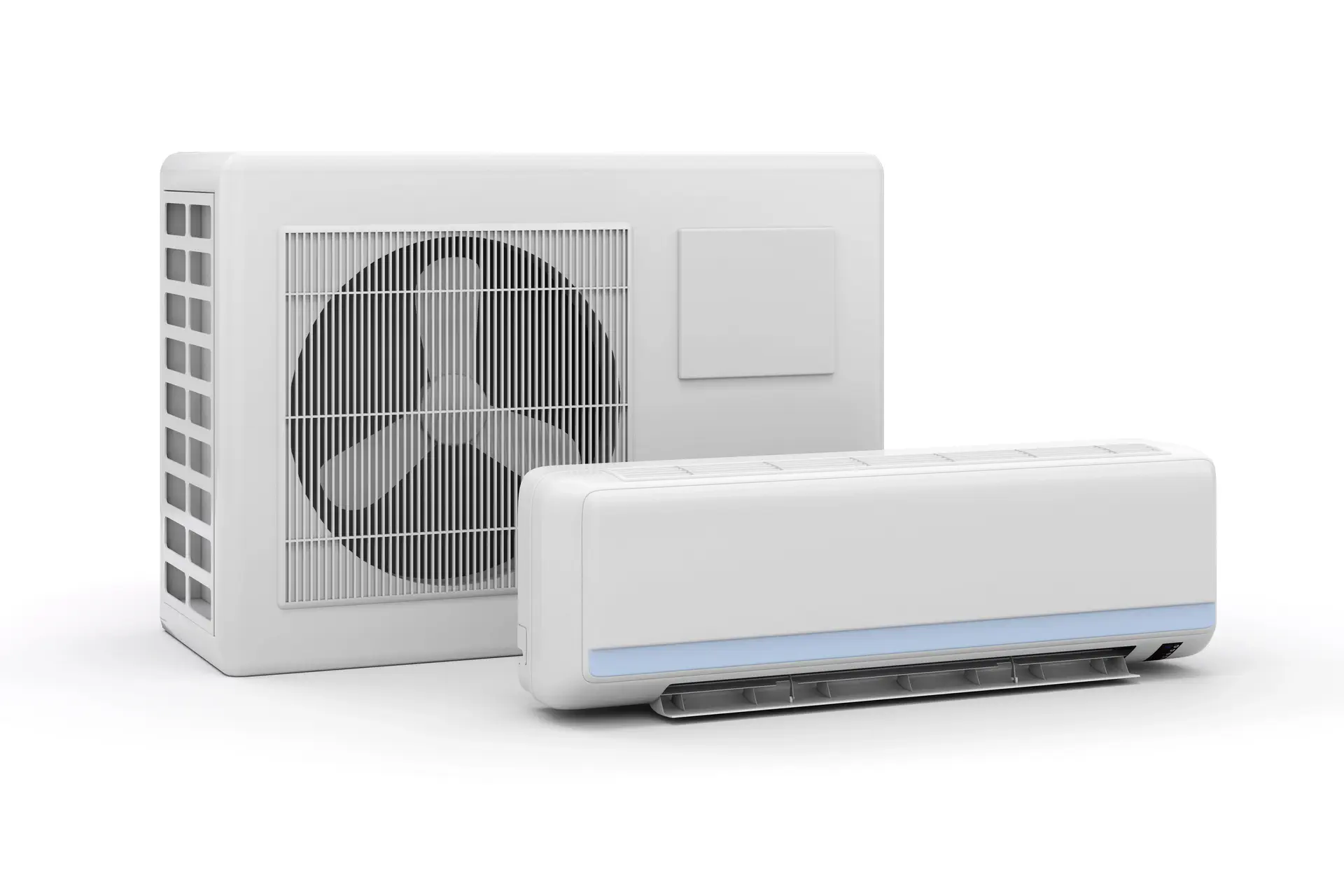
The distinction worth noting: every system we replaced in the United States was a whole-house central air system — one outdoor compressor, ductwork throughout the house, a single air handler. That is the standard residential setup across most of the U.S. Panama is different. Mini-split systems — individual wall-mounted units, one per room, each with its own outdoor compressor — are the norm here. The SEER rating applies to both types, but the way you size, install, and think about efficiency changes considerably when you are dealing with five separate units instead of one.
Panama sharpens the efficiency calculation further. Air conditioning here is not a seasonal necessity. It is a year-round, often around-the-clock necessity. The unit you choose — and specifically how efficient that unit is — will shape your monthly electric bill for the entire time you live here. Getting this decision wrong is expensive. Getting it right pays dividends every single month.
This post explains SEER ratings from the ground up — what they mean, what’s available in Panama, what the numbers actually cost you in electricity, and what we think makes sense to buy for a Panama home.
What SEER Actually Means
SEER stands for Seasonal Energy Efficiency Ratio. It measures how much cooling you get per watt of electricity consumed. A higher SEER number means more cooling for the same power draw — or the same cooling for less power. The math is straightforward: a SEER 20 unit does the same cooling job as a SEER 10 unit while using exactly half the electricity.
The “seasonal” part of the name is a holdover from how the rating was developed for temperate climates, where you run the AC heavily in summer and not at all in winter. That assumption is baked into the formula. In Panama, where there is no winter and the temperature differential between day and night is modest year-round, you get the worst of both worlds: you run the AC constantly, and the “seasonal” averaging in the rating actually understates how hard your unit will work.
Why Panama Is Different
Panama sits between 7° and 9° north latitude. Average highs in Panama City hover around 88°F (31°C) year-round, with humidity consistently above 75%. You are not running AC for three months. You are running it twelve months, often around the clock. The efficiency gap between a SEER 12 and a SEER 18 unit costs you real money every single month — compounded over a ten- or fifteen-year retirement.
The SEER Range: What’s Actually Available
In Panama, you will encounter a range of mini-split units across three broad efficiency tiers. Understanding what each tier actually delivers — and what it costs — is the starting point for making a smart purchase.
SEER Tiers Available in Panama
SEER 9–12 units still exist in Panama — mostly in older rental apartments, budget renovations, and properties where the landlord or developer made the cheapest possible choice. You will see them. Do not buy them for a home you intend to live in. The electricity savings from upgrading will pay back the cost difference faster than you expect.
SEER 13–16 is what you will most commonly encounter in mid-range construction and developer-installed systems. It is acceptable, and if you are renting a furnished apartment, this is probably what you have. If you are building or renovating, you can do better.
SEER 17–20 is the practical sweet spot for Panama. These are inverter-driven mini-splits — the compressor modulates its speed rather than cycling fully on and off — which means they handle Panama’s sustained heat load more efficiently than older fixed-speed designs at any given SEER rating.
SEER 21 and above exists, and the technology is excellent. The question is whether the additional unit cost recovers itself in electricity savings within a reasonable timeframe — and that depends on how many units you are installing and how aggressively you run them.
What SEER Costs: The Unit Price Difference
More efficiency costs more upfront. The following are approximate Panama retail price ranges for a 12,000 BTU (1-ton) mini-split — the most common residential size — across SEER tiers. Prices vary by brand and vendor; these are representative figures from conversations with equipment suppliers and retailers during our April 2026 research trip.
| SEER Rating | Approx. Unit Cost (12,000 BTU) | Notes |
|---|---|---|
| SEER 12 | $350–$500 | Fixed-speed. Lowest upfront, highest operating cost. |
| SEER 14–15 | $500–$700 | Entry inverter. Common in mid-range builds. |
| SEER 17–18 | $700–$950 | Our recommended minimum for Panama homes. |
| SEER 20–21 | $950–$1,300 | Strong efficiency. Good choice for bedrooms. |
| SEER 22–25+ | $1,300–$1,900+ | Premium inverter. Diminishing returns above SEER 22. |
For a three-bedroom apartment with one unit per room plus a living area unit — a common configuration — you are looking at four mini-splits. The cost difference between equipping that apartment with SEER 14 units versus SEER 18 units runs roughly $800–$1,200 total upfront. That gap closes quickly when you are running the AC every day of the year.
The unit you buy in month one is the electric bill you pay every month for the next decade. SEER is not a spec. It is a recurring expense.
The Electricity Cost Math: What SEER Saves You Monthly
Panama’s residential electricity rate varies slightly by consumption band, but for most expat households running air conditioning regularly, a working number is approximately $0.17–$0.22 per kilowatt-hour (kWh) — consistent with the top-tier residential rate we verified in the first article in this series. For this comparison we will use $0.19/kWh, a reasonable midpoint for a typical Panama City apartment.
A 12,000 BTU unit rated at SEER 12 draws roughly 1,000 watts per hour. The same cooling output at SEER 18 draws approximately 667 watts per hour. At SEER 21, it drops to about 571 watts. If you run a single unit ten hours per day — which is modest for a bedroom in Panama — the monthly difference looks like this:
| SEER Rating | Watts/hr (12K BTU) | kWh/month (10hr/day) | Monthly Cost @ $0.19/kWh | vs. SEER 12 |
|---|---|---|---|---|
| SEER 12 | 1,000W | 300 kWh | $57.00 | — |
| SEER 15 | 800W | 240 kWh | $45.60 | Save $11.40/mo |
| SEER 18 | 667W | 200 kWh | $38.00 | Save $19.00/mo |
| SEER 21 | 571W | 171 kWh | $32.49 | Save $24.51/mo |
| SEER 24 | 500W | 150 kWh | $28.50 | Save $28.50/mo |
That is per unit. A four-unit home running the system twelve hours a day — one bedroom cooled all night, living spaces running during waking hours — multiplies these numbers significantly. The upgrade from SEER 12 to SEER 18 across four units saves roughly $76/month. That is $912 per year. The additional cost of buying SEER 18 units instead of SEER 12 units recovers itself in under two years.
The Payback Calculation
For a four-unit Panama home running 12 hours/day:
- Upgrade cost: SEER 12 → SEER 18 ≈ $800–$1,200 total premium
- Monthly electricity savings: ~$76
- Payback period: 11–16 months
- Ten-year savings vs. SEER 12: $9,120+
SEER vs. SEER2: A Note on the Newer Standard
In the United States, the Department of Energy updated its testing methodology in 2023 and introduced SEER2 ratings, which use a slightly more demanding test condition. A SEER 18 unit under the old standard might rate SEER2 17 or 17.5 under the new one. Panama still primarily operates on the original SEER rating system, and most equipment sold here is labeled accordingly. If you are shipping equipment from the U.S. or buying from a U.S. importer, verify which standard the listed rating reflects. The difference is not dramatic, but it matters for comparison shopping.
What If the Unit Doesn’t Have a SEER Rating?
Not every mini-split sold in Panama comes from a U.S.-designed product line. You will encounter units — particularly from Asian manufacturers selling through regional distributors — that carry no SEER rating at all. That does not mean they are unrated. It means they were rated under a different standard. Here is what those labels actually say, and how to translate them.
EER — Energy Efficiency Ratio
EER is the simplest and oldest efficiency metric, and it appears on virtually every air conditioning unit regardless of country of origin. It measures cooling output (in BTUs per hour) divided by power input (in watts) at a single, fixed test condition: 95°F outdoors, 80°F indoors, 50% relative humidity. A higher EER is better. EER is a snapshot — it does not account for varying temperatures across a season — but it is a consistent and honest comparison point between units. A SEER rating is roughly EER divided by 0.875 (or multiplied by about 1.14), so a unit with an EER of 12 is roughly equivalent to a SEER 13–14 unit. An EER of 15 corresponds to approximately SEER 17–18.
COP — Coefficient of Performance
COP is the unit-less, physics-based efficiency ratio used internationally by engineers and in technical documentation. It divides energy output by energy input with both in the same units — no BTU-to-watt conversion needed. A COP of 3.5 means the unit delivers 3.5 units of cooling energy for every 1 unit of electricity consumed. To convert COP to EER: multiply by 3.412. To get an approximate SEER equivalent: multiply COP by about 3.79. A modern inverter mini-split with a COP of 4.5 at rated conditions is performing at roughly SEER 17 equivalent. COP above 5.0 corresponds to approximately SEER 19+.
CSPF — Cooling Seasonal Performance Factor
CSPF is the international seasonal efficiency standard defined by ISO 16358-1 and increasingly used across Latin America, Asia, and Europe. It is conceptually similar to SEER — it measures efficiency across a full cooling season rather than a single test point — but it uses different temperature bins and test conditions, calibrated to regional climates rather than the U.S. temperate-climate model. Crucially, CSPF T3 is the variant designed specifically for hot tropical climates. For Panama, a unit rated under CSPF T3 is actually being tested under conditions much closer to what you will experience day-to-day than the standard SEER test conditions are. A CSPF of 5.0 is roughly equivalent to SEER 17. A CSPF of 6.0 is in the SEER 20–21 range.
Approximate Rating Equivalents — Quick Reference
These Are Approximations
Conversions between SEER, EER, COP, and CSPF are estimates — the exact relationship varies by climate zone, humidity, and how each manufacturer runs its tests. Use these numbers for general comparison when shopping, not for precise engineering decisions. When comparing two units in the same store, make sure you are comparing the same metric on both spec sheets.
What Your Electrical Panel Needs
The efficiency conversation is only half the story. A high-SEER inverter mini-split still draws significant amperage at startup and sustained operation, and Panama’s residential electrical infrastructure is something every expat buyer or renter needs to understand before they commit to a home. We cover panel age and inspection more broadly in our Electrical Wiring & Home Inspections article; here’s what applies specifically to AC circuits.
Panel Capacity and Breaker Requirements
Panama residences are wired on a 120V/240V split-phase system, the same as the United States. A standard residential panel is 100–150 amps total service — sufficient for a typical apartment but potentially undersized for a home running four or five mini-splits simultaneously alongside other loads.
Each mini-split requires its own dedicated circuit. Breaker sizes by unit capacity:
| Mini-Split Capacity | BTU | Dedicated Breaker Required | Wire Gauge (minimum) |
|---|---|---|---|
| 9,000 BTU (0.75-ton) | 9K | 15A / 240V | 14 AWG |
| 12,000 BTU (1-ton) | 12K | 20A / 240V | 12 AWG |
| 18,000 BTU (1.5-ton) | 18K | 25–30A / 240V | 10 AWG |
| 24,000 BTU (2-ton) | 24K | 30–35A / 240V | 10 AWG |
| 36,000 BTU (3-ton) | 36K | 40–50A / 240V | 8 AWG |
A four-unit home with 12,000 BTU units in each room consumes four dedicated 20-amp, 240V circuits. That is 80 amps of breaker capacity committed to AC alone, before you add water heating, kitchen appliances, washer/dryer, and general lighting. A 100-amp panel gets tight. A 150-amp or 200-amp panel gives you margin.
Inspect the Panel Before You Sign
Older apartments and homes in Panama — anything built before roughly 2010 — may have undersized panels or wiring not rated for the amperage modern mini-splits require. Before committing to a rental or purchase, ask to see the breaker panel. Count the existing circuits. Ask what capacity each slot is rated for. An electrician’s inspection ($30–$60 for a residential visit) is worth every dollar if it reveals a 60-amp panel that cannot safely support four AC units.
Voltage Stability in Panama
Panama’s grid is generally reliable in Panama City, particularly in Bella Vista, Marbella, El Cangrejo, and Costa del Este. However, voltage fluctuations are a documented reality in some areas, particularly during the rainy season when grid demand spikes. High-SEER inverter units are more sensitive to voltage irregularities than older fixed-speed compressors, because the variable-frequency drive in the inverter has tighter operating tolerances.
If you are installing premium SEER 20+ units, consider installing a voltage stabilizer or automatic voltage regulator (AVR) on the AC circuits. These run $80–$200 per unit and protect against both voltage sag and surge. Cheaper than a compressor replacement.
Multi-Zone Systems
Multi-zone mini-split systems — one outdoor compressor connected to two, three, or four indoor units — are available in Panama and can simplify installation in properties where running individual outdoor condenser units on every exterior wall is not practical. The tradeoff: if the single compressor fails, all zones go down. For most Panama City apartments, individual split systems per room remain the standard and more serviceable approach.
Other Things the SEER Label Doesn’t Tell You
Dehumidification Mode
In Panama’s humidity — consistently 75–90% relative humidity year-round — dehumidification matters as much as cooling. Better inverter mini-splits include a dedicated dry mode that runs the compressor at low speed specifically to remove moisture without overcooling the room. The SEER rating measures cooling efficiency, not dehumidification efficiency. Look for this feature specifically on the spec sheet, because running AC all day in a humid climate without effective dehumidification produces a cold, clammy room rather than a comfortable one.
HSPF: The Heating Rating You Will Never Use
Most mini-splits sold in Panama are marketed as heat pumps and carry both a SEER cooling rating and an HSPF heating rating. You can ignore the HSPF entirely. Panama’s climate never drops below 65°F (18°C) even at night in the highlands, and Panama City rarely sees anything below 72°F (22°C). You will not use the heating function. Do not pay extra for a higher HSPF rating.
Noise Levels
The indoor air handler’s noise level (measured in dB) matters more than most buyers realize — particularly for bedrooms where you will run the unit all night. Units at 19–22 dB are near-silent. Units at 30+ dB are audible white noise. Check the spec sheet. This is listed on every mini-split data sheet and frequently omitted from the salesperson’s pitch.
Filter Maintenance in the Tropics
Panama’s combination of fine dust, pollen, and humidity means mini-split filters clog faster than in temperate climates. A SEER 18 unit with a clogged filter effectively performs like a SEER 12 unit in real-world conditions — because restricted airflow forces the compressor to work harder. Clean or rinse filters monthly. This is not optional maintenance in Panama; it is how you protect the efficiency you paid for.
Refrigerant Type
Modern mini-splits use R-410A or the newer R-32 refrigerant. R-32 units are more efficient, have a lower environmental impact, and are increasingly standard in newer high-SEER models. Confirm which refrigerant your unit uses before purchase, because R-410A and R-32 require different servicing equipment and are not interchangeable. Verify that local HVAC technicians stock the refrigerant for your unit — this is not a question to skip.
Quick Checklist — What to Confirm Before Buying
Our Recommendation for Panama
If you are buying or renovating: target SEER 17–20 with inverter technology. This is where the efficiency gain per dollar spent is steepest, the equipment is widely available from major brands (LG, Daikin, Midea, Gree, and Samsung all have strong Panama distribution), and the payback window is under two years at Panama electricity rates.
SEER 21–24 is a reasonable choice if you are fitting out a property you intend to own and occupy for ten or more years, or if you are installing in a room that will run 16–24 hours per day — a master bedroom, a home office, or a space without natural ventilation. The additional upfront cost recovers in that context.
Going above SEER 24 gets into territory where the marginal electricity savings are measurable but the additional equipment cost takes four or more years to recover. Not a bad choice, but not the obvious one.
Avoid fixed-speed (non-inverter) units entirely, regardless of SEER rating, for any space you intend to occupy seriously. An inverter unit at SEER 16 will outperform a fixed-speed unit at SEER 16 in real-world Panama conditions because it ramps up and down to match load rather than cycling fully on and off — which also extends compressor life significantly in a climate where the unit never really rests.
The Short Version
- Buy inverter technology. Non-negotiable for Panama.
- Target SEER 17–20 for the best value at Panama electricity rates.
- Get SEER 21+ for rooms that run all night, every night.
- Verify panel capacity before installing multiple units.
- Clean filters monthly — it protects the efficiency you paid for.
- Budget $80–$200 per unit for a voltage stabilizer if you are installing premium equipment.
We will publish a follow-up post with specific brand comparisons and where to buy in Panama City. We are still gathering that research. What we can tell you now is that the SEER decision is the one that matters most — and it is the one most buyers skip.
Sources & Verification
- Official: SEER (Seasonal Energy Efficiency Ratio) as the standard U.S. air-conditioning efficiency metric; the U.S. Department of Energy’s 2023 update to SEER2 testing methodology. Standard, well-documented industry definitions.
- Reported: Approximate conversion factors between SEER, EER, COP, and CSPF (international, ISO 16358-1) efficiency metrics. These are industry rule-of-thumb approximations rather than exact physical constants, as the article itself notes — the relationship varies by climate zone, humidity, and manufacturer test conditions.
- Community: Panama-specific unit pricing by SEER tier, electrical panel and breaker/wire-gauge requirements, refrigerant type availability, and brand distribution (LG, Daikin, Midea, Gree, Samsung) in Panama. Synthesised from conversations with equipment suppliers and retailers during our April 2026 research trip and general HVAC electrical engineering practice.
- Not yet verified: The $0.19/kWh rate used in the savings-math table is consistent with the $0.19–$0.22/kWh top residential tier we independently verified in this series’ Rates, Reliability & Billing article, but individual bills vary by tier and consumption pattern — treat the specific dollar savings figures as illustrative rather than a guarantee for any specific household.
Facts in this article last verified: July 2026.
Panama Electricity Guide
- 01 Panama Electricity Guide for Expats: Rates, Reliability & the Billing Trap That Triples Your Bill
- 02 Voltage, Plugs & Appliances: The One Big Advantage American Expats Have
- 03 Wiring, Inspections & Electrical Hazards in Older Panama Homes
- 04 Mini Splits, Solar, Windows, and the Home Buyer's Electricity Checklist
- 05 Jalousie Windows and the Hidden Electricity Cost
- 06 SEER Ratings: What to Buy — and What to Avoid
- 07 Gas Appliances & the $4.37 Cylinder Most Expats Miss
- 08 Solar Panels: What the Math Actually Says
- 09 Panama's Clean Energy Grid: What Expats Need to Know
- 10 Power Outages, UPS Systems & Backup Power
Brian & Kent
A gay couple based in St. Petersburg, Florida, researching and relocating to Panama in real time. Brian’s permanent residency was approved in July 2026. Kent is the researcher. Everything on this site comes from what we are actually doing, paying, and figuring out — not what a brochure told us.