Panama Electricity Guide
Panama’s Clean Energy Bet: What the Renewable Push Actually Means for Expats
Panama’s installed generation capacity is over 75% renewable. Actual generation on any given day swings much more than that — and understanding why matters for anyone planning a decade or two here.
 Brian & Kent · GayExpatsPanama.com · April 2026 Research Trip
Before we moved to Panama in our minds — before the visa research, the attorney meetings, and the cost-of-living spreadsheets — we thought of it as a place with unpredictable infrastructure. Hot, humid, beautiful, but also: third-world power grid, rolling blackouts, generators humming in hotel lobbies. That picture is outdated in a very specific and interesting way.
Panama Electricity Guide
Everything we've learned about electricity in Panama — rates, reliability, wiring hazards, mini splits, solar, and what to check before you buy.
- Panama Electricity Guide for Expats: Rates, Reliability & the Billing Trap That Triples Your Bill
- Voltage, Plugs & Appliances: The One Big Advantage American Expats Have
- Wiring, Inspections & Electrical Hazards in Older Panama Homes
- Mini Splits, Solar, Windows, and the Home Buyer's Electricity Checklist
- Jalousie Windows and the Hidden Electricity Cost
- SEER Ratings: What to Buy — and What to Avoid
- Gas Appliances & the $4.37 Cylinder Most Expats Miss
- Solar Panels: What the Math Actually Says
- Panama's Clean Energy Grid: What Expats Need to Know You are here
- Power Outages, UPS Systems & Backup Power
Panama’s electricity grid is, by most objective measures, cleaner than the one powering most American homes. As of early 2026, roughly 75% of installed electricity capacity comes from renewable sources — hydro, wind, and a fast-growing solar sector, confirmed by Panama’s grid operator, the Centro Nacional de Despacho. While we were doing our April 2026 research trip, the government was simultaneously advancing a major policy process to lock in a renewable-first direction through 2050. This is not greenwashing. It has real, practical implications for where you live, what you pay, and what options you have for your own home energy setup. It also has a real limitation worth understanding honestly, which we get to below.
Here is what we verified, what it means, and — honestly — what the real risks still are.
Where Panama’s Grid Actually Stands
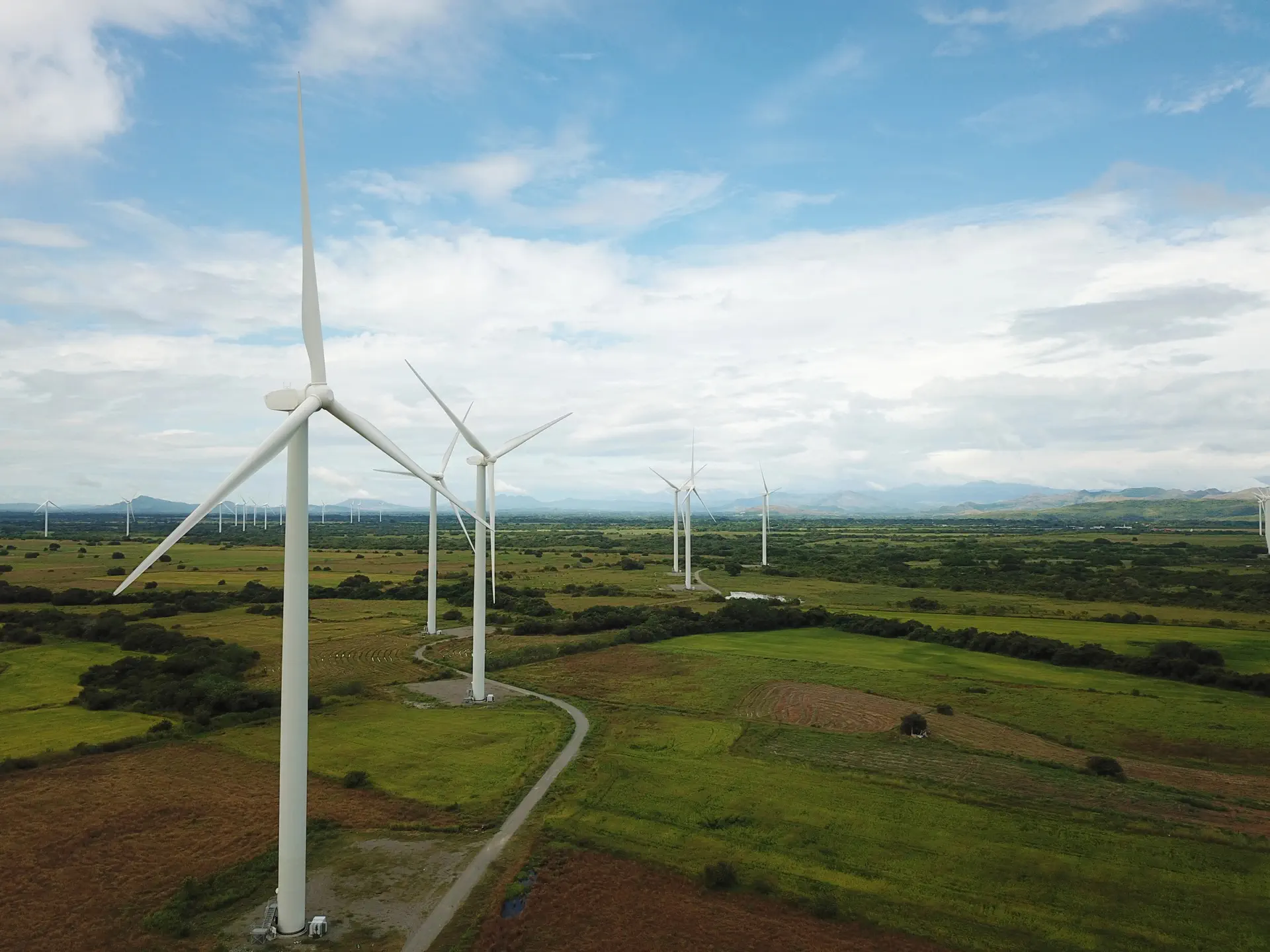
Panama’s electricity backbone is hydropower. The grid runs on rainfall — the same tropical geography that makes the canal work also makes Panama one of the best hydro environments in Central America. The Fortuna plant alone has 300 MW of installed capacity (approximately 276.5 MW operational). Changuinola 1 adds another 189.68 MW. More than 40 private companies operate generating assets across the country, including major hydro, solar, and wind projects — names like La Estrella, Los Valles, Monte Lirio, Estí, Pando, and Gualaca, managed by groups including AES, Celsia, and EISA.
Panama’s Installed Generation Capacity — 2026
Solar is the fastest-growing segment. As of a January 2026 ASEP filing, Panama had approximately 7,064 self-consumption solar customers with a combined 192 MW of installed rooftop and small-scale capacity — we cover this in full in this series’ Solar Panels article. That number is moving quickly.
Panama’s electricity grid is cleaner than the one powering most American homes right now. That is not a talking point — it is what the installed-capacity data shows.
Installed Capacity vs. Actual Generation: The Distinction That Matters
The 75%+ figure describes installed capacity — the generating equipment Panama has built. What actually flows through the grid on any given day, the generation mix, is a different and much more volatile number, and understanding the gap between the two is essential to reading Panama’s energy story honestly.
In November 2024 — a wet-season peak month with reservoirs full — renewable sources provided 97.66% of actual electricity generation: hydroelectric alone supplied 88.3%, solar 6%, and wind 1.86%, according to Panama’s National Energy Secretariat (SNE) citing Centro Nacional de Despacho data. For that month, Panama covered essentially all of its demand with clean power.
Contrast that with a documented dry-season stress period during an El Niño alert reported in May 2026: renewable generation dropped to just 52.72% of the electricity produced, with thermal plants — burning natural gas, bunker fuel, and diesel — supplying 47.28%, nearly matching hydro output. Solar contributed 13.80% and wind 9.56% during that period, which helped offset some of the hydro shortfall, but thermal generation still had to fill a substantial gap.
Actual Generation Mix — Two Real Snapshots
That is not a contradiction between two sources getting different answers — it is the honest range of a hydro-heavy grid. When reservoirs are full, Panama can run almost entirely clean. When a severe dry season or El Niño event lowers reservoir levels, the country leans hard on thermal generation to keep the lights on, and that generation is both more expensive and more emissions-heavy. Separately, Panama’s National Secretary of Energy stated in February 2026 that the country’s current renewable share was closer to 65%, with a government target of exceeding 85% — a figure that may reflect a different measurement point or a more conservative generation-based accounting than the capacity-based 75%. We present both because they come from credible, differently-scoped sources rather than pick one as more correct.
The Government’s Actual Plan
Panama’s National Secretariat of Energy has been developing the National Energy Plan 2025–2050 — a structured, long-term policy roadmap — alongside a more granular National Energy Plan 2026–2040, whose formulation process was formally launched in March 2026 and is expected to take roughly 18 months. This is not a press release with aspirational targets. It is a planning process backed by a participatory development process involving the private sector, academic institutions, international organizations, and government agencies. Panama’s National Secretary of Energy, Rodrigo Rodríguez, has been explicit that the target of exceeding 85% renewable generation must be built “without neglecting energy security or system stability” — i.e., the government is not treating this as a race to 100% regardless of reliability cost.
The Auction Program
The most concrete near-term action is a competitive renewable energy auction program that began rolling out in 2026, with four successive tender rounds planned as part of the National Energy Plan 2025–2050, starting with hydroelectric and wind technologies and gradually incorporating solar and battery storage.
Two ETESA tenders are worth distinguishing, because their scale is quite different:
| Tender | Scope | Bids Received | Award Date |
|---|---|---|---|
| ETESA 01-25 | New hydroelectric and wind generation, 19-year contracts through 2048 | 7 bids from 6 companies, up to 260.57 MW combined | 24 April 2026 |
| ETESA 01-26 | Contracting on existing plants | 71 bids, 67 of them renewable — hydro and solar predominant | 5 May 2026 |
Preliminary results for ETESA 01-25 named specific winning bids: Santa Cruz Wind, UEP III (at $92.77/MWh, 7,257.67 GWh assigned), Los Naranjos Overseas (at $94.45/MWh, 1,115.78 GWh), and Corporación de Energía del Istmo (at $97.50/MWh, 1,531.14 GWh). Officials characterized the competitive pricing from both tenders as a concrete step toward moderating electricity costs for consumers over the medium and long term, since new renewable capacity contracted at competitive rates is one of the clearer levers for holding down future tariffs.
What This Means for the Grid
More contracted capacity — and specifically more diversity across hydro, wind, and eventually solar and battery storage — means more grid stability, which is the real practical concern for expats. A grid that is heavily hydro-dependent in a single severe dry season can struggle, as the May 2026 El Niño snapshot above shows concretely. A diversified grid with wind, solar, and battery backup is more resilient to exactly that kind of stress. The auction program is specifically designed to add that diversification.
Distributed Generation — The Rooftop Solar Story
This is the part that matters most for expats considering property in Panama, and it is moving faster than most people realize. Panama’s public services regulator, ASEP, raised the maximum annual limits for electricity self-consumption from renewable sources in early 2026 — increasing thresholds to 5% (GWh) and 16% (MW), up from the prior 4% and 13% caps. The reason: rooftop solar adoption had grown so fast it was approaching the old limits.
For expats evaluating property, this shifts the conversation from “is solar possible?” to “what size system and what backup strategy makes sense?” Properties that would have been considered too remote five years ago are increasingly viable with a properly sized solar-plus-battery setup. Sites in coastal areas like Cambutal, Mariato, or Torio — places where grid access has historically been marginal — are getting a second look from buyers who can self-generate.
Regional Integration
Panama also serves as the anchor for the Clean Energy Corridor of Central America (CECCA) — an IRENA-backed initiative to enable cross-border renewable power trading via the SIEPAC regional grid. Panama’s geography makes it the natural hub. Surplus clean electricity generated in Panama can, in theory, be exported to neighbors during high-generation periods. This adds long-term strategic value to Panama’s clean grid posture and strengthens the government’s incentive to keep building renewable capacity.
What This Costs You as a Resident
Panama’s residential electricity rate was approximately $0.184 per kWh as of September 2025 — roughly on par with the U.S. national average and meaningfully less than what residents pay in Florida. Your actual monthly bill, though, is entirely a function of where you live and how aggressively you use air conditioning.
Monthly Electricity Costs — Panama Typical Ranges
A word on tariff adjustments: effective January 1, 2026, the government allowed some electricity subsidies (the Additional FET) to expire. As we covered in more detail in this series’ Rates, Reliability & Billing article, ENSA customers using more than 300 kWh per month saw an average adjustment of about 2.74% (up to 5% for some), while Edemet customers saw a similar pattern with roughly two-thirds unaffected. Most residential customers overall fell under the threshold and saw no change. The subsidy structure continues to protect lower-consumption households — the reality is more targeted than headlines about “electricity price increases” in Panama might suggest.
A/C Is the Variable That Controls Everything
In Panama City and coastal areas, your air conditioning use is what determines your electricity bill far more than the underlying rate or the grid’s renewable mix. Choosing housing with efficient inverter A/C units instead of older central systems can be the difference between $90 and $250 per month. Ask specifically about the A/C systems before you sign anything — see this series’ SEER Ratings article for what to look for.
The Real Risk: El Niño and Hydro Dependency
We are going to say this plainly because it is a real limitation that honest coverage of Panama’s energy story requires: the grid’s heavy reliance on hydropower is also its primary vulnerability. When the dry season runs long — and climate change is making that more likely — reservoir levels drop and hydro output falls. Panama responds by firing up thermal generation (natural gas, bunker fuel, diesel), which is more expensive and more emissions-heavy. The May 2026 snapshot above — renewable generation falling to 52.72% during a documented El Niño alert, with thermal supplying nearly half the grid — is exactly this dynamic playing out in real numbers, not a hypothetical.
During severe El Niño events, this reliance on thermal backup can mean higher electricity costs passed through to consumers, as well as occasional grid strain. The auction program specifically targeting diversification — more wind, more solar, eventually more battery storage — is a direct policy response to this risk. The question is whether the buildout happens fast enough to stay ahead of climate variability. It is a reasonable concern, not a disqualifying one — but you should have it on your radar, and now you have real numbers to weigh it against rather than a vague impression.
The One Thing Not to Ignore
If you are buying property with plans to be there long-term, grid reliability during extreme dry seasons is a real planning consideration. A solar-plus-battery backup system is increasingly practical and not outrageously expensive in Panama. If you are evaluating rural or coastal property specifically, ask about grid reliability history for that area — and price in backup power as a core line item, not an afterthought.
What This Actually Means If You’re Moving to Panama
None of this changes the fundamental math of Panama’s appeal. But it does affect how you should think about a few decisions.
Housing Selection
The A/C efficiency question matters more than the grid’s renewable mix when it comes to your monthly bill. Newer construction with inverter A/C is meaningfully less expensive to operate. In highland areas — Boquete, Volcán, El Valle — you may not need significant A/C at all, which drops electricity costs dramatically and makes the grid’s generation mix largely irrelevant to your daily budget.
Rooftop Solar as a Realistic Option
Panama’s regulatory environment for self-consumption is now genuinely supportive. ASEP raised the limits precisely because uptake has been so strong. If you are buying property — particularly a house rather than a condo — getting a solar assessment is worth the conversation. The economics depend on your consumption, your roof orientation, and whether you want battery backup. We are not in a position to quote you prices because we haven’t done this ourselves yet, but it is firmly in our thinking for any property purchase.
Long-Term Grid Direction
The 25-year planning framework and the active auction program are signals that Panama’s government views renewable energy as a structural commitment, not a trend. For expats thinking about where a country is headed over a 10- or 20-year retirement horizon, this is material. Panama is not going backward on clean energy. The political and economic incentives are aligned, and there is meaningful private sector investment locked in — over $441 million in long-term contracts from the ETESA 01-25 tender alone. That is a reasonable bet, tempered by the honest acknowledgment that dry-season reliability is a real, actively-being-addressed challenge rather than a solved problem.
The Bottom Line for Expat Budget Planning
Budget $80–$150/month for electricity in Panama City with moderate A/C use. Budget $40–$70 in the highlands where A/C is optional. If you are buying property, price in the option to add solar — the regulatory environment now actively supports it, and the economics are improving. Do not panic about the grid; do think clearly about A/C efficiency and dry-season backup options if you are going rural.
We will update this as we get further into the process — particularly once we have done property viewings where the energy infrastructure is part of the conversation. If you have firsthand experience with rooftop solar installation in Panama, we would genuinely like to hear about it. The prices and process are still something we are researching.
Sources & Verification
- Official: Panama’s renewable installed capacity share (75%+, per Centro Nacional de Despacho, as reported by Energía Estratégica, January 2026), including Fortuna (300 MW installed / ~276.5 MW operational) and Changuinola 1 (189.68 MW) plant capacities and the 40+ companies operating generation assets nationwide.
- Official: Actual monthly renewable generation shares — 97.66% in November 2024 (hydro 88.3%, solar 6%, wind 1.86%), per Panama’s National Energy Secretariat (SNE) citing Centro Nacional de Despacho; and 52.72% during a documented El Niño dry-season alert reported in May 2026 (thermal 47.28%, solar 13.80%, wind 9.56%), per Infobae citing Centro Nacional de Despacho data.
- Official: National Secretary of Energy Rodrigo Rodríguez’s February 2026 statement citing a current renewable generation share of approximately 65%, with a government target exceeding 85%, made at APEDE’s energy forum and reported by Infobae.
- Official: ETESA tender details — 01-25 (new hydro/wind generation, 19-year contracts through 2048, seven bids from six companies up to 260.57 MW combined, award 24 April 2026, preliminary winners Santa Cruz Wind, UEP III, Los Naranjos Overseas, and Corporación de Energía del Istmo at the prices and volumes stated) and 01-26 (existing-plant contracting, 71 bids with 67 renewable, award 5 May 2026) — confirmed against Energía Estratégica (17 April 2026), ETESA’s own tender pages, and La Verdad Panamá / La Estrella coverage of the preliminary results.
- Official: ASEP’s increase of distributed self-consumption caps to 5% (GWh) and 16% (MW), up from 4% and 13% — consistent with the same figure independently confirmed in this series’ Solar Panels article. Residential electricity rate of approximately $0.184/kWh as of September 2025, and the January 2026 tariff adjustment figures, cross-verified against this series’ Rates, Reliability & Billing article.
- Community: Monthly electricity cost ranges by region and usage pattern, and general observations about property evaluation and housing selection. Synthesised from expat accounts and our own April 2026 research.
Facts in this article last verified: July 2026.
Panama Electricity Guide
- 01 Panama Electricity Guide for Expats: Rates, Reliability & the Billing Trap That Triples Your Bill
- 02 Voltage, Plugs & Appliances: The One Big Advantage American Expats Have
- 03 Wiring, Inspections & Electrical Hazards in Older Panama Homes
- 04 Mini Splits, Solar, Windows, and the Home Buyer's Electricity Checklist
- 05 Jalousie Windows and the Hidden Electricity Cost
- 06 SEER Ratings: What to Buy — and What to Avoid
- 07 Gas Appliances & the $4.37 Cylinder Most Expats Miss
- 08 Solar Panels: What the Math Actually Says
- 09 Panama's Clean Energy Grid: What Expats Need to Know
- 10 Power Outages, UPS Systems & Backup Power
Brian & Kent
A gay couple based in St. Petersburg, Florida, researching and relocating to Panama in real time. Brian’s permanent residency was approved in July 2026. Kent is the researcher. Everything on this site comes from what we are actually doing, paying, and figuring out — not what a brochure told us.